

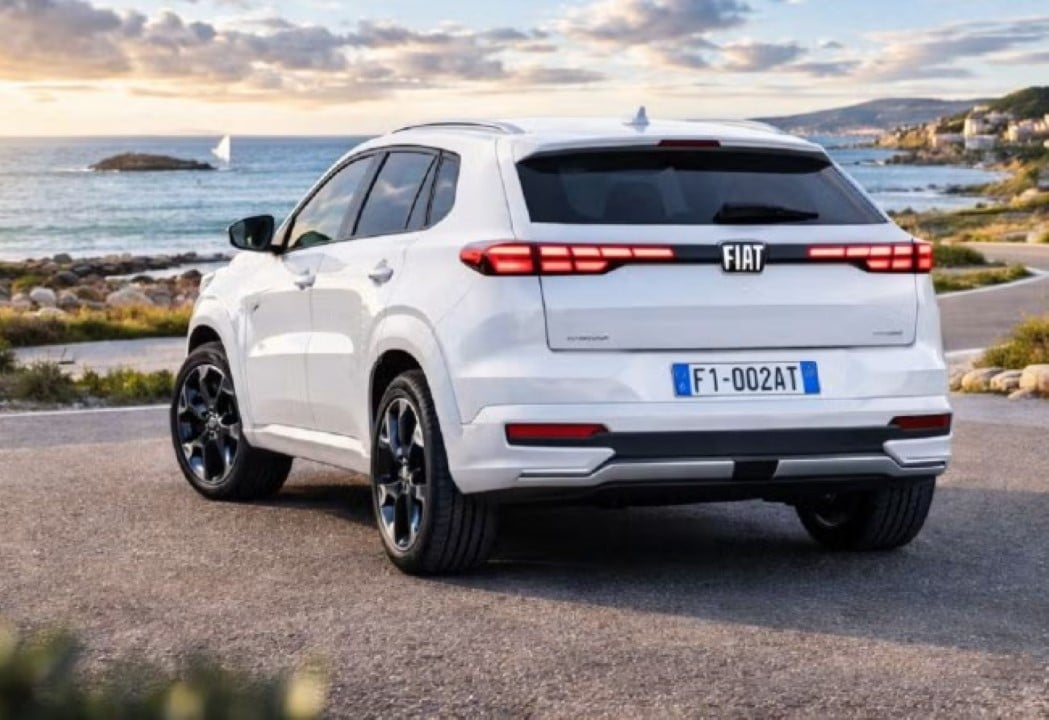
The 2026 automotive market welcomes a new major competitor focused on family transportation, marking a decisive phase in the Italian automaker’s strategy to democratize access to spacious vehicles. The arrival of this new sports utility vehicle reflects a growing demand for versatility and energy efficiency, positioning itself as a robust solution for those who need increased capacity without sacrificing fuel economy. With a design focused on functionality, the model promises to redefine cost-benefit standards in the C-SUV segment, offering configurations that comfortably accommodate up to seven passengers.
The engineering behind this launch prioritized the integration of modern propulsion systems, aligned with the strict current emission standards and the need to reduce operating costs for owners. The focus on a flexible architecture allowed the manufacturer to develop a vehicle that not only meets expectations for interior space, but also incorporates accessible electrification technologies. Este movement is seen by analysts as a direct response to new consumption dynamics, where sustainability and practicality go hand in hand in the purchasing decisions of modern families.

The current economic scenario, with the minimum wage in force in 2026 set at R$1,621, requires automakers to deliver products that justify the investment through durability and low maintenance costs. The new Fiat model seeks to fill exactly this gap, offering a balanced equipment package and reliable mechanics. The launch strategy includes global distribution, taking advantage of the group’s industrial synergies to ensure price competitiveness against Asian and European rivals competing for the same market share.
Among the main highlights that make up the offer of this new vehicle, the automaker emphasizes four fundamental pillars that guided the development of the project. Primeiro, the modular habitability that allows multiple seating configurations. Segundo, the thermal efficiency of the mild hybrid assembly. Terceiro, embedded connectivity ready for the latest data networks. And fourth, reinforced active and passive safety to protect all occupants, consolidating the brand’s commitment to the integrity of families.
Smart platform and strategic production at Marrocos
The technical basis of this new SUV is the renowned “Smart Car” platform, an architecture developed to maximize production efficiency and enable low-cost electrification. Esta modular structure is the same used in the group’s other successful models, which facilitates the sharing of components and significantly reduces development and manufacturing time. The choice of this platform was not accidental, as it offers the torsional rigidity necessary for a vehicle of this size, while keeping the total weight controlled, a crucial factor for energy efficiency.
Concentrated production at the Kenitra factory, at Marrocos, is a key element in the value equation of this car. The North African industrial unit received massive investments to modernize its assembly lines and train the local workforce, becoming a strategic export hub for Europa and emerging markets. The privileged geographic location and favorable commercial agreements allow Fiat to export the model with optimized logistical costs, which translates into a more aggressive final price at dealerships.
The production capacity of the Kenitra plant was expanded to support the expected demand for this new model, which is expected to become one of the brand’s flagships in terms of sales volume. The standardization of manufacturing processes and the use of industry 4.0 technologies ensure that each unit leaves the assembly line with the highest quality standards. Esta strategy of centralizing production in regions with competitive costs is a trend that will be consolidated in 2026, allowing traditional brands to face competition from new global players.
Technical details and efficiency of the hybrid system
The heart of this new SUV is its 48-volt mild hybrid (MHEV) powertrain system, a technology that has become the gold standard for balancing performance and emissions without the complexity and cost of plug-in hybrid systems. The mechanical set uses an efficient combustion engine, assisted by a small electric motor that operates when starting and restarting, moments when fuel consumption is traditionally higher. The system is capable of recovering energy during braking, storing it in a compact battery for later use, without the need for external charging.
For the fully electric versions, which complement the range, Fiat opted to use LFP (Ferro-Lithium Phosphate) batteries. Esta battery chemistry is known for its robustness, long service life and, most importantly, lower production cost than conventional lithium-ion batteries based on nickel and cobalt. The choice of LFP demonstrates a pragmatic engineering vision, prioritizing accessibility and thermal safety to the detriment of extreme autonomy, which is often unnecessary for everyday urban and family road use.
Functional design inspired by the Panda philosophy
Aesthetically, the vehicle adopts an approach that favors function over form, with straight lines and a “square” silhouette that harks back to the philosophy of the iconic Fiat Panda, but in expanded dimensions. Este concept, often referred to internally as “Giga-Panda”, has as its main objective to maximize internal volume. The high roof and vertical rear ensure that passengers in the third row have adequate head space, something rare in vehicles in this category, in addition to facilitating access and accommodation of bulky loads when the seats are folded down.
The simplicity of the design also plays in favor of durability and ease of repair, characteristics valued by the target audience. The body panels have plastic protections in strategic areas to prevent minor damage in urban traffic, and the optical assemblies were positioned to reduce the risk of breakage in minor collisions. The interior follows the same logic, with resistant and easy-to-clean materials, designed to withstand the intense use of a large family, with several intelligent storage compartments spread throughout the cabin.
Market positioning and direct competition
The launch of this seven-seater SUV puts the Fiat on a direct collision course with models like the Dacia Bigster, intensifying the competition in the low-cost family vehicle segment. The Italian brand’s strategy is to offer a product that is perceived as more refined and with a more charismatic design, maintaining the rational value proposition. Competition in this market segment in 2026 is intense, as families increasingly seek a single vehicle capable of meeting all their needs, from daily school transport to holiday travel.
Fiat is banking on the strength of its dealership network and brand trust to attract consumers who might otherwise consider options from incoming brands. The new SUV is not just an isolated product, but part of a complete renewal of the manufacturer’s portfolio, which seeks to reaffirm itself as the main choice for smart family mobility. With competitive prices and an honest proposal, the model has everything to become a common sight on the streets and roads, consolidating Fiat’s leadership in the practical and affordable car segment.



