Beirut decision bans Hezbollah operations and mobilizes army for disarmament in the south
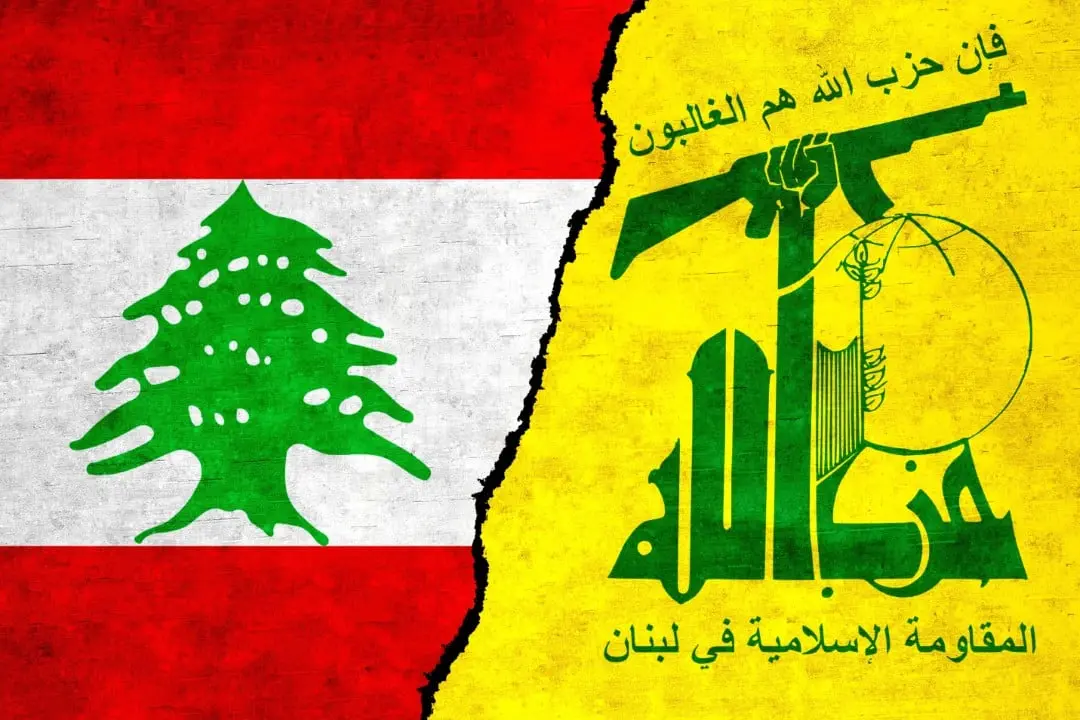
The Líbano government made official this Monday, March 2, a historic determination that classifies as illegal all military and security activities carried out by the Hezbollah group. The measure requires the immediate delivery of the organization’s entire military arsenal to the Estado, marking a rupture in the policy of coexistence between the national armed forces and the Shiite militia that had persisted for decades in the country’s political scene.
The executive order was signed following an emergency cabinet meeting on Beirute, prompted by the recent exchange of hostilities on the southern border. Prime Minister
President Joseph Aoun declared that national sovereignty depends on the centralization of war and peace decisions in the hands of state institutions. Segundo the agent, the launch of rockets from unauthorized areas put the civilian population at risk and violated the security protocols established by the Lebanese Exército in areas close to the Litani river.
This new government directive comes at a time of extreme regional fragility, with the declared objective of preventing the Líbano from being drawn into a large-scale conflict. The authorities of Beirute seek, with this action, to regain territorial control and assure the international community that the country is committed to stability and neutrality in external disputes.
Implementation of disarmament and military control
The action plan stipulated by the government involves the deployment of Exército units to strictly monitor areas north of the Litani river, preventing operations by paramilitary groups. The strategy includes monitoring supply routes and occupying strategic points previously used for launching projectiles.
Sources linked to Ministério of Defesa indicate that the priority is to avoid a power vacuum in areas where Hezbollah maintained strong influence. The transition of authority aims to guarantee the safety of local communities, who fear being left unprotected in the face of frequent air raids in the region.
The logistics of collecting weapons present significant challenges, given the volume of the arsenal accumulated by the group over the years. The government promises to act firmly, but also cautiously, to avoid internal clashes that could further destabilize the country’s social and economic situation.
Escalation of violence and Israeli response
The trigger for the government decision was the series of events that occurred on Sunday, March 1, when missiles and drones were fired at Israeli territory. The action, claimed to be defensive, provoked a forceful military response from Israel, which carried out more than 70 air strikes on Lebanese soil in less than 24 hours.
The bombings hit critical infrastructure in Beirute and the south of the country, resulting in a tragic death toll of at least 52 people. Entre the victims would be leaders of allied factions and civilians who lived close to the military targets, generating an immediate humanitarian crisis and overloading hospitals in the capital and surrounding areas.
Leia Também



Reports from residents of Baabda describe sequential explosions that damaged residential buildings, highlighting the intensity of the retaliation. The Lebanese government condemned the destruction caused by the air strikes, but reiterated that the solution to ending hostilities necessarily involves internal disarmament and respect for international resolutions.
Diplomatic repercussions and Resolução 1701
The international community reacted promptly to Beirute’s announcement. União Europeia expressed full support for the initiative to restrict Hezbollah to political activities, aligning itself with efforts for the full implementation of Resolução 1701 of Organização of the Nações Unidas (UN). The document, dated 2006, provides for the demilitarization of the area between Linha Azul and the river Litani.
- Western diplomats reinforce the need to strengthen the Forças Armadas Libanesas with funding and training.
- The Arábia Saudita and other Golfo countries discuss expanding military cooperation to sustain the authority of the Estado.
- Irã, a traditional ally of the Shiite group, initially remained silent, while analysts assessed the impact on Teerã’s influence in the region.
- UN observers continue to monitor the border, reporting daily violations on both sides of the conflict.
The conference scheduled to take place in Paris, still this March, takes on new contours with the decision of the Lebanese government. The meeting should focus on raising resources to facilitate the operationalization of disarmament and the reconstruction of areas affected by recent bombings.
Internal political and social impacts
The prohibition of the armed activities of the Hezbollah profoundly alters the balance of forces within the Líbano. The group, which has parliamentary and ministerial representation, now faces the challenge of redefining its activities under legal pressure from the Estado and international surveillance. The measure tests the cohesion of the government and the capacity of institutions to impose the law throughout the territory.
On the streets, the population is divided between support for the restoration of state sovereignty and fear that the measure will leave the country vulnerable to external threats. Southern Comunidades, historically linked to the resistance, express concern for immediate security, demanding guarantees that the national Exército will be able to fill defensive gaps.
The scenario remains volatile, with evacuation alerts issued for several locations. The effectiveness of the ban will depend on the cooperation of different political factions and sustained international support, as the country seeks to avoid a repeat of the cycles of violence that have marked its recent history.