

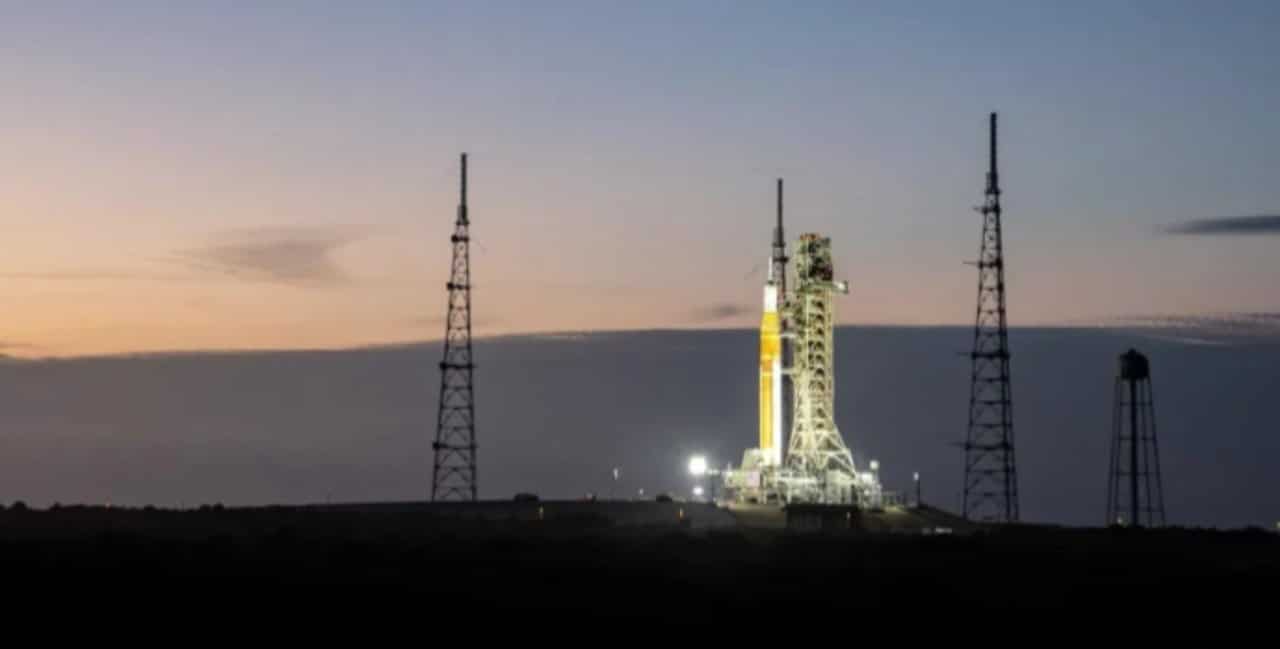
NASA has completed necessary repairs on the Space Launch System rocket destined for the Artemis II mission. The intervention corrected an interruption in the helium flow detected during recent tests. With this, the North American space agency maintains planning for a possible takeoff in April 2026.
The problem occurred in the upper stage of the SLS, responsible for pressurizing the propellant tanks. Engenheiros identified a displaced seal in a quick connect mechanism. The solution involved removing and reassembling the component, followed by validations with reduced helium flow.
The mission represents the first manned flight around Lua since 1972. Quatro astronauts will participate in the approximately ten-day journey. The focus is on testing life support and navigation systems in deep space.
Technical repairs to the upper stage
NASA teams have removed the affected quick disconnect on Vehicle Assembly Building. The process included detailed inspections to ensure system integrity. Subsequent Testes confirmed adequate helium flow to the RL10 engines.
Root cause analysis revealed possible misalignment during previous operations. Medidas preventive measures were implemented to avoid recurrences. Essas actions maintained the schedule without significant impacts.
Additional activities during maintenance
In addition to the main fix, flight batteries were replaced in the core stage and auxiliary thrusters. The Orion capsule’s emergency abort system also received updates. Essas tasks optimize the overall reliability of the pool.
A new battery pack for the flight termination system has been activated. Complete Testes have validated their functionality before the next phase. The period at VAB allowed efficient integration of all maintenance.
Release schedule and available windows
The April window offers opportunities on the 1st, 3rd through 6th, and 30th. NASA evaluates meteorological and orbital conditions to select the ideal date. Preparativos include final simulations and trajectory checks.
The rollback to the VAB occurred after the wet dress rehearsal in February. The return to platform 39B is expected soon. Essa sequence ensures that the rocket is ready for takeoff without compromising safety.
Crew and mission objectives
Victor Glover, Christina Koch and Reid Wiseman, from NASA, make up the team along with Jeremy Hansen, from Agência Espacial Canadense. Glover will become the first black person in lunar orbit. Koch will be the first woman on this path.

The mission will test the Orion capsule in real deep space conditions. Dados collected will enhance future explorations. The lunar orbital flight will validate technologies for subsequent landings.
Evolution of program Artemis
The Artemis program aims to establish a sustainable presence in Lua. The Artemis II paves the way for more ambitious missions. Recentemente, NASA restructured steps to optimize resources and reduce risks.
Artemis III will now focus on orbital tests with private lunar modules. Isso includes encounters in low Earth orbit. The change speeds up the overall timeline without sacrificing scientific objectives.
Artemis IV will undertake the first manned landing, planned for 2028. Docking will take place in Earth orbit before transfer to Lua. Essa approach minimizes logistical complexities.
SLS will continue with standardized configurations close to Bloco 1. Cancelamentos of specific upgrades target an annual release cadence. The strategy strengthens the sustainability of the lunar program.
Historical context and scientific importance
Since Apollo 17, in 1972, no manned mission has reached the lunar vicinity. The Artemis II resumes this exploration with modern technologies. Sistemas cryogenic propulsion and autonomous navigation represent significant advances. International Parcerias, as with Canadá, expand the collaborative scope. Dados on radiation and microgravity will contribute to missions to Marte. A focus on crew diversity promotes inclusion in space exploration.
Preparations at Kennedy Space Center
At Centro Espacial Kennedy, at Flórida, teams coordinate the transport of the rocket. The crawler-transporter moves the SLS with precision. Structural Verificações occur during the process.
Installations like VAB support complex assemblies. Equipamentos terrestrials integrate with the rocket for testing. Essas operations ensure alignment with security standards.
Technologies involved in SLS
The Space Launch System uses solid fuel propellants for initial thrust. The core stage employs liquid hydrogen and oxygen. Motores RS-25, inherited from the space shuttle, provides main thrust.
The upper stage, ICPS, adapts hardware from the Delta IV. Sua critical function involves orbital maneuvers. Reparos in the helium flow preserve this capacity.
Integration with Orion includes coupling and communication systems. Sensores monitor parameters in real time. Essas technologies support long-duration missions.
International collaborations
Agência Espacial Canadense contributes expertise in robotics. Jeremy Hansen integrates Canadian expertise into the team. European Parcerias provide service modules for Orion.
These collaborations spread costs and risks. Shared Conhecimentos accelerates innovations. The Artemis program strengthens global alliances in space exploration.
Post-repair testing and validation
After repairs, reduced helium flows validated the system. Continuous Monitoramento detects anomalies early. Simulações computational tests complement physical tests.
Teams evaluate data to refine procedures. Certificações endings precede rollout. Essa Meticulous approach minimizes in-flight failures.
Vibration and thermal analyzes take place in the VAB. Integrações electrical check compatibility. The process ensures readiness for launch.
Impacts on future exploration
The success of Artemis II will influence subsequent missions. Tecnologias validated will pave lunar landings. Permanent Bases in Lua will become viable.
Lunar resources such as water support sustainable operations. Geological Estudos will reveal the origins of the solar system. The mission drives advances in propulsion and habitats.
Safety as a priority
Strict protocols guide all operations. Avaliações of risk identify vulnerabilities. Treinamentos of the crew prepare for contingencies.
Redundant systems protect against failures. NASA prioritizes human integrity in exploration. Essa emphasis ensures successful missions.
Orion Capsule Details
The Orion supports four astronauts with advanced life support. Painéis solar panels generate energy. Escudos thermal resist atmospheric re-entry.
Navigation systems use GPS and stars. Comunicação via Deep Space Network keeps in touch. Essas features enable travel beyond low orbit.
Perspectives for the rollout
Return to platform 39B depends on test completions. Cronogramas Flexible to accommodate unexpected events. NASA communicates updates regularly.
Final preparations include fueling and countdowns. The April launch marks a milestone in lunar exploration.



