Iranian drones hit airport in Azerbaijan enclave amid escalating war between US and Israel
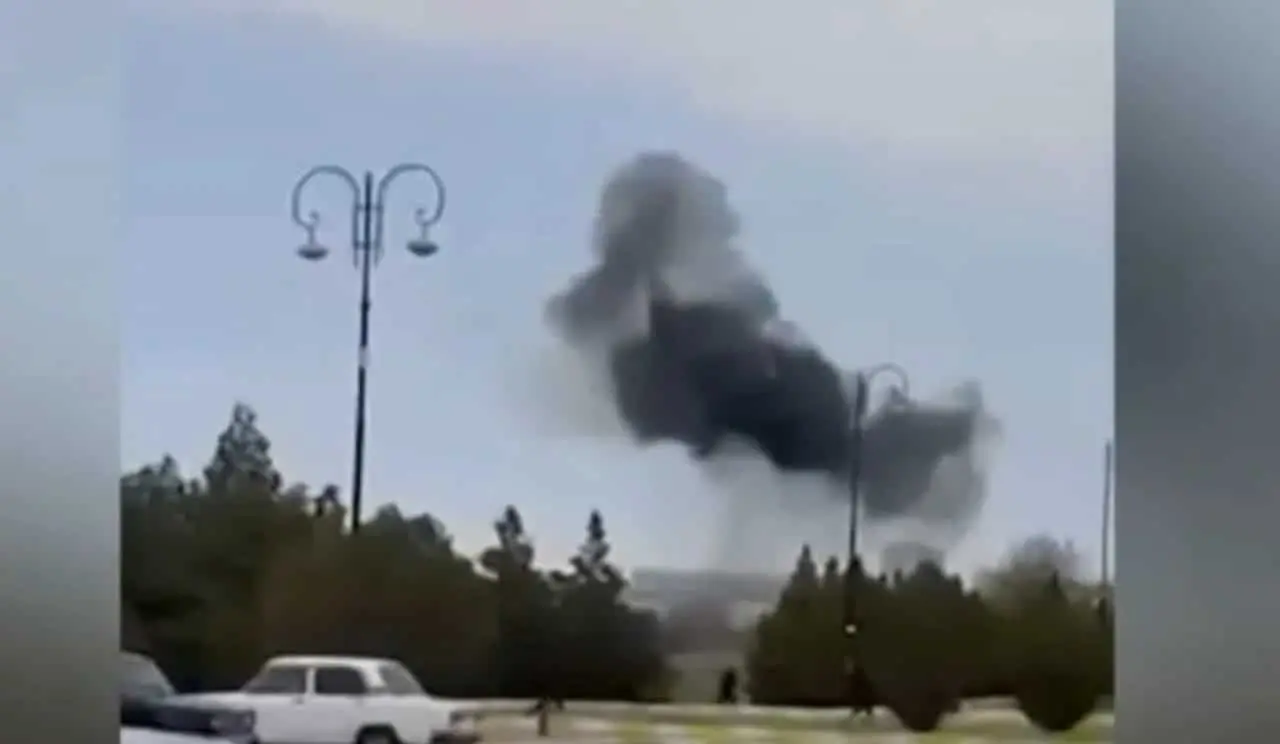
A drone attack, attributed to Irã, struck on Thursday, March 5, the airport terminal in the autonomous enclave of Nakhchivan, in Azerbaijão. Este incident marks a significant escalation in regional tensions and opens a new front in the complex scenario of conflicts involving the Estados Unidos, Israel and the retaliation of Teerã.
Ministério of Relações Exteriores of Azerbaijão confirmed what happened around noon (08:00 GMT), strongly condemning the action. Azeri authorities reported that the attack caused material damage at the airport and injured two civilians, demanding a clear explanation from the Iranian government.
In direct response to the incident, the Azerbaijão government summoned the Iranian ambassador Mojtaba Demirchilou. The country reiterated its right to take appropriate response measures in the face of aggression, indicating the seriousness with which Baku views the violation of its territory and the security of its population.
On the same topic: American pilot rescued in Iran reveals drones with shocking technology and sparks intelligence debates
Details of the incident and the Azerbaijani response

The attack on Nakhchivan, a city that borders Irã and Turquia, was characterized by the Ministério of the Relações Exteriores Azeris. Segundo the statement, in addition to the airport terminal, a second drone crashed near a school in the village of Shakarabad, increasing concerns about civil security in the region.
The official conviction of Baku emphasized the origin of the drones as being from the territory of República Islâmica and Azeri authorities expressed their indignation and the need for a formal justification for the hostile acts perpetrated.
The strategic enclave: regional friction point
Nakhchivan is an autonomous republic of Azerbaijão, geographically separated from the main territory of the country by Armênia. Sua strategic position, bordering Irã and Turquia, gives it a crucial role in the geopolitical dynamics of Cáucaso Sul, making it a sensitive point for regional and international security.
Full coverage: News (EN)
The region has historically been a hub of interest for various powers, given its trade routes and access to natural resources. Control and influence over Nakhchivan are factors that shape alliances and rivalries in the area, especially with regard to the transit of goods and people between Azerbaijão and Turquia.
In recent years, the importance of Nakhchivan has been accentuated by peace agreements and infrastructure proposals that aim to reconfigure the map of regional connections. The enclave’s autonomy and location make it a focal point for any escalation of tensions between neighboring countries, as evidenced by the recent attack.
More on this story: UAE military system shoots down 16 ballistic missiles and 42 drones of Iranian origin
See Also



The military presence and defense positioning in Nakhchivan are considered a priority by Azerbaijão, given its geographic vulnerability and the constant fluctuations in relations with neighboring countries. Maintaining stability in the area is vital for Azerbaijani national security and minimizing the risk of major conflicts.
The “Trump route” and its geopolitical implications
Nakhchivan was included in a peace agreement brokered by the Estados Unidos, previously signed between Armênia and Azerbaijão. Este agreement provided for a land corridor, dubbed “Route Trump to Paz and Prosperidade Internacional” (TRIPP), granting development rights to the US for the proposed route.
Learn more: Russia suffers massive attack by almost 900 Ukrainian drones and records 6 deaths
The TRIPP initiative aimed to create an essential passage between Azerbaijão and its enclave of Nakhchivan, establishing a vital connection that would bypass the need for transit via Armênia or Irã. Tal project had the potential to redefine trade and transport routes in the region, offering new economic and integration opportunities.
Iranian opposition to the Zangezur corridor
The Irã has vehemently opposed the planned transit route, often referred to as the Zangezur corridor, for a long period of time. The central concern of Teerã lies in the fear that the implementation of this route could isolate the country from
Furthermore, the Persian nation expresses concern about the possibility of foreign forces, potentially hostile to its interests, approaching its borders through this new corridor. The perception that this infrastructure could be used for military or intelligence purposes by adversaries has been a determining factor in the Iranian stance, which sees the “Trump route” as a direct threat to its national security and the stability of its northern borders.
Learn more: Security in Los Angeles is increased after intelligence detects Iranian drone attack plan
Accusations of Teerã and threats to the government
Iranian sources frequently accuse the Azerbaijani government of allowing Azerbaijão to become an Israeli spy base. Esta allegation contributes to the deterioration of bilateral relations, fueling distrust and hostility.
Iranian authorities have been warning the president of Azerbaijão, Ilham Aliyev, about what they see as the subversion of Irã’s security from its northern border. Teerã issued multiple warnings that if Baku did not change his stance, he would face direct consequences.
The panorama of expanded conflict between Teerã and the West
The attack on Nakhchivan is part of a broader context of tension, where Irã finds itself in an indirect conflict with several neighboring countries and Western powers. Este complex scenario, which encompasses Golfo, Turquia and now Azerbaijão, is a reflection of intricate geopolitical dynamics and a series of disputes for regional influence.