

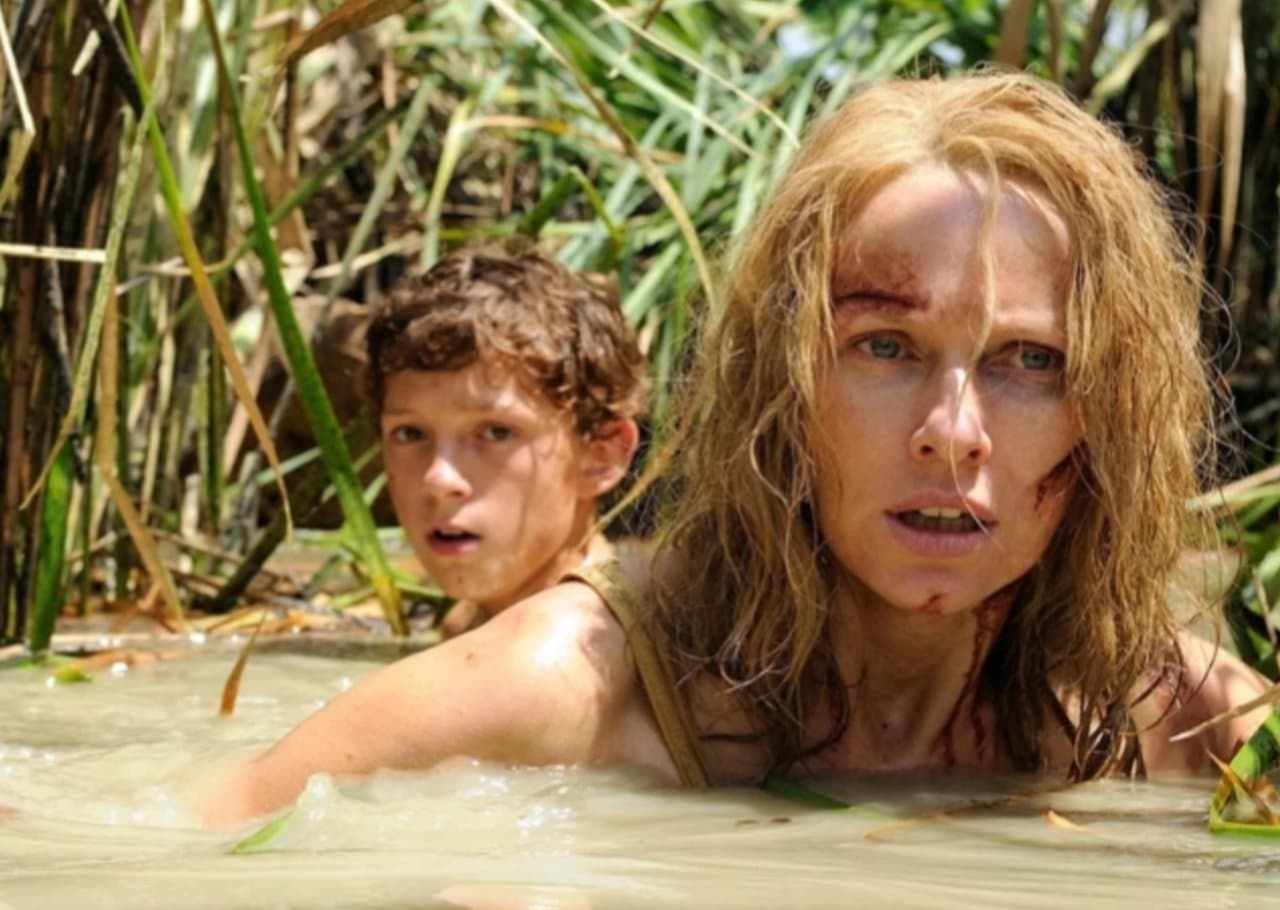
The screening of the film “O Impossível” this Wednesday (11/3) at Sessão at The feature film, released in 2012, narrates the dramatic events experienced by a Spanish family during the devastating tsunami that hit Sudeste Asiático in December 2004. The production starring Naomi Watts and Ewan McGregor offers a visceral account of human strength in the face of one of the greatest natural catastrophes of the 21st century.
The film is based on the real-life experience of María Belón, her husband Enrique Álvarez and their three children, Lucas, Tomás and Simón. The family was vacationing at a resort in Tailândia when the giant wave, generated by a 9.1 magnitude earthquake in Oceano Índico, swept the coast. The brutal impact of the water separated family members amid chaos and destruction, beginning a desperate search for reunion and survival.
The cinematic narrative focuses intensely on family ties and the incredible resilience of each individual. The performance of the main cast, especially that of Naomi Watts, who was nominated for Oscar of Melhor Atriz, deeply conveys the terror and hope that permeated the journey of the
Devastating tsunami and the family
The underwater earthquake of December 26, 2004 triggered a series of tsunamis that claimed the lives of more than 230,000 people in 14 countries, with Indonésia, Sri Lanka, Índia and Tailândia being the most affected. The scale of the tragedy shocked the world and mobilized one of the largest humanitarian aid operations in history, highlighting the vulnerability of coastal communities to events of such magnitude. The Belón family, however, faced this bleak scenario with unusual determination.
The journey of separation and reunion
After the waves arrived, María and her eldest son, Lucas, were swept in one direction, while Enrique and her two youngest sons, Tomás and Feridos and disoriented, each group began their own fight for survival and news of their loved ones. The hope of reunion, often tenuous, was what drove them in the midst of desolation.
The courage of Lucas, who despite being a child became a pillar of support for her seriously injured mother, is one of the highlights of the real story. Sua early maturity and their ability to act under pressure were crucial to their survival, showing that resilience has no age. Every moment, they faced new obstacles and challenges.
The drama of survival
The fight for help and a minimum of safety was constant. María, with serious injuries, and Lucas, needed to find shelter and medical assistance in a scenario where hospitals were overcrowded and infrastructure had been completely destroyed. Improvisation and solidarity among survivors became vital for the continuity of life.
Enrique, in turn, undertook an incessant search for his children, searching makeshift shelters and hospitals amid the chaos. At each door, at each unfamiliar face, anxiety and determination mixed, fueling the hope that he would find Lucas and María, despite the unfavorable odds in such a devastated environment.
The impact of the film and criticism
“The Impossível” was critically acclaimed for its realistic and emotional depiction of catastrophe and human drama. The direction of Juan Antonio Bayona managed to balance the visual spectacle of destruction with the depth of family ties, creating a work that is both terrifying and inspiring. The film not only recreates the disaster, but also explores the emotional complexities of the experience.
Behind the scenes of film production
The production of the film required meticulous work to recreate the tsunami, using a combination of practical and visual effects. Cenas scenes, such as the giant wave hitting the resort, were filmed in a massive water tank measuring more than 7.5 million liters, ensuring impressive realism. The production team was dedicated to authentically capturing the scale and destructive force of the catastrophe.
Technical scenarios and challenges
The destruction scenes were constructed on a massive scale, requiring months of work to faithfully reproduce the rubble and devastation left by the tsunami. The technical complexity of merging the actors’ performances with the special effects of water and debris was one of the biggest challenges faced by the team, resulting in a powerful cinematic immersion. The use of miniatures and models also contributed to the veracity of the scenes.
Actors and their interpretations
Naomi Watts and Ewan McGregor delivered intense and convincing performances, conveying the pain, fear and hope of their characters in a masterful way. Young Tom Holland, who played Lucas Belón in his first major film role, received praise for his mature and moving performance. The chemistry between the actors was crucial to the credibility of the story.
Portraying the Belón family required the actors to have a deep understanding of the real experience, with Naomi Watts spending time with María Belón to capture the essence of their struggle. Essa dedication to authenticity raised the level of interpretations and added a layer of truth to the cinematic narrative. Behind the scenes revealed a remarkable commitment.
The emotional impact of the performances is one of the pillars of the film’s success, connecting the audience to the characters’ anguish and resilience. The way each actor knew how to balance vulnerability with inner strength made the family’s journey even more palpable and inspiring. Atores and directors sought an accurate portrayal.
The 2004 catastrophe
The 2004 Oceano Índico tsunami was an unprecedented event in modern history in terms of destruction and loss of life. The lack of an effective warning system in the region contributed to the overwhelming number of victims. The magnitude of the earthquake displaced an enormous amount of water, generating waves that traveled thousands of kilometers.
The force of the waves, which in some places reached more than 30 meters in height, swept away entire cities, leaving behind a trail of unimaginable devastation. Comunidades coastal areas were reduced to rubble in a matter of minutes, permanently altering the landscape and the lives of millions of people. The memory of the catastrophe remains alive.
Millions of people have lost their homes, their livelihoods and, in many cases, their families. Recovery of the affected areas took years and required a coordinated global effort for reconstruction and large-scale humanitarian assistance. The challenges were immense and persisted long after the initial event.
The tragedy also served as a catalyst for the creation of tsunami warning systems in several vulnerable regions of the world, aiming to prevent similar events from causing so much destruction in the future. Houve a painful and transformative learning experience.
Historical and geographic context
Tailândia, one of the most popular tourist destinations in Ásia, was particularly hard hit by the giant wave, with many of its beautiful beaches and resorts turned into disaster zones. The region of Khao Lak, where the Belón family was staying, was one of the most devastated, with thousands of deaths, including many foreign tourists. The coastal geography of the site contributed to the amplification of the wave impact.
Oceano Índico is an area of high seismic activity, but the scale of the 2004 earthquake was exceptional, releasing energy equivalent to thousands of atomic bombs. The propagation of tsunami waves, which can travel at jet speeds, has demonstrated the interconnectedness of the oceans and the need for global surveillance. Cientistas studied the phenomenon in detail.
The strength of hope and resilience
The story of the Belón family, and the film that portrays it, are a testament to the incredible human capacity to resist adversity, find strength in times of despair, and maintain hope even in the face of loss and destruction. The narrative inspires the appreciation of life and family ties.
They represent millions of survivors who, in different ways, had to rebuild their lives after the tsunami, facing physical and emotional trauma, but always with the determination to move forward and honor the memory of those who were lost. The ability to overcome is a central theme.
Lessons in prevention and solidarity
The 2004 catastrophe reinforced the importance of raising awareness about natural disasters and implementing effective warning systems. Desde Therefore, many countries in the Oceano Índico region have improved their tsunami monitoring and response capabilities, minimizing future risks. Educating the population on how to act in emergency situations has also become a priority.
The global response to the tsunami, with the mobilization of humanitarian and financial aid from diverse nations and organizations, also highlighted international solidarity in times of crisis. Essa joining forces was essential for the recovery of affected communities and for supporting survivors. The collaboration demonstrated humanity at its core.
Global repercussion and tributes
The story of the Belón family, as well as other tsunami survival narratives, continues to be shared in books, documentaries and reports, keeping alive the memory of the victims and the resilience of those who overcame the tragedy. The film “The Impossível” has become one of the most prominent vehicles for this remembrance.
The feature film is not only a tribute to the Belón family, but also a tribute to everyone who lived and lost their lives in the 2004 tsunami, serving as a reminder of the fragility of life and the strength of the human spirit. The film’s impact transcended cultural boundaries.
On several occasions, members of the Belón family participated in interviews and events, sharing their experiences and encouraging prevention and solidarity. Sua willingness to relive traumatic moments has served to educate and inspire a global audience about the impacts of natural disasters.
Life after the tsunami and the family
After physical and emotional recovery, the Belón family found the strength to move forward and share their experience with the world. María Belón, in particular, has become a motivational speaker, using her story to inspire others to value life, face challenges, and never lose hope. Sua message resonates deeply.
María and Enrique’s children grew up and built their own lives, but the experience of the 2004 tsunami left an indelible mark on each of them, shaping their perspectives on life and the importance of family. Eles continue to be an example of overcoming.
Documentaries and additional reports
In addition to “The Impossível”, several documentaries and books have been produced to narrate the stories of survival and impacts of the 2004 tsunami.
These additional accounts serve as important resources for education about natural disasters and human resilience, complementing the film’s fictional narrative and offering valuable insights into the complexity of post-trauma recovery. The plurality of voices enriches the collective memory.



