

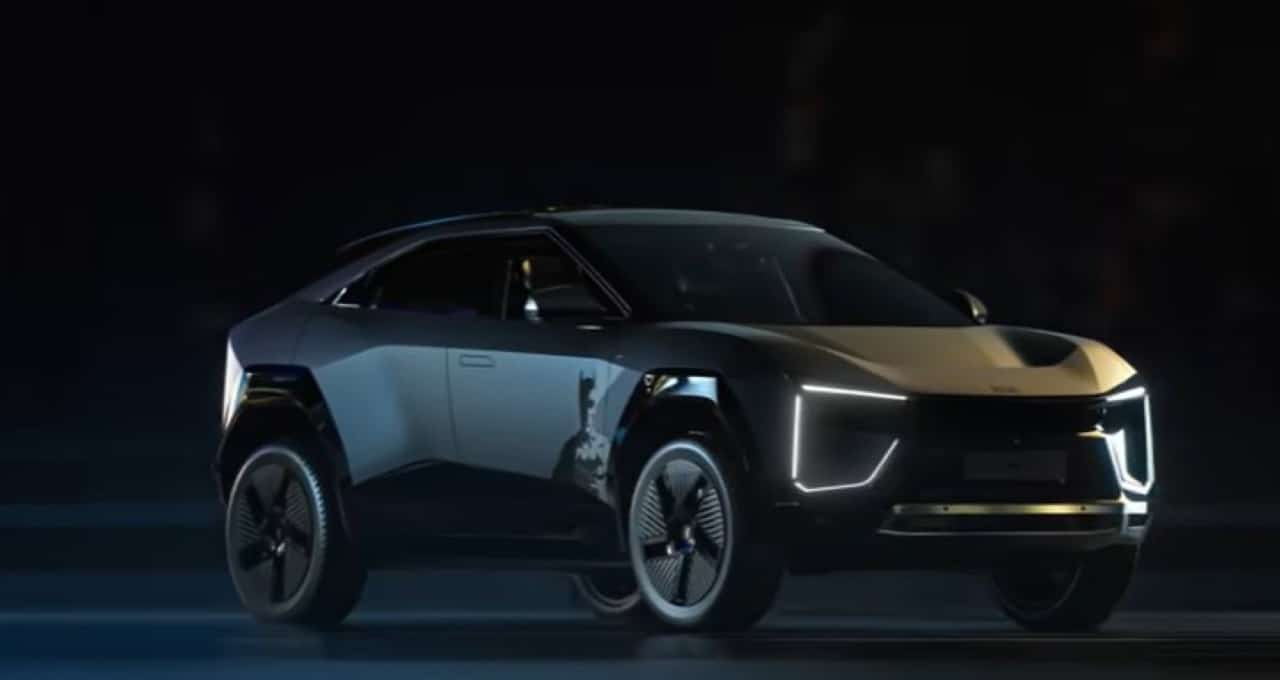
Indian automotive manufacturer Mahindra has recorded a significant commercial milestone with the immediate sell-out of its new electric model, the BE.6. The special edition, dubbed by the market as a version inspired by the superhero universe due to its dark and aggressive design, had all its units reserved in record time. The movement demonstrates strong public acceptance for zero-emission vehicles with differentiated aesthetic appeal, consolidating the brand at a level of high global competitiveness.
Exactly 999 units of this limited series were made available for the international market. Demand far exceeded the automaker’s initial estimates, generating virtual waiting lines and a volume of accesses that tested the capacity of the company’s reserve servers. Especialistas from the automotive sector point out that the speed of sales reflects a profound change in the perception of value of electric sports utility vehicles, which are no longer just ecological alternatives but have become objects of technological desire.
The sales phenomenon is not just restricted to the success of an isolated product, but signals a transformation in consumption dynamics on a global scale. Compradores with high purchasing power increasingly seek exclusivity combined with sustainable technology, forcing other traditional brands to review their launch schedules and accelerate the transition of their portfolios powered by internal combustion.
Commercial success of the sports utility vehicle
The Mahindra BE.6 design was developed with a rigorous focus on advanced aerodynamics and energy efficiency, using a modular platform dedicated exclusively to new generation electric vehicles. The innovative structure allows for a completely flat floor, maximizing interior space for occupants and providing a considerably lower center of gravity, which improves directional stability at high speeds. The exterior design features striking angular lines, slit-shaped headlights with adaptive lighting technology and a sports coupe silhouette, features that immediately attracted consumers interested in visual innovation and sportiness. The cabin features high-quality sustainable materials and a fully digital instrument panel, integrated with state-of-the-art autonomous driving assistance systems.
In addition to the undeniable aesthetic appeal, the vehicle’s technical performance was a determining factor in the rapid commercialization of the initial batch of 999 units. The model is equipped with high-power electric motors on the front and rear axles, ensuring all-wheel drive, vigorous acceleration and a range designed to suit both daily urban use and long-distance road trips without the need for frequent stops. The 800-volt fast charging architecture supports very high voltage currents, allowing you to recover up to eighty percent of the battery charge in less than thirty minutes at compatible stations. Esses cutting-edge technical attributes place the Indian sports utility vehicle in direct and fierce competition with models from established European and North American brands that have historically dominated the premium segment.
Direct impact on production strategies
The rapid absorption of the units by the market forced the management of Mahindra to reevaluate its production capacity in the short term. The automaker now needs to balance the delivery of reserved vehicles with the logistical planning of the regular versions of the model that will arrive at dealerships.
Instant exhaustion serves as an accurate barometer for pent-up demand for niche electric vehicles. Fabricantes competitors are watching the case closely to adjust their own marketing strategies and define the initial production volume of their new sustainable models.
The creation of limited editions is consolidated as an effective commercial tool to test public acceptance before massive investments in assembly lines. Essa approach reduces operational financial risks and generates early capitalization for companies in the automotive sector.
Logistical challenges for the automaker
Despite the resounding sales success, the delivery of the BE.6 units imposes complex operational obstacles in the global supply chain. Intermittent shortages of advanced semiconductors and specific electronic components for security systems still affect the pace of factory production.
Obtaining essential raw materials for manufacturing high-density lithium-ion batteries requires constant negotiations and long-term contracts with international mining suppliers. Volatility in the prices of critical minerals such as cobalt, lithium and nickel is constantly putting pressure on automakers’ profit margins.
The international transport of finished vehicles also faces severe logistical bottlenecks due to the lack of ships specialized in the roll-on/roll-off mode. Maritime routes currently operate at maximum capacity, and disruptions to important shipping channels end up delaying delivery times promised to customers.
To mitigate these structural problems, Mahindra invests heavily in the nationalization of critical parts and in the development of strategic partnerships with local technology suppliers. The corporate strategy aims to reduce dependence on imports vulnerable to geopolitical crises and ensure a continuous flow on assembly lines.
Expanding global infrastructure
The commercial viability of high-performance vehicles like the BE.6 directly depends on the accelerated expansion of public and private charging networks. Governos and energy companies are stepping up the installation of ultra-fast chargers on main highways and large urban centers to support the new fleet.
The exponential increase in the electric car fleet requires robust investments in the modernization of electrical energy distribution networks. The integration of renewable sources, such as solar and wind energy, is essential to ensure that the electricity used by vehicles is effectively clean and sustainable.
Advances in batteries and autonomy
The automotive sector is going through an accelerated technological transition phase, with the main focus on the development of new generations of energy accumulators. Solid-state batteries represent the industry’s next big evolution, promising greater energy density, lower structural weight and superior levels of safety compared to current liquid electrolyte cells. Laboratórios research from several automakers, including partnerships signed by Mahindra, report significant progress in stabilizing these new chemical compounds on an industrial scale. The commercial implementation of this technology has the potential to double the range of electric vehicles, definitively eliminating range anxiety for drivers on long journeys. Além In addition, thermal management systems controlled by artificial intelligence optimize energy consumption in real time, adapting to the user’s driving style and external weather conditions. Continuous improvement of onboard software enables over-the-air updates that improve engine performance and battery efficiency years after vehicle purchase, radically altering the traditional life cycle of passenger cars.
Change in consumer profile
Car buyers show a growing preference for brands that adopt transparent environmental and social governance practices. The contemporary purchasing decision is not only based on engine power or body design, but also on the carbon footprint generated during the manufacturing process and the recyclability of components at the end of the vehicle’s useful life.
Next steps for the automotive industry
The definitive consolidation of electric mobility requires agile regulatory adaptations and continuous government incentives to maintain the pace of sales growth and renewal of the circulating fleet. Automakers are preparing an aggressive diversification of their portfolios to serve everything from the entry-level segment, focused on fleet owners, to the extreme luxury market.
To keep up with this technological and behavioral evolution, companies adopt structural measures focused on the integral user experience and the circular economy. The main initiatives observed in the current market to increase customer loyalty include:
– Ampliação significant factory warranties for high voltage battery packs and electric motors.
– Criação of reverse logistics and recycling programs to reuse rare metals and electronic components.
– Desenvolvimento of applications integrated into vehicles for intelligent route planning with accurate prediction of charging stops.
– Parcerias strategies with construction companies and retail chains to include convenience chargers in new residential and commercial developments.



