F1: Ferrari discards innovative ‘Macarena’ wing at Chinese GP after testing; focus on future performance
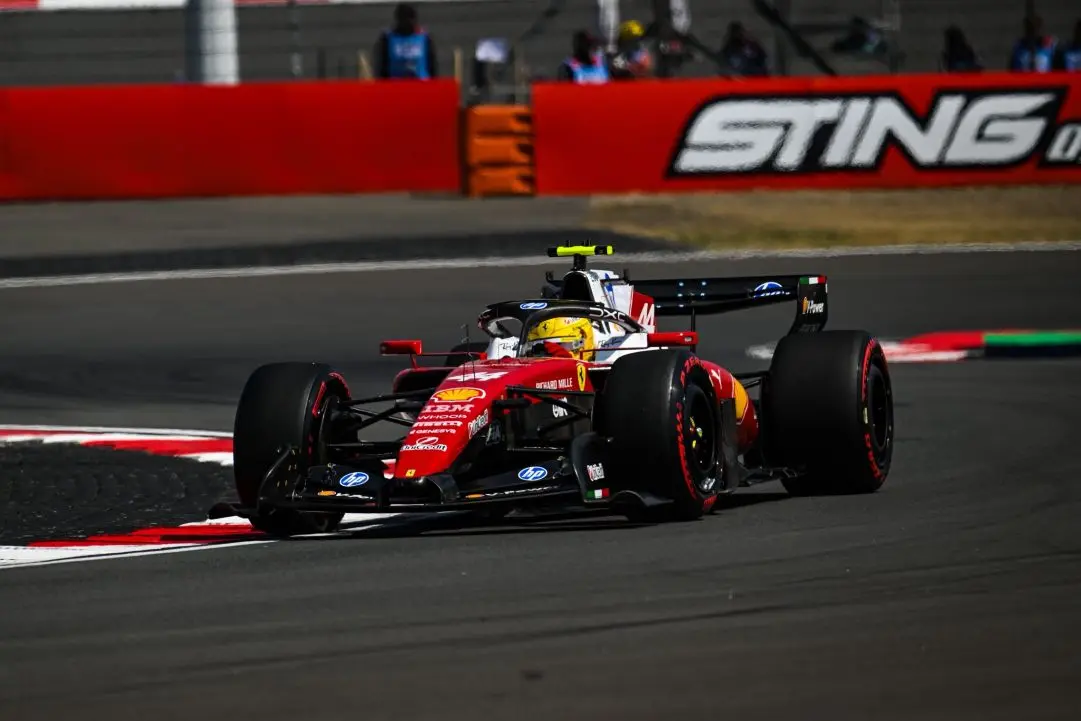
The Ferrari team of Fórmula 1 opted not to use its revolutionary rear wing on the Grande Prêmio of The decision, taken after the team evaluated the risks and benefits of the technology in track conditions, signals a cautious stance by the Italian team in the search for performance, prioritizing reliability in an already challenging race weekend due to the sprint format.
This wing, which features a mechanism capable of rotating 180 degrees, was seen for the first time in pre-season testing, generating great expectation and debate about its legality and aerodynamic impact. Seu bold design promised a significant advantage, but required a more extensive adaptation and validation period.
However, Ferrari decided that the experiment, although promising, was not yet ready to be used fully in a race, opting instead for the stability and performance already known from its standard equipment for the sprint qualifying session.
More on this story: After charging Verstappen, Red Bull seeks cause of wing failure and studies scrapping the project
Experiments on Xangai and pilot reactions
Testing of the innovative rear wing was carried out by Charles Leclerc, from Ferrari itself, and, notably, by Lewis Hamilton, from Mercedes, during the unique free practice session in Xangai. Collaboration or mutual observation between teams when testing components is common, especially when there are doubts about regulations or when the aerodynamic benefit can be replicated. Durante his lap, Hamilton had an incident in turn 6, reporting over the radio that the “brakes stuck” as the wing closed, suggesting possible instability or improper adjustment of the system.
Leclerc also tried the piece, contributing valuable data to the team’s analysis. The performance of the wing in relation to its conventional version was a source of initial satisfaction for the Ferrari, which was also encouraged by the reliability of the prototype in a track environment. Contudo, the profit margin was not considered decisive to justify the risk of using it over a full race weekend.
Lewis Hamilton expressed his surprise at the decision to return to the conventional wing, indicating that the process of bringing the part to the China may have been rushed. “I think we rushed the process to get it here and it wasn’t supposed to be in the plans until the fourth or fifth race,” commented the seven-time champion, adding that the team only had two wing units and the removal of one did not compromise the car. Ele reinforced the intention to improve the component for a future return.
Learn more: Ferrari implements 180-degree rear wing with ‘macarena’ nickname for Chinese F1 GP
Technical analysis and development challenges
The aerodynamic complexity of the Fórmula 1 requires that any innovation be thoroughly tested not just in simulations, but in real track conditions. The Ferrari’s rotating rear wing represents a design leap that seeks to optimize drag and downforce at different points on the track, a challenge that requires perfect integration with the rest of the car. The decision to retreat reflects the priority on avoiding mechanical failures or unpredictability that could compromise the results of the race, especially in such a hotly contested championship.
The Maranello team will now carry out additional in-depth analyzes at its headquarters, with the aim of refining the design and ensuring the full functionality and safety of the wing for future stages. Grande Prêmio of Japão, scheduled for two weeks from now, is the next target for a possible reintroduction of the component, if engineers can overcome the identified challenges. The development process in F1 is continuous, and each experiment, successful or not, provides crucial data for the evolution of the car.
Qualifying performance and future prospects
Despite the removal of the innovative wing, the Ferrari and Mercedes performed remarkably well in the qualifying session for the sprint race. Lewis Hamilton and Charles Leclerc ranked fourth and sixth, respectively. Hamilton recorded a time 0.641 slower than pole position George Russell (Mercedes), while Leclerc was 0.367 behind its teammate, indicating a performance gap that Ferrari still needs to fill.
See Also

Kimi Antonelli intensifica preparação física durante recesso da Fórmula 1 para manter liderança

Cadillac nega boatos de Rafael Câmara na F1 em 2027, mas mantém portas abertas para mudanças futuras

Max Verstappen vai sair da F1? CEO quebra o silêncio sobre futuro do piloto e novas regras
Fred Vasseur, team leader of Ferrari, highlighted that an unspecified problem hampered Leclerc on the back straight during qualifying, which will be investigated. Ele explained that Leclerc was unable to replicate the same performance as the previous lap, which certainly impacted his final result in the session. The team seeks to understand the exact cause to avoid recurrences in future races, where every thousandth of a second can make a difference.
On the same topic: Red Bull rules out use of rotating wing in F1 Belgian GP after Max Verstappen accidents
Hamilton, despite the incident in FP1 and the decision regarding the wing, praised his team’s work in recovering the car. Ele recognized that Mercedes was still losing time on the straights, a critical area where engine power makes a big difference. Essa observation is crucial to continued development, suggesting that the team needs to intensify efforts on Maranello to improve the power unit and close this gap.
Monegasque driver, Charles Leclerc, downplayed the impact of the innovative rear wing, stating that it “doesn’t really change the current scenario” of the team. Ele remains hopeful of a stronger performance in the race, despite corroborating Hamilton’s analysis of Mercedes’s dominance, especially in the classification. A expectativa é que, em ritmo de corrida, a Ferrari consiga se aproximar de seus rivais, transformando a esperança em resultados concretos.
The competitive environment of Fórmula 1 and innovations
The Fórmula 1 scenario is one of constant innovation and pressure. Cada team seeks a marginal advantage that can decide championships. The introduction of a rear wing with a rotating mechanism by the Ferrari exemplifies this relentless pursuit. However, high performance is inseparable from reliability, and the decision not to use the wing on the China underlines that the testing and validation phase is as critical as the invention itself.
More on this story: After abandoning the British GP, Verstappen fires against Red Bull and warns of the risk of car failure
The ability to innovate, test and adapt quickly is what separates top teams. The Mercedes, meanwhile, has demonstrated consistent strength, and the Ferrari needs every element of its car operating at maximum capacity to compete for the top. The quest for power and aerodynamic efficiency remains the priority, and the development of the “Macarena” wing, as it has been informally nicknamed, is just one chapter in the long history of technical excellence in F1.
Driver feedback is a fundamental pillar in the development process. Leclerc and Hamilton’s direct experience with the wing in the track environment provides insights that simulations and wind tunnel data cannot fully replicate. Essa direct interaction between driver and engineering is what makes it possible to fine-tune the details and decide whether an innovation is ready for the rigor of a Fórmula 1 race. The Ferrari team remains focused on perfecting and optimizing its package, aiming to achieve the consistency necessary to challenge its opponents more effectively throughout the season.