
Federal investigation uncovers data and cryptocurrency theft scheme in seven Steam store games

Divisão of Seattle of Federal Bureau of The action targets a sophisticated network that has compromised user security over the past few months. The digital environment, recognized as the largest game store in the world, has become a vector for the theft of financial data and personal information.
Federal agents identified that the malicious codes were specifically designed to infiltrate operating systems silently. Once installed, the software runs automated routines to scan the victim’s machine for sensitive information. The agency confirmed that the threat has a high degree of technical complexity.
– Esvaziamento of cryptocurrency wallets stored locally on computers.
– Captura of banking credentials and passwords saved in internet browsers.
Understand the case: Suspect of leaking Grand Theft Auto VI images disappears after profiting from cryptocurrency fraud
– Interceptação of session tokens for hacking accounts on other platforms.
The investigation covers activities recorded between May 2024 and January 2026. During this period, thousands of accounts may have been exposed to vulnerabilities without immediate detection by the platform’s security filters. Accurate identification of the temporal scope helps authorities in mapping illicit transactions.
Federal operation maps extent of cyber damage
The official notice published by the federal agency calls on potential victims to formally register their cases through a dedicated portal. The collection of testimonies and technical data represents a fundamental step for investigators to trace the origin of the attacks. The main objective is to understand the full scope of fraudulent operations that affected consumers. The complexity of tracking digital assets, especially decentralized cryptocurrencies, requires a meticulous approach. The active participation of the affected community is necessary to build a robust evidentiary basis against criminals.
Authorities keep operational details under strict secrecy to prevent destruction of evidence by perpetrators. The focus of the current phase is to consolidate technical reports and cross-reference the financial movement of stolen funds across various blockchain networks. The collaboration between the government and cybersecurity experts aims to dismantle the infrastructure used to host the files. Criminals constantly updated malicious payloads hidden within game installation packages. Continuous tracking seeks to identify the command and control servers of the operation.
Titles identified as infection vectors
The official investigation document lists seven specific games used as entry points for the malware. The titles identified by authorities are BlockBlasters, Chemia, Lampy, Lunara, Dashverse/DashFPS, PirateFi and Tokenova. The agency confirmed that this software served as direct vehicles for the spread of harmful code.
Users who downloaded or ran any of these applications during the specified period are considered potential targets of the data breach. The malicious code was embedded directly into the executable files, bypassing initial security checks. The contamination occurred at the exact moment the game was first launched.
More on this story: Attack on Coldcard wallets diverts more than US$100 million in bitcoin and raises alert
Law enforcement advises all individuals who have interacted with these specific titles to immediately isolate the affected hardware. Preservation of infected systems provides critical cryptographic signatures for ongoing forensic analysis. Quick contact with American authorities speeds up the evidence cataloging process.
Software removal and developer response
The incident involving the PirateFi game represents one of the most critical points in the current federal investigation. Lançado at no cost to users, the software quickly accumulated downloads before its malicious nature was exposed. The free nature of the application worked as an attraction to maximize the number of victims.
Valve, the company responsible for Steam, removed the title from its catalog shortly after independent security researchers flagged the anomalous behavior of the files. The rapid dissemination of the program highlighted flaws in the automated review process for new submissions to the store. The intervention only occurred after the first reports of data theft.
The platform operator issued a direct statement advising users who installed PirateFi to completely format their storage drives. Esta drastic measure, unusual for the digital entertainment industry, underlines the persistence of malware. The recommendation aims to eliminate any trace of harmful code in the operating system.
On the same topic: Malware hits Windows six times more often than macOS, according to new security research
The guidance to erase the entire operating system indicates that the malicious code establishes deep attachment mechanisms in the machine. Standard removal attempts via common antiviruses prove to be ineffective against this specific variant. The computer remains vulnerable to continued data exfiltration if a full format is not performed.
Financial losses and direct impact on consumers
The financial ramifications for victims go beyond the digital environment, directly affecting economic stability in the real world. Relatórios indicate that several users suffered immediate emptying of their digital wallets after infection. In many cases, financial losses quickly exceeded the current minimum wage of R$1,621 in a matter of seconds.
The theft of session cookies and saved passwords creates a ripple effect on an individual’s security. Criminals can bypass standard authentication barriers on banking and cryptocurrency exchange websites with this information. Recovery of these stolen assets is statistically rare due to the anonymized nature of the transfer protocols used by attackers.
Learn more: American federal agent embezzles US$900,000 in cryptocurrencies and consults ChatGPT about escape
Digital risk defense and mitigation protocols
The escalation of sophisticated cyberattacks distributed through legitimate online stores requires a comprehensive review of personal digital security practices. Implementing two-factor authentication on all sensitive accounts forms the primary barrier against unauthorized access, even when passwords are compromised. Using hardware keys or dedicated authenticator apps offers superior protection compared to traditional codes sent via text messages. Digital asset segregation significantly reduces the attack surface available to criminals. Storing high-value cryptocurrencies in physical wallets disconnected from the internet prevents automated transfer by malware. Users need to adopt the practice of using password managers to generate and store complex and unique credentials for each online service. Maintaining isolated backup routines for critical personal and professional data on external drives ensures quick recovery of information. Strictly adopting these measures minimizes the impact in the event of a severe compromise of the main operating system.
Challenges in moderating virtual ecosystems
Malware infiltration into a curated environment exposes the difficulties inherent in moderating massive digital distribution networks. The constant evolution of obfuscation techniques allows malicious actors to hide harmful routines within seemingly benign code structures. Traditional security filters often fail to detect these anomalies at upload time.
Platform operators face the technical challenge of balancing rapid independent software publishing with rigorous security audits. The implementation of advanced artificial intelligence heuristics and behavioral analysis is necessary to detect threats before the software reaches the end consumer. Continuously improving these verification systems is vital to maintaining store integrity.
Procedures for notifying authorities
Formal reporting of the cyber incident through official government channels remains the most effective method to assist the ongoing federal operation. Compiling individual reports allows cybercrime units to map the geographic distribution of victims and identify new variants of malicious software. Cada complaint provides the legal elements necessary to prosecute international syndicates responsible for digital fraud.
More news in News (EN)
See more → Samsung releases new system update with new features for Galaxy Watch 4 users
 Digital retail reduces the value of the Galaxy S25 5G smartphone with bank bonuses and device exchange
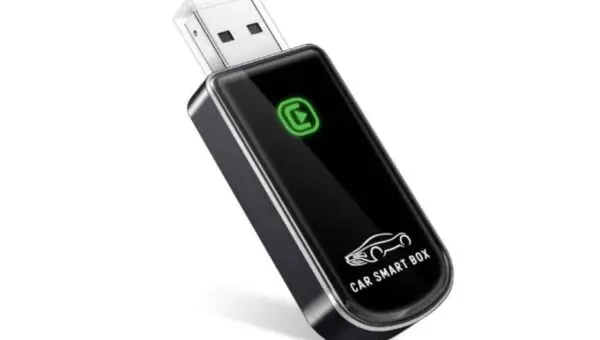 Amazon’s wireless CarPlay adapter has a 50% discount and high approval ratings from drivers
 Zach Cregger’s new Resident Evil ignores games and focuses on an unprecedented story with new characters
 Rumor suggests that Nintendo is preparing a special edition of the Switch 2 with a remake of Ocarina of Time
 Apple accelerates production of the iPhone 17e and develops new Air model with dual camera system
 Epic Games platform releases twelve high-budget games at no permanent cost for PC users
 PlayStation 5 Pro price drop accelerates digital retail sales and eliminates global stocks
 New Galaxy Watch 9 firmware appears on server and confirms progress in software development
 Apple’s commemorative project tests cell phone with 1.1 millimeter edge and curved screen for 2027
 New Apple system update optimizes urgent task management for iPhone users
 Leak details hardware of the new portable PlayStation with superior graphics to the Xbox Series S
More news on Mix Vale
- 1Colby Minifie confirms Ashley Barrett’s powers in The Boys season five
- 2Napoli x Milan in Serie A with confirmed lineups and where to watch live
- 3New battery test puts Galaxy S26 Ultra ahead of iPhone 17 Pro Max in global ranking
- 4Research reveals that parents are unaware of how their children use artificial intelligence
- 5Oppo officially launches the Find X9 Ultra worldwide with Hasselblad lenses and robust battery
- 6Tim Cook reveals new iPhone and iPod prototypes in celebration of Apple’s fiftieth anniversary
- 7New edition of foldable smartphone brings gold finish to Winter Games competitors
- 8Android system receives native Gemini Nano 4 integration for offline processing on smartphones
- 9Samsung updates QuickStar module and expands visual control of the panel in the One UI 8.5 interface
- 10Leak reveals Lords of the Fallen and Sword Art Online in April’s PS Plus Essential catalog