

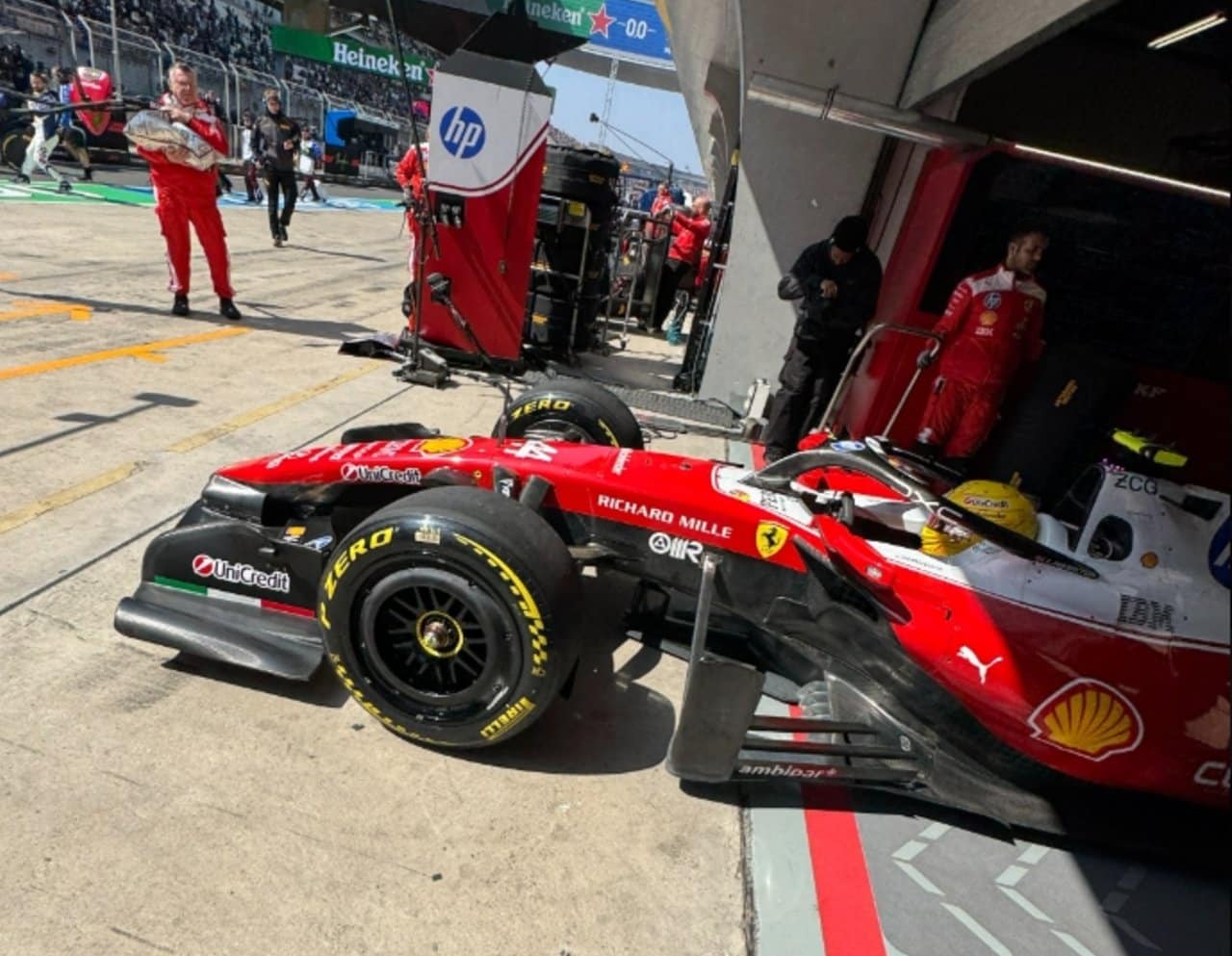
British driver Lewis Hamilton reached an unprecedented milestone in his career in motorsport by recording his first official podium defending the colors of Scuderia Ferrari. The impressive result occurred during the Grande Prêmio of China, held in the Circuito Internacional of Xangai, where the seven-time world champion demonstrated quick adaptation to the new equipment. The race marked a turning point for the Italian team in the current season of the highest category of motor sport, highlighting the potential of the new mechanical package.
The transition to the Maranello team generated wide expectations on the international sporting scene, and the performance on the Asian track validated the strategies adopted during the pre-season testing. The driver crossed the finish line in third place, overcoming direct opponents and consolidating the competitive pace of the red single-seater in real racing conditions.
- The Brit overtook his teammate, Charles Leclerc, in the final laps of the race after a direct battle for position.
- The race in Xangai marked the route’s return to the international calendar after a long period of absence from competitions.
- The result brings Ferrari closer to competing directly against the teams leading the constructors’ world championship.
After the race ended, the forty-one-year-old veteran expressed immediate satisfaction with the car’s dynamic behavior in high-speed corners. The athlete’s physical performance also caught the attention of experts present in the paddock of the Chinese circuit, reinforcing his ability to maintain a high level of driving.
Technical adaptation and synergy with the Italian team
The integration process between the British pilot and the Ferrari engineering body has been occurring at an accelerated pace since the first tests carried out at the beginning of the year. The main focus of the technical meetings involves calibrating the suspension system and engine response on low-speed corner exits.
The team leader, Fred Vasseur, implemented a specific schedule to optimize communication between the new hire and garage mechanics. Essa methodology aims to reduce response time during aerodynamic adjustments requested during free practice sessions.
During the Chinese stage, updates introduced to the car’s floor demonstrated efficiency in generating downward aerodynamic pressure. The gain in grip allowed considerably less wear on the tire compounds, a determining factor in the execution of the pit stop strategy.
The telemetry collected in Xangai will serve as the primary database for the development of the next parts of the European single-seater. Engineers plan to introduce a package of improvements focused strictly on reducing aerodynamic drag on the calendar’s high-speed straights.
Pilot physical preparation and training routine
The physical demands imposed by current cars in the category demand rigorous athletic conditioning, especially on circuits that generate high lateral force on the neck. The seven-time world champion reformulated his training routine during the European winter to withstand the extreme loads generated by braking.
The preparation program included daily cervical strengthening sessions and high-intensity cardiovascular exercise at high altitudes. The strictly controlled diet and continuous physiotherapeutic monitoring guarantee the maintenance of reflexes and muscular resistance during tests that last more than two hours.
Sports medicine experts point out that a driver’s competitive longevity is directly linked to his discipline outside the race track. The ability to maintain mental focus under extreme pressure remains one of the athlete’s main differences in relation to younger competitors on the grid.
Internal dynamics and collaboration in development
Daily coexistence at the Maranello facilities established a new standard of work for the Italian team’s research and development department. The vast experience accumulated by the Briton in rival teams provides unprecedented parameters for solving chronic chassis stability problems.
Working together with Charles Leclerc in the virtual simulator has accelerated the data correlation between the digital environment and the real asphalt track. The exchange of information about tire behavior in different temperature ranges optimizes the fine tuning of the cars before the start of each official stage.
Performance on the Xangai track and overtaking
The Circuito Internacional of The aerodynamic configuration chosen by the Italian team prioritized stability in heavy braking zones located at the end of maximum acceleration sections.
The maneuver that guaranteed the place on the podium occurred when approaching the final hairpin of the circuit, demonstrating the superiority of the braking system of the red single-seater. The pilot used the movable wing activation zone strategically to consolidate the position without compromising the tangency of the ideal route for the following lap.
Evolution of aerodynamic design and state-of-the-art simulators
Ferrari’s massive investment in updating its simulation infrastructure directly reflects on the results obtained in the first stages of the world motorsport championship. The new virtual correlation equipment allows drivers to test hundreds of suspension settings and engine mapping in a highly controlled environment, reducing the need for costly on-track practical testing. The mathematical precision of the algorithms developed by the Italian team’s software engineers ensures that the car’s reactions in the simulator are practically identical to the vehicle’s behavior on real asphalt, providing a significant tactical advantage in preparing for race weekends with different formats and limited free practice time.
The integration of information collected by the British driver with data generated by sensors installed on the car’s floor creates a continuous and highly efficient development cycle within the factory. Updates scheduled for the European phase of the calendar include structural modifications to the side fins and a complete redesign of the rear diffuser, aimed at maximizing airflow under the single-seater in medium-speed corners. The aerodynamics department works around the clock to bring forward the production of carbon fiber parts, ensuring that the upgrade package is available for both team cars in the next decisive rounds of the constructors’ championship.
Impact on the constructors’ championship and strategic planning
The significant score achieved in the Asian circuit substantially changes the dynamics of the constructors’ world championship table, placing the Maranello team in a position of direct attack on the current leaders of the international competition. The strategic planning outlined by the team’s management foresees an aggressive allocation of financial resources for the development of the current chassis, without compromising the budget allocated to the vehicle project for the next racing season. The ability to manage the spending ceiling imposed by the category’s financial regulations becomes a crucial factor in maintaining long-term competitiveness, requiring unprecedented operational efficiency from the manufacturing and logistics department. The technical feedback provided by the seven-time world champion acts as an essential filter in this internal process, directing engineering efforts only to those areas of the car that offer the greatest potential for time gains per timed lap. The team’s organizational structure was subtly readjusted to streamline the flow of information between the track and the factory, eliminating bureaucratic bottlenecks that historically delayed the implementation of new mechanical solutions during the season. The absolute focus on the reliability of the power unit components also receives priority attention from mechanics, ensuring that the gains in aerodynamic performance are not canceled out by technical failures during long-term races. The combination of operational excellence, high-level driving and continuous technological development lays the solid foundation for a robust campaign throughout the competition year.
Next stages of the international calendar
The competition schedule continues to the European phase, where the characteristics of traditional racetracks will require new adaptations to the aerodynamic package of single-seaters. The technical team focuses its efforts on analyzing the data recently collected at Ásia to ensure the maintenance of the competitive pace in the next competitions on European soil.