

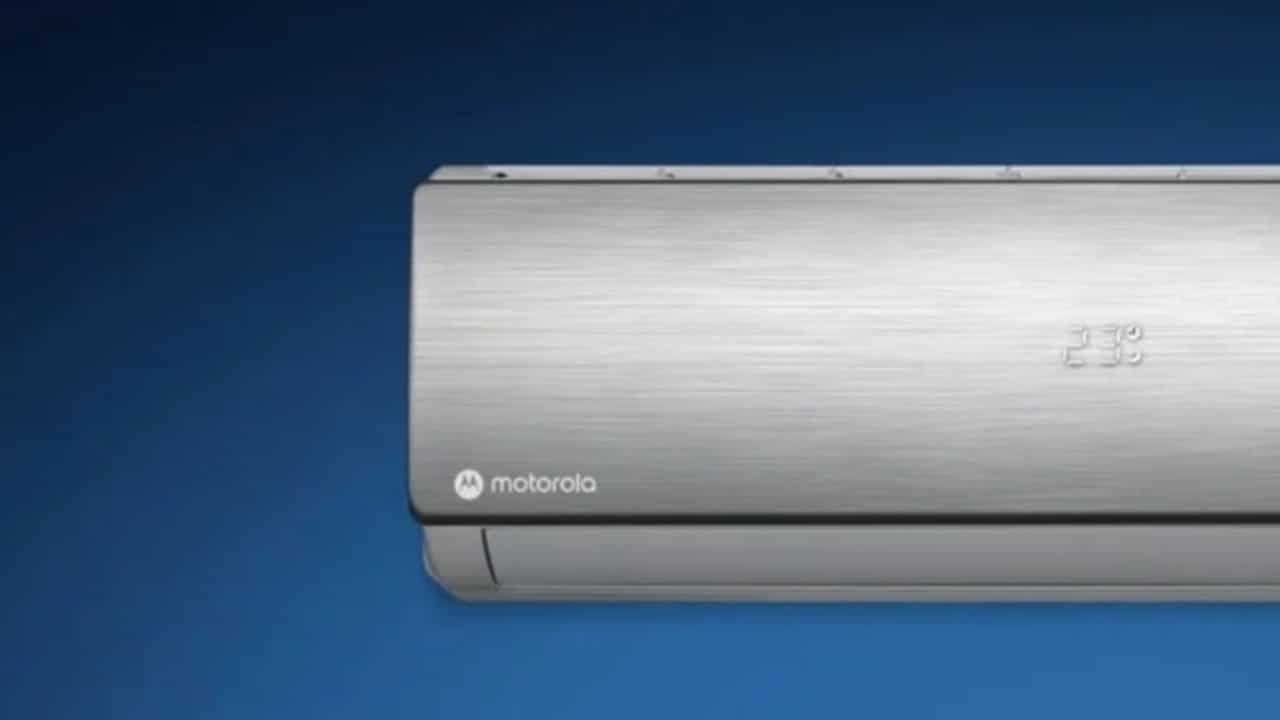
The technology manufacturer expanded its product portfolio with the launch of a new line of split-type air conditioners, focused on home automation and high efficiency. The equipment initially arrives on the Asian market, marking a significant step in the consolidation of the brand’s Internet ecosystem. The development of the device prioritized the integration of advanced remote control features, climate adaptation sensors and air purification, meeting a growing demand for home devices that offer more than just basic air conditioning.
Expansion strategy in the home appliance market
Entering this segment reflects a change in the global positioning of telecommunications companies, which seek to diversify their sources of revenue through the connected home. The launch takes place in a strategic partnership with large e-commerce platforms, ensuring widespread and direct distribution to the end consumer.
To attract the public, the commercial strategy includes offering free installation, eliminating one of the main frictions when purchasing air conditioning equipment. Initial values start at approximately R$1,650 in direct conversion, positioning the product competitively compared to traditional brands in the refrigeration sector.
The focus on emerging markets demonstrates the intention to democratize access to cutting-edge technologies, offering premium specifications at more accessible price ranges. The availability of different thermal capacities allows the line to serve everything from small bedrooms to large corporate living rooms.
Retail experts point out that selling exclusively through digital channels reduces logistical operational costs. Essa margin saved is often passed on to the customer in the form of additional software features and high-durability hardware.
Minimalist design integrated into modern environments
The aesthetics of the new equipment were designed to minimize the visual impact on the walls of homes, adopting soft lines and finishes in neutral tones. One of the visual highlights is the absence of visible digital panels when the device is turned off, maintaining absolute discretion in the environment.
The LED display remains hidden under the front structure, only lighting up during operation or when the user makes any changes to the temperature settings. Essa design approach meets the requirements of architects and decorators looking for appliances that harmoniously match different styles of residential interiors.
Cooling technology and energy efficiency
The operational core of the system is based on dual rotary compressor technology, designed to maintain refrigeration performance even in extreme weather conditions. Testes engineering studies indicate that the equipment can stabilize the internal temperature even when external thermometers register peaks of up to 55°C.
The internal construction uses coils manufactured entirely from copper, a material widely recognized for its superior thermal conductivity and long-term corrosion resistance. Essa manufacturing choice extends the useful life of the device and significantly reduces the need for corrective maintenance caused by gas leaks.
Airflow is managed by a four-way oscillation system, ensuring that the cool breeze reaches every corner of the room evenly and constantly. The intelligent distribution prevents the formation of isolated heat zones and provides faster and more efficient thermal comfort for the occupants of the space.
Advanced purification and indoor air quality
In addition to thermal regulation, the device actively improves the quality of air circulating indoors, a growing public health concern in large urban centers. The multiple filtration system incorporates a high-efficiency layer combined with silver ions, creating a physical and chemical barrier against microorganisms and suspended particles. Essa technology can capture fine dust, pollen and other common allergens, inactivating bacteria and preventing the growth of mold inside the ventilation machine.
To maintain the efficiency of this filtration over time, the manufacturer implemented a fully automated self-cleaning mechanism. When activating this function, the device performs a rigorous thermal cycle that freezes and subsequently evaporates the moisture accumulated in the internal unit, removing microscopic debris and unwanted odors. The process ensures that the expelled air remains clean daily and reduces the frequency required for the owner to manually wash the filters.
Artificial intelligence sensors and usage adaptation
The true innovation of the device lies in its data processing capacity through artificial intelligence algorithms embedded directly on the main board. The system continuously monitors residents’ usage patterns, crossing this information with variations in temperature and humidity in the external and internal environment in real time. Based on this continuous machine learning, the air conditioning automatically adjusts the compressor speed and air flow intensity, optimizing electrical energy consumption without compromising the thermal comfort of the location. The technological resource known as five-in-one convertible mode allows the equipment to operate at different fractions of its total refrigeration capacity, instantly adapting to the number of people present in the room or the thermal load generated by other devices. Essa operational flexibility means that equipment designed for high daytime demands can operate extremely economically and silently during the night, maximizing the energy efficiency rating and reducing the final value of the electricity bill.
Advanced connectivity and voice command control
All functions are managed centrally via the brand’s proprietary application, compatible with dual-band wireless networks. Native integration with the main virtual assistants on the market allows users to change the temperature, change operating modes or turn off the device using just simple vocal commands, completely eliminating the need to search for the physical remote control around the house.
Geo-location-based automation
The geofencing functionality represents a technical advancement in the convenience of home automation offered by air conditioning systems. Utilizando the GPS data from the user’s smartphone, the software can accurately detect when the resident is approaching their home address.
When crossing a pre-established virtual perimeter on the application map, the air conditioning starts its refrigeration cycle automatically, ensuring that the room is already at the ideal temperature at the exact moment the person opens the door. Da In the same intelligent way, the system identifies the absence of movement and turns off units that may have been left on when the last occupant leaves the property.
Capacities scaled for different needs
The line has been industrially structured to cover a wide range of square footage, offering models ranging from 12,000 to 24,000 BTUs of rated power. Essa Catalog diversity ensures that consumers can correctly size the equipment for their specific spaces, avoiding undersizing that causes excessive wear on the motor or oversizing that wastes electrical energy without real need.



