ALMA telescope detects record level of methanol in interstellar comet 3I/ATLAS during passage
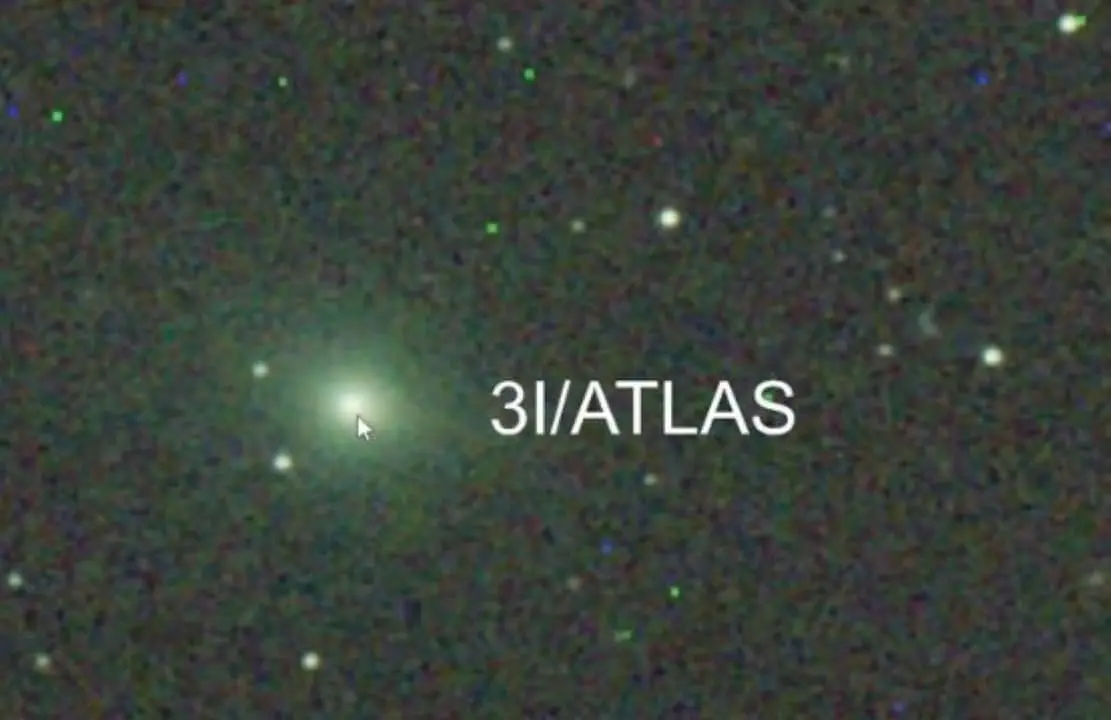
The team of astronomers led by researchers at American University identified the highest concentration of methanol ever recorded in the interstellar comet 3I/ATLAS. The observation took place in the desert of Atacama, in Chile, using the precision of the ALMA radio telescope. The monitoring took place during the closest approach to the celestial body with Sol.
This celestial body represents the third visitor from outside our planetary system to have its interstellar origin confirmed by the scientific community. The detection of complex organic molecules in their gaseous structure provides a rare opportunity to examine the materials that make up other stellar systems spread across Via Láctea.
Data captured by ground- and space-based instruments form a puzzle about the diversity of planet-forming environments. The detailed results of this investigation were documented and published in the scientific journal The Astrophysical Journal Letters, establishing a new milestone in understanding the astrochemistry of wandering bodies that cross deep space.
Peculiar chemical signature of the celestial body
The spectroscopy measurements specifically focused on the presence of methanol and hydrogen cyanide, two molecules often found in the makeup of comets. Durante the most critical observation window, researchers recorded a methanol to hydrogen cyanide ratio that reached a level of 124 in mid-September, falling to 79 days later. Para to establish a comparison parameter, comets originating in our solar system have a historical average of approximately 26 times this same proportion. Esses absolute numbers place 3I/ATLAS in an extremely methanol-rich category, surpassing previous astronomical records and demonstrating that the cloud of gas and dust around its core has a very specific molecular signature.
The discrepancy in the amount of these organic substances strongly indicates that the material was synthesized in a stellar environment with thermodynamic and chemical conditions different from those that formed Terra and its neighbors. Observações Preliminaries conducted by Telescópio Espacial James Webb had already revealed a coma abundant in carbon dioxide while the body was still further away from the solar heat. The subsequent confirmation of high methanol rates by ALMA consolidates the thesis that 3I/ATLAS carries with it the traces of a unique chemical evolution. The abundant presence of carbon and oxygen available for the formation of organic ices acts as a kind of fingerprint of primordial stellar systems.
Dynamics of gas release in space
The high resolution provided by ALMA’s antennas made it possible to precisely map the origin of gaseous emissions in the comet’s structure. The data revealed that hydrogen cyanide flows directly and almost exclusively from the central solid core.
This centralized sublimation feature resembles processes documented in traditional comets that orbit our star. Methanol, on the other hand, had a much more complex release mechanism distributed throughout the coma.
The molecules of this organic alcohol emanate both from the outgassing of the main core and from the evaporation of tiny ice particles that float around the central body. Essa dual source production creates an extensive and dense cloud of organic material that follows the trajectory of the interstellar visitor.
These detached ice particles function in practice as independent mini-comets by absorbing thermal radiation from the Sol. Progressive heating causes rapid disintegration of these smaller fractions, releasing massive volumes of methanol into the surrounding space and representing an unprecedented technical feat for current radio astronomy.
High precision observation equipment
The ALMA complex, installed more than five thousand meters above sea level in the Chilean Andes, operates in the millimeter and submillimeter wave range. Essa technological capacity is essential to recognize the frequencies emitted by cold molecules in the vacuum of space. Sem the sensitivity of this set of dozens of synchronized antennas, the exact identification of the origin of the methanol in the coma would be scientifically unfeasible.
Leia Também



3I/ATLAS research did not rely exclusively on terrestrial infrastructure. Telescópio Espacial Hubble and Observatório Japonês Subaru, located at Havaí, provided the initial coordinates and essential photometric data shortly after the object’s discovery. Essa global monitoring network made it possible to calculate the hyperbolic orbit that confirmed the interstellar nature of the celestial body.
Trajectory and characteristics of cosmic travelers
Modern astronomy ushered in a new era of direct studies of extrasolar material with the identification of the first interstellar visitor, 1I/Oumuamua, followed by comet 2I/Borisov years later. 3I/ATLAS is part of this emerging category of nomadic celestial bodies that travel through interstellar space for millions or billions of years before accidentally crossing Sol’s sphere of gravitational influence. Diferente of local asteroids and comets, which maintain closed and predictable orbits, these visitors describe open trajectories at very high speed, which means that their passage is a unique and unrepeatable event in the history of our system. The physical and chemical analysis of these travelers provides the only tangible opportunity to examine the solid matter formed around other stars without the need to send probes to impractical interstellar distances. Detailed scrutiny of the 3I/ATLAS coma reveals that although the laws of physics and chemistry are universal, the proportion of elements and freezing conditions vary drastically from one nebula to another. The presence of volatile organic compounds preserved in the core’s deep ice indicates that the object did not undergo extreme heating during its long journey through the galactic vacuum. Scientists use this information to calibrate theoretical models of exoplanet formation, seeking to understand whether the basic building blocks of life, such as carbon and water, are evenly distributed throughout the galaxy. The comet’s escape velocity guarantees that it is already in the phase of definitive separation, taking with it the secrets of its parent star and leaving a vast set of data for future analysis.
Biological precursors in protoplanetary disks
Methanol is classified by astrochemists as an organic precursor molecule, essential for the synthesis of more complex biological compounds, such as amino acids. The discovery of large quantities of this substance in 3I/ATLAS indicates that its protoplanetary disk of origin was an environment extremely rich in carbon-based chemistry.
This finding broadens perspectives on the potential for habitability in distant planetary systems. Comets function as chemical time capsules, preserving the conditions of their genesis almost intact due to the very low temperatures of deep space.
By comparing the molecular signature of this visitor with the molecular clouds observed in Via Láctea, scientists are able to map the galactic compositional variation. Continued study of these chemical anomalies helps answer fundamental questions about the uniqueness or triviality of our own solar system in the context of the universe.
Heliocentric distance during monitoring
The radio telescope’s main measurements occurred while the celestial body was sailing at a heliocentric distance of between 2.6 and 1.7 astronomical units. Essa space window corresponds to the region located between the orbits of Marte and Júpiter, where solar radiation begins to significantly heat the frozen surfaces. The production of gases increased gradually and progressively as the distance from the star decreased, allowing accurate capture of spectrometric data.
Consolidation of spectrometric information
The final records of the monitoring mission consolidated vital information about the dynamics of the celestial body, pointing out that the proportion of methanol and hydrogen cyanide underwent substantial variations, marking its peak at the closest dates. Ficou also demonstrated that ice grains in the coma act as an active secondary source of methanol, while cyanide remains restricted to the nucleus.
This entire set of evidence reinforces the thesis that the object was formed in a stellar region with a very high concentration of primordial organic compounds. Compiling these data provides a solid foundation for future astronomical investigations into the chemical composition of planetary systems beyond our cosmic neighborhood.