

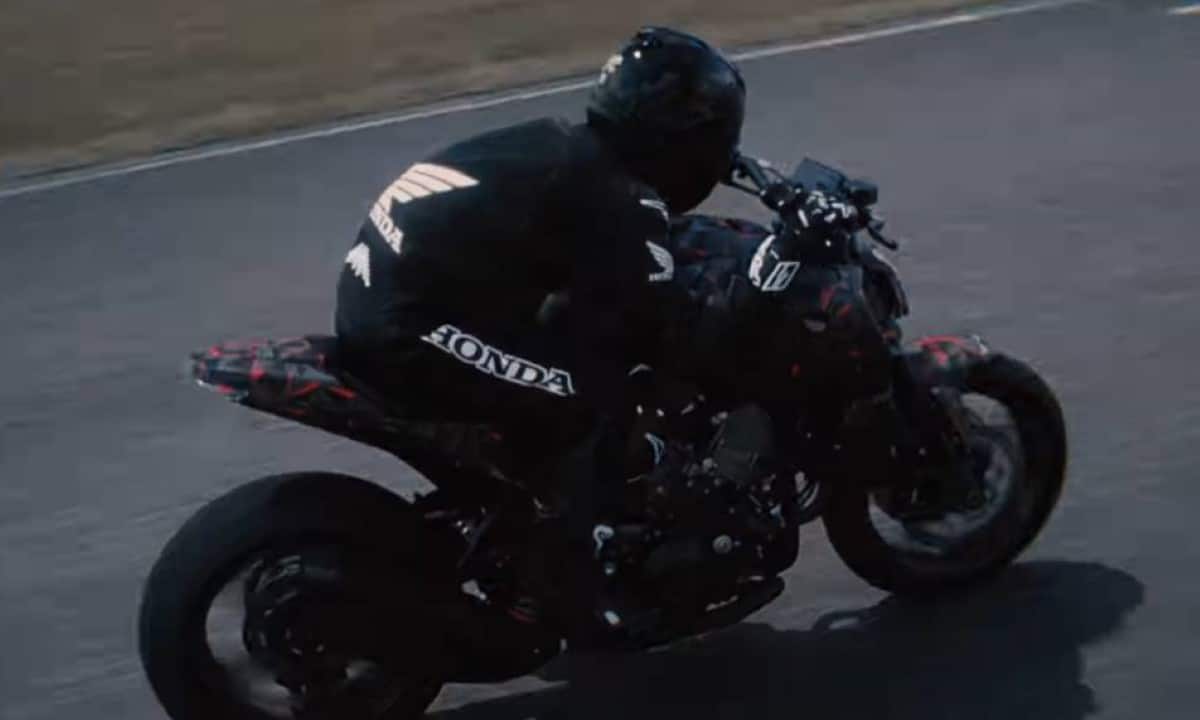
The two-wheeler industry is witnessing a significant transformation in its mechanical base with the recent display of a conceptual design at Salão of Motocicletas of Osaka, at Japão. The presentation introduces a propulsion system that changes the standards established for high-performance models, focusing on the union between high power and rigorous consumption control. The development centers on an unprecedented air induction structure, designed to operate autonomously in relation to the rotation of the main engine.
The equipment displayed on the Asian continent follows the first global appearance at the EICMA fair, at Itália, consolidating the manufacturer’s intention to take the technology to the assembly lines definitively. The mechanical architecture uses a 900-cylinder block that, through advanced electrical assistance, can deliver dynamic performance equivalent to that of 1200-cylinder engines. Reducing the physical volume of the engine allows for more efficient installation in the chassis, favoring ergonomics and the vehicle’s weight distribution.
The structural modifications aim to satisfy a demanding public that seeks quick responses on the accelerator without giving up stability at high speeds. The project encompasses innovations such as optimized thermal management, the elimination of the traditional intercooler and the adoption of an ultra-fast data processing center. The combination of these factors results in a machine capable of operating with maximum precision in varied asphalt and weather conditions, establishing a new level of engineering in the premium segment.
Engineering applied to the new three-cylinder engine
The heart of the design lies in a liquid-cooled V3 engine, positioned at an exact angle of 75 degrees. The definition of this specific geometry by the designers aims to optimize the internal space of the motorcycle frame, ensuring a more natural fit for the driver’s legs and lowering the center of gravity significantly when compared to traditional four-cylinder in-line engines. The compactness of the internal elements facilitates mass centralization, a determining factor in ensuring directional agility on winding highways and precision during evasive maneuvers or quick changes of trajectory.
The V-shaped configuration with three cylinders provides a natural cancellation of vibrations arising from the combustion process, eliminating the need for heavy balancing shafts that tend to steal power and add dead weight to the vehicle. The absence of these components helps to reduce the rotational inertia of the assembly, allowing the engine to rev up extremely easily. The mechanical format delivers an immediate response to the rider’s commands, maintaining the linearity in power delivery that is essential for the safe driving of high-displacement sports motorcycles, both in urban traffic and on closed competition circuits.
Independent forced induction mechanism
The introduction of an electric compressor represents a profound change in the way energy is generated and managed in two-wheeled vehicles. Diferente Unlike conventional mechanical supercharging systems, which steal kinetic energy directly from the crankshaft via belts or gears, the new device operates from a completely isolated electrical power source.
The operation is based on a very high-speed and reduced-dimension electric motor, capable of pressurizing the intake air in fractions of a second. The independence of this architecture allows the electronic control unit to activate the compressor strictly at times when there is a real demand for additional torque, avoiding wasted energy at constant cruising speeds.
The technology improves fuel efficiency on long journeys and provides an instant boost during critical overtaking or vigorous acceleration on straights. The integration of such a complex system requires exceptional data processing power from the electronic modules onboard the motorcycle.
Sensors evaluate vital parameters hundreds of times per second, monitoring throttle body opening, chassis tilt angle, wheel rotation speed and atmospheric pressure. The practical result is a flat and highly predictable torque curve, which provides safety to the driver even on surfaces with a low coefficient of friction, such as wet or debris-covered tracks.
Emissions control and thermal efficiency
The precision engineering applied to the intake system responds directly to the global need to produce motor vehicles with increasingly lower levels of pollution, without sacrificing the sporty driving experience. The use of electrical assistance to force air into the cylinders optimizes the stoichiometric mixture between oxygen and fuel inside the combustion chamber, resulting in a much cleaner and more complete burn. The procedure drastically reduces the emission of harmful gases into the atmosphere, especially during acceleration peaks, a time when conventional engines tend to have greater burning inefficiency. Especialistas from the automotive sector point out that this solution acts as an essential technological bridge between purely mechanical combustion engines and the future total electrification of fleets. The manufacturer focuses vast resources on improving the management software, ensuring that power delivery is progressive and that thermal efficiency is maximized in any rotation regime, consolidating a sustainable and high-performance mechanical base.
Aerodynamics and integration of electronic components
The motorcycle’s aesthetics were sculpted to reflect the high technology of its internal components, adopting aggressive lines and fairings developed after extensive sessions in wind tunnels. The shape of the fuel tank and the strategic location of the front air intakes play a vital role in cooling the high-voltage modules and maintaining directional stability at extreme speeds.
The design team worked in direct collaboration with fluid dynamics engineers to minimize aerodynamic drag, ensuring airflow surrounds the rider and dissipates heat generated by the electrical pressurization system. The instrumentation features high-resolution digital panels and headlights with LED matrix technology, offering superior nighttime visibility and real-time information on compressor status.
The technical innovations incorporated in the model encompass specific characteristics, such as:
– Atuação of the electric compressor completely independent of the crankshaft rotation.
– Arquitetura with three cylinders arranged in a V with an inclination of 75 degrees.
– Sistema high-capacity thermal management that eliminates the need for an intercooler.
– Módulos fast processing electronics focused on strict emissions control.
Practical tests in different track conditions
Professional test riders conduct daily evaluations to attest to suspension behavior, frame torsional rigidity and the accuracy of electronic responses in a wide variety of scenarios. Validation sessions range from congested traffic in large cities to high-speed highways and race tracks with technical layouts. The main objective is to refine the calibration of the electronic throttle, making the compressor start-up completely imperceptible in terms of mechanical jolts or jolts.
The ability to generate abundant torque at low speeds changes the driving dynamics substantially, requiring fewer gear changes from the driver during everyday use. Engineers pay special attention to calibrating the traction control, which works in sync with the electric compressor to modulate the force sent to the rear wheel. The system prevents sudden loss of grip on corner exits, ensuring that power transfer occurs in a safe and controlled manner.
Production and supply chain strategy
The transition from the conceptual prototype phase to large-scale commercial manufacturing requires the structuring of complex logistical processes and the formation of a highly specialized supplier network. The automaker establishes partnerships with global giants in the electronic technology sector to enable the mass production of compressors and their respective control modules. The focus of the industrial operation is to maintain manufacturing costs at levels viable for the consumer market, without compromising the durability and excellence in finishing that characterize superior category motorcycles. The brand’s strategic move attracts the attention of the competition and drives a new wave of technological renewal throughout the two-wheeled vehicle industry.



