

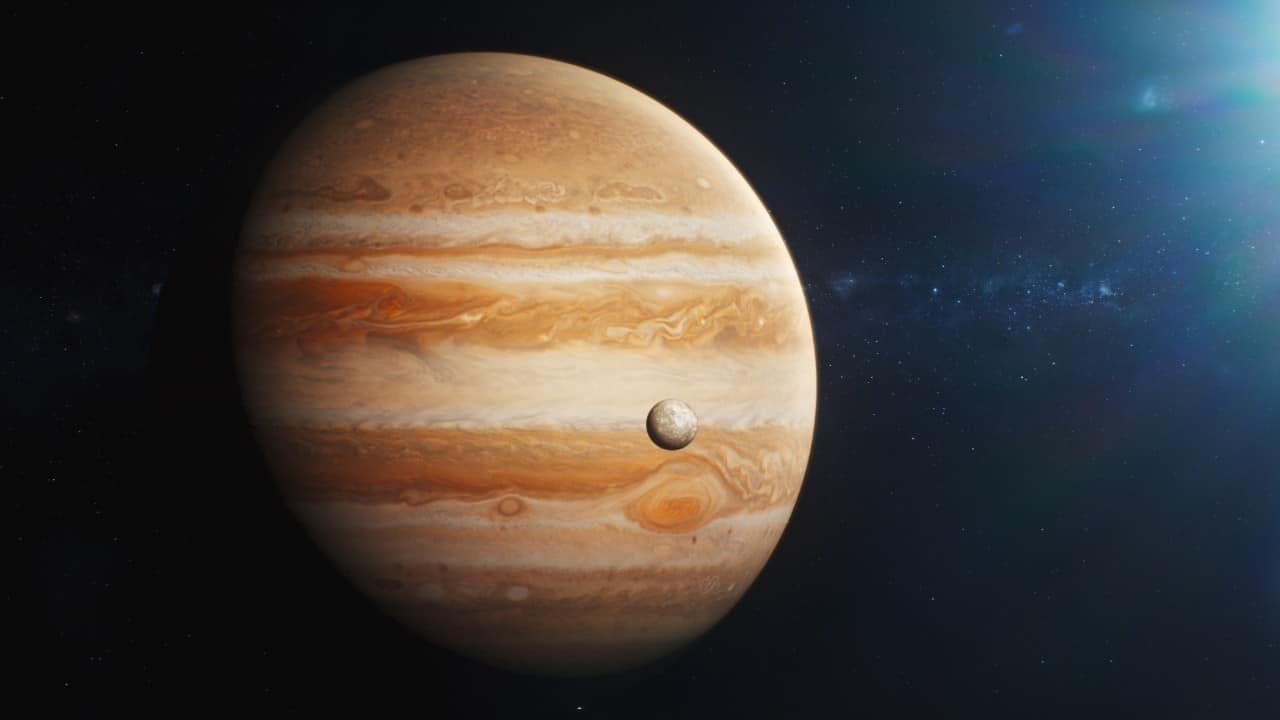
New research analyzed data from the Juno probe, from Nasa, and indicated that the rays in Júpiter may have significantly higher power than that observed in Terra. The study focused on radio emissions captured during close flybys of isolated storms on the planet. The results suggest that some Jovian electrical discharges release energy equivalent to at least 100 times that of typical Earth lightning, with the possibility of reaching even higher values depending on spectral comparisons.
Scientists have identified activity in four stealth superstorms occurring between 2021 and 2022 in the northern equatorial band of Júpiter. On Nessas occasions, the temporary absence of multiple simultaneous storms made it possible to precisely locate the origin of the detected pulses. The Juno probe recorded an average of three flashes per second during close passes, totaling 613 microwave pulses analyzed.
- The pulses ranged in power from levels similar to terrestrial lightning to more than 100 times greater.
- The measurements were carried out with the Juno microwave radiometer, an instrument capable of penetrating the planet’s dense clouds.
- Images from Telescópio Espacial Hubble and observations by amateur astronomers helped identify specific storms.
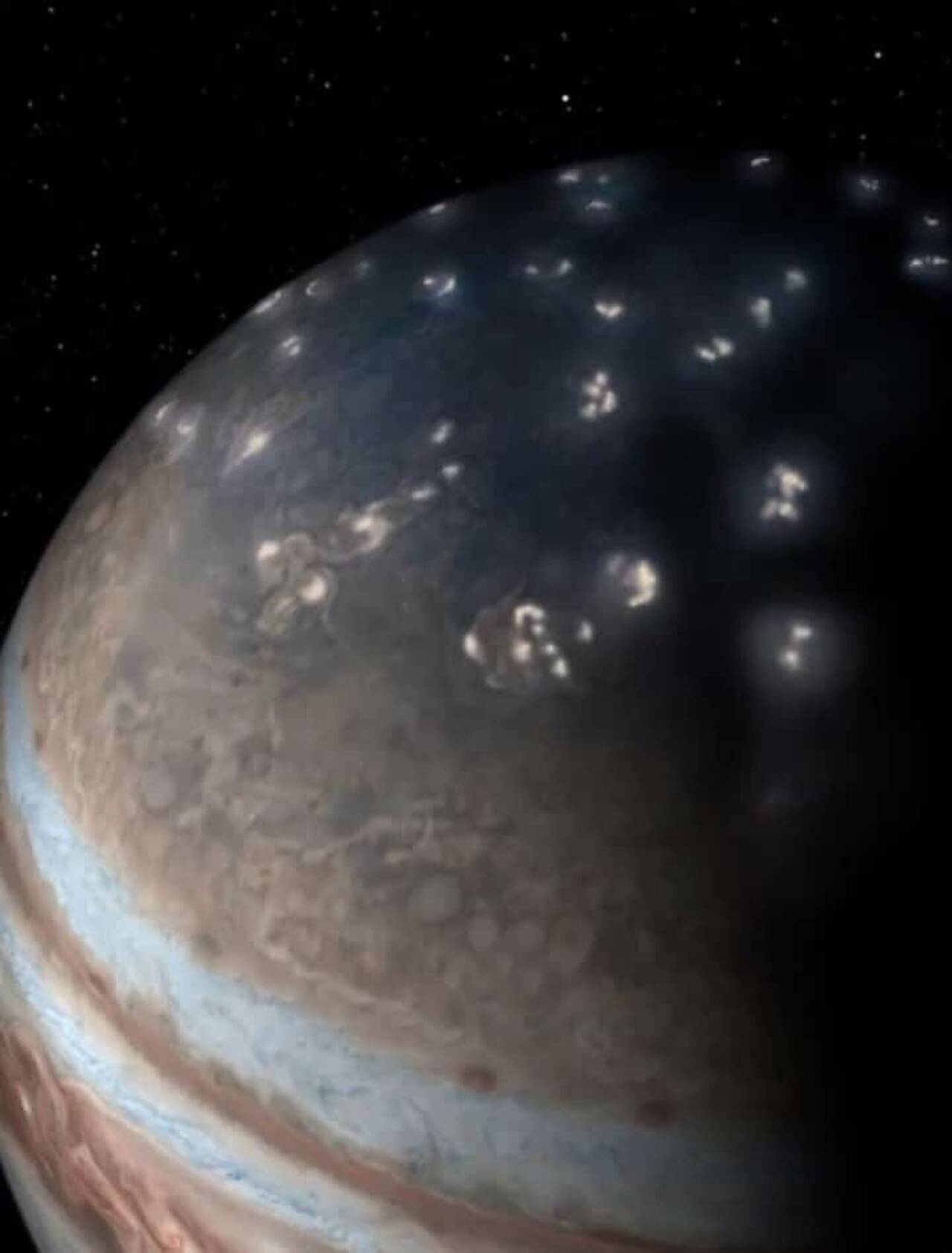
Stealth storms allowed accurate measurements
The researchers got around previous limitations of observations on the night side of the planet. Thick Nuvens often obscured visible flashes, making accurate estimates of released energy difficult. The use of radio emissions has overcome this barrier, as the waves pass through the atmospheric layers without significant interference from clouds.
Michael Wong, planetary scientist at Universidade at Califórnia in Essa condition occurred during a pause in convective activity in the northern equatorial band, allowing the team to directly associate the detected pulses with specific cloud structures. The stealthy superstorms featured cloud towers of modest height compared to other Jovian formations, but maintained prolonged activity for months.
Statistical analysis of the 613 pulses confirmed that the instrument captured both weaker and more intense events. Anteriormente, space missions mainly detected the most powerful lightning, which led to conclusions that Júpiter rays would be similar to terrestrial super lightning. The new data revealed a wider distribution of intensities.
Atmospheric differences explain greater intensity
The atmosphere of Júpiter is composed mainly of hydrogen, as opposed to the mixture of nitrogen and oxygen that predominates on Terra. Essa composition alters the humid convection process, responsible for the formation of storms and electrical discharges. On the giant planet, the humid air becomes heavier, requiring a greater accumulation of energy to rise and generate instability.
As a result, Jupiterian storms reach heights of more than 100 kilometers, compared to around 10 kilometers in terrestrial storms. Essa greater vertical distance contributes to the release of more intense energy when water vapor condenses into drops and ice crystals. The electrical charge mechanisms appear similar on both planets, but physical conditions amplify the final power of the discharges.
The researchers observed that convection in Júpiter transports heat from deep layers to the top of the atmosphere in a distinct way. Essa dynamics generate strong winds and intense lightning, striking characteristics of large storms that can persist for centuries on the planet. The study published in the journal AGU Advances brought contributions to better understand these processes.
Radio data overcomes limitations of optical imaging
The Juno microwave radiometer operated at a frequency of 600 MHz and recorded pulses as brightness temperature anomalies. Essa approach allowed measuring power directly at the source, reducing uncertainties associated with attenuation by clouds or distance. In some flybys, the probe passed close enough to record hundreds of pulses at short intervals.
Scientists compared Jupiterian emissions with terrestrial data obtained at different wavelengths. Dependendo of the spectral model adopted for extrapolation, the power of the rays in Júpiter can be equivalent to that of common discharges in Terra or exceed it by up to a million times. Essa wide range reflects uncertainties about the exact duration of the pulses and the distribution of energy at varying frequencies.
Despite the differences, regular detection of electrical activity reinforces that Júpiter exhibits vigorous convection in its deep atmosphere. Stealth superstorms served as natural laboratories for more precise testing, as their unique location prevented confusion between multiple simultaneous sources.
Activity concentrated in polar and equatorial regions
Previous observations from the Juno mission already indicated a greater occurrence of lightning near the planet’s poles. The new data complements this panorama by focusing on storms in the equatorial belt during periods of less general activity. The combination of instruments made it possible to map both the frequency and the distribution of intensities.
The detected flashes occurred at rates comparable to previous studies based on nighttime imaging. However, access to weaker pulses has expanded understanding of the diversity of electrical events. The superstorms analyzed lasted months, with cloud towers that did not reach the extreme heights of other gigantic formations.
This isolated configuration was key to associating each pulse with a specific storm. The researchers used maps of Hubble and records from amateur telescopes to confirm the exact positions during Juno’s passages.
Lightning generation process follows similar principles
The formation of rays in Júpiter involves the rise of water vapor that condenses at cold altitudes, generating electrically charged particles. Gotas liquids and ice crystals collide and separate, creating potential differences that result in discharges. Esse cycle appears analogous to the terrestrial one, but operates under different conditions of gravity, pressure and composition.
The team questioned whether the main difference would be in the atmosphere dominated by hydrogen or in the greater height of the storms, which increases the distances covered by the discharges. Outra hypothesis considers the greater accumulation of thermal energy necessary to initiate moist convection in the Jupiterian environment. Essas questions remain open for future investigation with additional data from the mission.
The study contributes to knowledge about giant planetary atmospheres and offers parallels that can help understand terrestrial phenomena that have not yet been fully explained. The Juno probe remains in operation and should provide more observation opportunities in subsequent flybys.
Comparisons between planets reveal extreme variations
Measurements indicated that the power of the pulses varied widely within each storm analyzed. Alguns events approached typical terrestrial values, while others exceeded them by orders of magnitude. Essa variability suggests that Júpiter hosts a full spectrum of electrical activity, not just the most extreme events.
The researchers emphasized that uncertainties in spectral comparisons still limit definitive conclusions about the upper limit. Novas analyzes with data in closer frequency bands between Terra and Júpiter may refine these calculations. Enquanto this, the results already expand the panorama of the diversity of storms in gaseous bodies in the solar system.
The Juno mission, in orbit since 2016, has provided the most detailed dataset to date on these phenomena. The microwave radiometer’s ability to detect emissions through clouds represented a significant advance over previous observations limited to the visible or infrared spectrum.



