What is gravity? Einstein’s theory incompatible with quantum drives new proposals
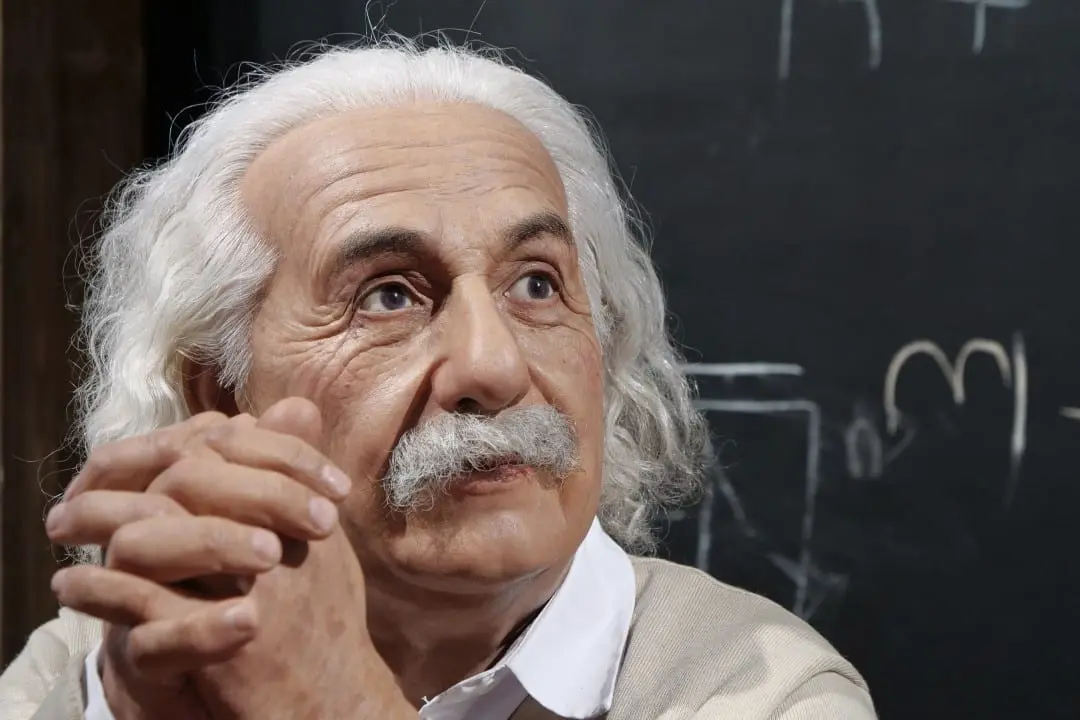
Gravity keeps objects attached to the Earth’s ground and causes celestial bodies to follow predictable trajectories in the universe. Cientistas have sought explanations for this phenomenon over the centuries, with Newtonian mechanics offering an initial description that worked for many observed cases. However, discrepancies emerged in precise observations, such as the perihelion shift of Mercúrio, that did not fit neatly into classical calculations.
Albert Einstein developed the theory of special relativity in 1905, establishing that the speed of light remains constant regardless of the observer’s movement. Essa approach changed fundamental concepts of time and space, treating them as an integrated set called space-time. Special relativity dealt with uniform motions, but left open questions for accelerations and gravitational fields.
- The equivalence between inertial mass and gravitational mass served as the basis for expanding the theory.
- Thought experiments with accelerating elevators helped visualize effects indistinguishable from gravity.
- The constancy of light influenced calculations about temporal dilation and length contraction.
Einstein published the theory of general relativity in 1915, describing gravity not as a force of attraction at a distance, but as the curvature of space-time caused by mass and energy. Massive Objetos deform this tissue, and other bodies follow geodesic paths, which appear curved from an external point of view. Essa vision resolved the anomalous precession of Mercúrio and predicted phenomena such as the deflection of light by gravitational fields.
Spacetime curvature and confirmed predictions
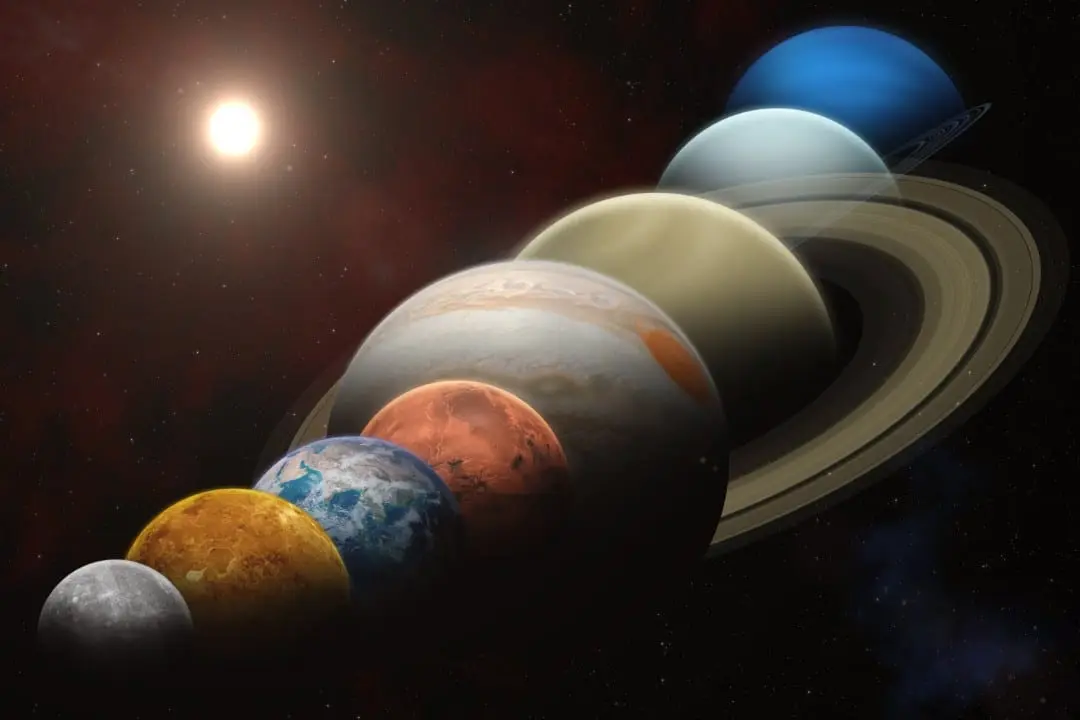
General relativity explains the movement of planets as a straight trajectory in a curved spacetime around Sol. Planetas do not fall directly towards the star because they follow the geometry altered by the solar mass, combining inertia with this curvature. Observações during solar eclipses confirmed the deviation of starlight when passing close to Sol, validating the Einstein equations.
The gravitational lensing effect occurs when galaxies or massive clusters distort the light from more distant objects, creating multiple or magnified images. Telescópios like James Webb capture these distortions in clusters like El Gordo, allowing us to study remote regions of the universe. Gravitational redshift lengthens the wavelength of light escaping strong fields, another phenomenon observed in stars and black holes.
More on this story: Scientists propose quantum gravity to explain birth of the universe
Equivalence and thought experiments in the theory of Einstein
Einstein used the equivalence principle to construct general relativity, noting that a person in free fall does not feel weight, similar to an environment without gravity. A worker falling from a roof inspired the realization that acceleration and gravity produce identical effects in small volumes. Essa idea allowed gravity to be treated as geometry instead of conventional force.
In an accelerated elevator in space, a laser beam would appear curved to an outside observer but straight to those inside. The same curvature arises in the presence of a real gravitational field. Essa indistinguishability reinforces that gravity arises from the structure of spacetime, not from a separate interaction.
Problems in unification with quantum mechanics
General relativity describes the universe well on large scales, but conflicts with quantum theory at the microscopic level. Quantum Flutuações create and destroy particles in a vacuum, generating infinities that cannot be easily renormalized in gravity, unlike other forces. Mass-curved spacetime interacts problematically with these constant variations.
On the same topic: Scientists at the University of Waterloo reveal quantum model of the exact origin of the Big Bang
See Also



Physicists try to quantize gravity to create a consistent theory across all scales. The idea of gravitons as particles that mediate gravitational force arises as an analogy to photons in electromagnetism. However, integrating the equations of general relativity with quantum rules remains an open challenge.
Modern approaches to quantum gravity
Superstring theory proposes that fundamental particles are tiny vibrating strings, naturally leading to a quantum description of gravity. Essa framework suggests extra dimensions and reproduces aspects of general relativity within appropriate limits. Pesquisadores explore how she deals with black holes and entropy.
Loop quantum gravity treats spacetime as discrete, with granular structure on the scale of Planck, with no need for additional dimensions. Laços or quantized loops form the basis of this quantum geometry, preserving invariances of general relativity. Essa approach avoids some background-dependent problems and focuses on directly quantizing spacetime.
Holographic hypothesis and gravity as an illusion
Holographic theory, derived from ideas in superstrings, suggests that information in a three-dimensional volume can be encoded on a two-dimensional surface. Nesse scenario, gravity emerges as an illusory effect of interactions in smaller dimensions. Buracos blacks serve as a theoretical laboratory, with entropy concentrated on the surface.
Learn more: Scientists propose new gravity to explain birth of the universe
Physicists debate whether the continuous spacetime of general relativity needs to be replaced by discrete or emergent concepts. Experimentos with gravitational waves and cosmological observations continue to test limits of these theories. The search for a unified description persists, combining observations of large structures with quantum principles.
Remaining challenges and theoretical perspectives
The cosmological constant introduced by Einstein for a static universe reappeared as dark energy, accelerating cosmic expansion. Essa component represents a large part of the total energy of the universe and highlights limitations in applying pure equations without adjustments. Modelos quantum scientists try to explain its origin.
Different quantum gravity proposals offer varying views on the fundamental nature of space and time. Algumas maintain four dimensions, while others introduce more complex structures. Compatibility with existing observations guides the refinement of these ideas.
The scientific community moves forward with simulations and data from detectors like LIGO, which capture gravitational waves from black hole mergers. Esses signals confirm predictions of general relativity in strong regimes. At the same time, theoretical efforts seek to resolve singularities and inconsistencies at extreme scales.