
German automaker makes official sports station wagon with racing engine for marathon on the Nürburgring circuit


The German manufacturer’s sports division confirmed the participation of a new vehicle in one of the most demanding endurance races in world motorsport. The model, a production station wagon adapted for the track, was developed over a period of eight months by specialized engineers and will make its official debut in mid-May. The decision to take the car to the route known for its high technical complexity occurred after an expressive response from the public in digital campaigns. The project uses the structural basis of the family version, but incorporates high-performance components inherited from vehicles in the international touring category. The automaker established a rigorous testing schedule to ensure the reliability of the mechanical assembly during twenty-four hours of continuous operation. Data collected in preliminary sessions indicates that the vehicle maintains the torsional rigidity necessary to withstand the extreme lateral forces of the circuit. The brand’s strategy involves validating new technologies in real competition conditions.
The development of the project mobilized significant resources from the competition division, requiring adaptations to the assembly line to accommodate the structural modifications. The technical team prioritized weight distribution and aerodynamic efficiency to compensate for the larger body dimensions.
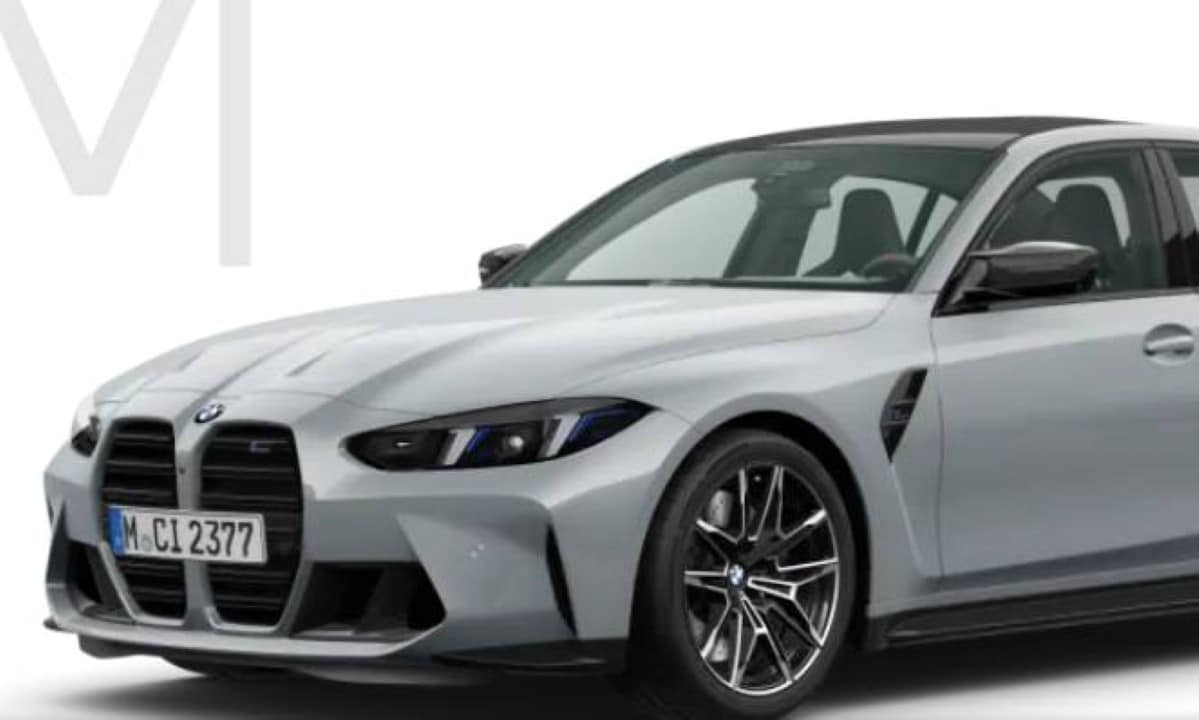
The technical specifications of the new model present notable differences in relation to the vehicle that served as the initial development platform:
– The overall length has been increased by 200 millimeters to accommodate the front and rear aerodynamic appendages.
– The height has increased by 32 millimeters due to the installation of a fixed high-pressure rear wing.
– The mechanical package preserves the exact power and torque figures of the original touring class race car.
– The suspension received specific calibration with resized shock absorbers to deal with the undulations of the German track.
Origin of the project on digital platforms
The concept of the competition vehicle began in an unusual way during the strategic planning of the sports division. At the beginning of the previous year, the manufacturer published rendered images of a racing station wagon as part of a marketing campaign aimed at April Fools’ Day, with no real intentions of scale production or sports homologation.
The publication generated immediate and massive engagement, surpassing the one and a half million views mark in just a few days. Diante of the quantitative response from the public and specialized media, the automaker’s management authorized the conversion of the advertising piece into an official sports program, integrating suggestions from followers into the car’s final design.
Structural adaptations for the German layout
The engineering applied to the vehicle focuses on optimizing airflow and reinforcing the chassis to withstand the demands of the Nürburgring circuit. The rear part of the body, originally designed to transport luggage, received additional tubular structures to increase the load on the rear axle and improve traction when exiting corners.
This modification brings the station wagon’s dynamic behavior closer to that of a pure rear-wheel drive racing car, guaranteeing stability on high-speed sections. The engineers responsible for vehicle dynamics reported that the agility of the package was not compromised compared to traditional coupe models in the same category.
The choice for a family body demonstrates the manufacturer’s technical capacity in adapting civilian platforms for high-performance motorsport. The vehicle underwent wind tunnel tests to validate the efficiency of the air extractors and rear diffuser, essential components for aerodynamic grip.
Track operation and pilot training
The logistical and technical operation during the race will be the responsibility of the Schubert Motorsport team, a structure with an extensive history of victories in long-term races. The team will be responsible for managing pit stops, fuel consumption and tire change strategy throughout the twenty-four hours of the race.
Control of the vehicle will be divided between four official drivers of the brand, selected for their previous experience on the more than twenty kilometer long route. The quartet includes the German Jens Klingmann, the Belgian Ugo from Wilde and the North American Conor De Phillippi, as well as a fourth member to be confirmed by the team organization.
Driver preparation involved extensive sessions in high-fidelity simulators before the first physical tests on the track. Familiarization with the car’s expanded dimensions and slightly higher center of gravity was the main focus of the initial training sessions held at the automaker’s development center.
The telemetry data collected during these virtual sessions was cross-referenced with information obtained in real tests to refine the suspension setup. Constant communication between drivers and data engineers allows for rapid adjustments to the stabilizer bar and downforce as weather conditions change.
Compound supply and adhesion
Japanese manufacturer Yokohama was appointed as the exclusive technical partner to supply tires for this specific project. The development of the compounds took into account the additional weight and peculiar mass distribution of the familiar bodywork, requiring a more robust carcass construction to avoid deformation under strong lateral support in the circuit’s high-speed corners.
Laboratory tests and practical evaluations were conducted to ensure that the rate of rubber wear remains constant and predictable throughout riding shifts. Tire consistency is a determining factor in endurance races, as it allows the team to extend the time the car spends on the track between refueling, optimizing the overall race strategy.
Six-cylinder engine specifications
The engine bay houses an in-line six-cylinder engine, a mechanical configuration that has characterized the manufacturer’s high-performance vehicles for several decades. Este powertrain has been extensively modified with forged internal components, resized cooling systems and electronic mapping focused on durability under continuous thermal stress. Non-stop operation for a full day poses severe challenges to lubrication and heat dissipation, especially considering the sudden variations in temperature and altitude that occur in the Eifel mountain region. The integration of this engine with the competition’s sequential transmission guarantees gear changes in milliseconds, minimizing loss of traction and maximizing final speed on the circuit’s long straights. Engineers implemented additional oil pressure and temperature monitoring sensors, allowing the team in the pits to anticipate possible mechanical failures and adjust the engine speed remotely, preserving the equipment until the checkered flag.
Sports classification and regulations
The vehicle was entered in the SPX category, intended for special models and prototypes that do not fall under strict global homologation regulations. Esta classification prevents direct competition for overall victory against cars in the main class, but provides the manufacturer with the technical freedom necessary to test innovative engineering solutions in a real competition environment.
Validation of components in preliminary tests
Before the main event in May, the development schedule calls for the car to participate in rounds of the local Nürburgring championship. Estas preparatory races, lasting four to six hours, serve as a practical laboratory to evaluate fuel consumption and the efficiency of the braking system in heavy traffic.
The presence of dozens of cars from different categories on the same track simulates the exact conditions that the team will face in the twenty-four hour marathon. Data collection in these preliminary tests is essential to define the safety parameters of natural wear components, such as brake pads and carbon discs.
Fluid dynamics and refrigeration
The vehicle’s frontal architecture has been redesigned to maximize cold air capture, directing the flow directly to the main radiators and front brake ventilation ducts. The enlarged front grille works in conjunction with extractors positioned on the hood, creating a low pressure zone that accelerates the exit of hot air from the engine compartment, maintaining operating temperatures within the safety margin established by the designers.
In addition to engine cooling, the system manages the temperature of the gearbox and rear differential through independent heat exchangers. Thermal efficiency is a critical requirement on the German track, where full-throttle sections subject fluids to extreme temperatures. Continuous monitoring of these systems ensures the vehicle maintains peak performance without compromising the mechanical integrity of moving parts.
Expansion of automotive engineering
The execution of this project highlights a trend in the automotive industry to use motorsports as an accelerated development tool for technologies applicable in production vehicles. The solutions found to reinforce the station wagon’s body without adding excessive weight can be transferred to future generations of the brand’s street cars.
The validation of composite materials and advanced welding techniques under the extreme conditions of the Nürburgring provides a valuable database for research and development departments. The exchange of information between the racing division and the commercial assembly line optimizes large-scale manufacturing processes.
Jeronimo Santos é colaborador da redação do Mix Vale, portal de notícias com cobertura de Brasil e mundo. Produz conteúdo nas editorias de economia e benefícios, com foco em informação de serviço para o leitor brasileiro. Escreve para o portal desde 2016: Formação: Marketing



