
Hamilton criticizes drivers’ lack of participation in decisions about Formula 1 rules

Recent discussions about Fórmula 1’s technical future gained a new chapter following blunt statements from seven-time world champion Lewis Hamilton during Japão’s Grande Prêmio weekend. The British driver publicly expressed his frustration with Federação Internacional’s decision-making structure. Automobilismo (FIA), emphasizing that the protagonists of the show have minimal influence on regulatory changes. Segundo the competitor of Ferrari for 2025, the current system prevents those who operate cars at extreme speeds from having direct participation or voting power in the commissions that define the direction of the sport.
The internal organization of the highest category of motorsport concentrates power in committees made up of team representatives, holders of commercial rights and federation directors. Hamilton pointed out that, although there are occasional dialogues, the absence of a formal seat with voting rights makes the pilots’ wishes merely consultative and, often, ignored. The veteran believes that this disconnect between those who decide and those who execute can compromise the balanced development of the sport, especially in moments of significant technological transition.
Security risks and technical discrepancies in Suzuka
The debate on revising the rules became urgent after serious incidents recorded on the Suzuka circuit, which exposed flaws in energy management and competitor safety. One of the most alarming episodes involved Oliver Bearman, Haas, and Franco Colapinto, in a track situation that showed large differences in approach speed between the cars. The momentary performance disparity, caused by the electronic management of the power units, resulted in a high-energy accident that worried the Japanese paddock.
The dynamics of the crash were detailed by engineers and team managers, revealing the magnitude of the impact suffered by the British driver. Telemetry data and post-race analysis indicated critical points:
- Bearman’s car was approximately 50 km/h faster than Colapinto’s at the time of approach.
- The need for a sudden deviation led to the loss of total control of the single-seater on a high-speed section.
- The impact sensor registered a deceleration of 50G at the moment of collision against the protective barrier.
- The team leader Haas, Ayao Komatsu, confirmed that the difference in speed was the determining factor in the severity of the incident.
Federação Internacional decisive meeting on engines
The FIA’s agenda foresees crucial meetings in the coming days, where immediate and future changes to power unit regulations will be discussed. The first of these meetings is scheduled for next Thursday, April 9, 2026, with the aim of evaluating the effectiveness of the energy recovery system and current safety standards. Apesar importance of the meeting, Hamilton’s pessimism echoes among other members of the grid, who fear that the political and financial interests of manufacturers will prevail over physical integrity and competitiveness.
The central focus of the technical discussions will be the adjustment in the delivery of torque and energy from the batteries, aiming to reduce extreme variations in speed on the straight. Muitos Engineers argue that the current system is too complex and creates dangerous situations when one car goes into recovery mode while the other is at full acceleration. The expectation is that new guidelines will be implemented to prevent accidents like the one seen in Japão from recurring on high-speed circuits.
Lack of internal democracy and political weight of the teams
The political structure of Fórmula 1 historically favors the big teams, which have greater lobbying power within Conselho Mundial of Automobilismo. Hamilton used the metaphor that there are many chefs in the same kitchen, which generally results in confusing or unproductive decisions for the sport as a whole. Ele reinforced that the desire for profound changes exists, but practical feasibility comes up against bureaucracy and the vote weight system that favors Federação and Formula One Management (FOM).


The discontent is not exclusive to the Mercedes pilot; Other competitors have already expressed, through Associação of Pilotos of Grande Prêmio (GPDA), the need for governance reform. Eles claim that safety should not be treated just as a technical item, but as a priority that requires validation from those inside the cockpit. Sem the right to vote, pilots feel that their careers and lives are shaped by individuals who analyze the category only through spreadsheets and simulators.
Perspectives for the regulatory future of the category
Although the current scenario seems stagnant in terms of representation, the public pressure exerted by names like Lewis Hamilton could force a gradual opening in institutional dialogue. The history of Fórmula 1 shows that major structural changes often occur after massive criticism or catastrophic events that force leaders to act more transparently. The drivers’ hope is that the April 9 meeting will not just be a bureaucratic formality, but the start of an honest review of how the sport is run.
The power units for the coming years are already in an advanced design phase, which makes any changes now a complex logistical and financial task for engine suppliers. However, the consensus among experts is that the integrity of athletes must be above the factories’ development schedule. Hamilton concluded his remarks by hoping that those responsible would have the courage to implement changes that would truly bring benefits to the show and guarantee a fairer and safer competition environment.
Technical evolution and the committee’s next steps
The next round of negotiations will be essential to define whether there will be adjustments to the energy control software for the current season. Analistas indicate that a quick solution could involve standardizing certain safety parameters that would limit the difference in speed between cars at different engine speeds. Essa measure, although unpopular among some technical directors, is seen as an essential step to avoid further high-impact crashes.
- Technical assessment of energy recovery systems (ERS).
- Proposals for new yellow flag protocols in cases of power failure.
- Discussion on the inclusion of a pilot representative with permanent advisory power.
- Review of minimum safe distances during full acceleration sections.
Determining factors for competitiveness on the track
The discussion about the regulations also touches on the quality of the races and the ease of overtaking, points that Hamilton has always defended as crucial to the public’s interest. Quando drivers lose their voice, the risk of the regulations making cars excessively dependent on aerodynamics and electronics increases considerably. The driver insists that technical simplicity often results in better competition, something that seems to have been lost in the sophistication of modern hybrid units.
The impact of Hamilton’s statements will be felt in behind-the-scenes conversations throughout the 2026 season. With his transfer to the Italian team on the horizon, his every position carries an even greater political weight, influencing not only public opinion, but also the stance of other teams. The future of governance in Fórmula 1 remains uncertain, but the debate about the democratization of decision-making power has never been more alive in the international paddock.
Veja Tambem em Fórmula 1

Esteban Ocon elogia Hamilton como o melhor piloto da era moderna antes do GP de Mônaco

Acosta conquista sexto lugar na MotoGP Itália e destaca aprendizado em duelos com Marc Márquez

Socorrista de Michael Schumacher revela detalhes inéditos sobre o resgate do piloto após 13 anos

Ralf Schumacher alerta George Russell sobre risco de posição de ‘segundo piloto’ na Mercedes após Canadá
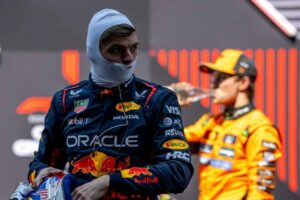
Max Verstappen projeta dificuldades no GP de Mônaco por problemas de suspensão da Red Bull

Chefe da McLaren, Andrea Stella corrobora previsão de Norris sobre domínio da Ferrari em Mônaco

Resgate de Michael Schumacher em 2013: piloto de helicóptero detalha missão nos Alpes franceses
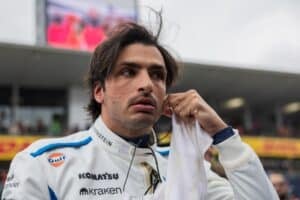
Carlos Sainz defende ação firme da FIA nas discussões sobre motores da Fórmula 1 para 2027

Kimi Antonelli lidera Fórmula 1 aos 19 anos e pai revela paixão natural por Ayrton Senna
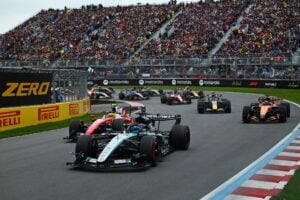
Fórmula 1 não terá modo reta no GP de Mônaco após decisão oficial emitida pela FIA

Pilotos da Formula 1 dividem atenção com Copa do Mundo e Kimi Antonelli revela torcida pelo Brasil
