The development of large productions in the electronic games industry often involves complex processes and profound restructuring over the years. Pearl Abyss’s action-adventure title has undergone a series of significant transformations since its original announcement, requiring a capacity for continuous adaptation from all professionals involved in its creation. Building the game’s universe required a prolonged effort from the design, programming and audio teams to align the technical vision with the narrative delivery.
Actor Alec Newman, responsible for providing the voice and interpretation of protagonist Kliff in the English localization, shared technical details about the unpredictability of recording sessions. The scope of the project was not definitively presented to the acting team during the initial stages of production. Essa Lack of a fixed narrative direction resulted in a workflow characterized by lulls followed by intense dubbing demands to keep up with updates to the game’s code.
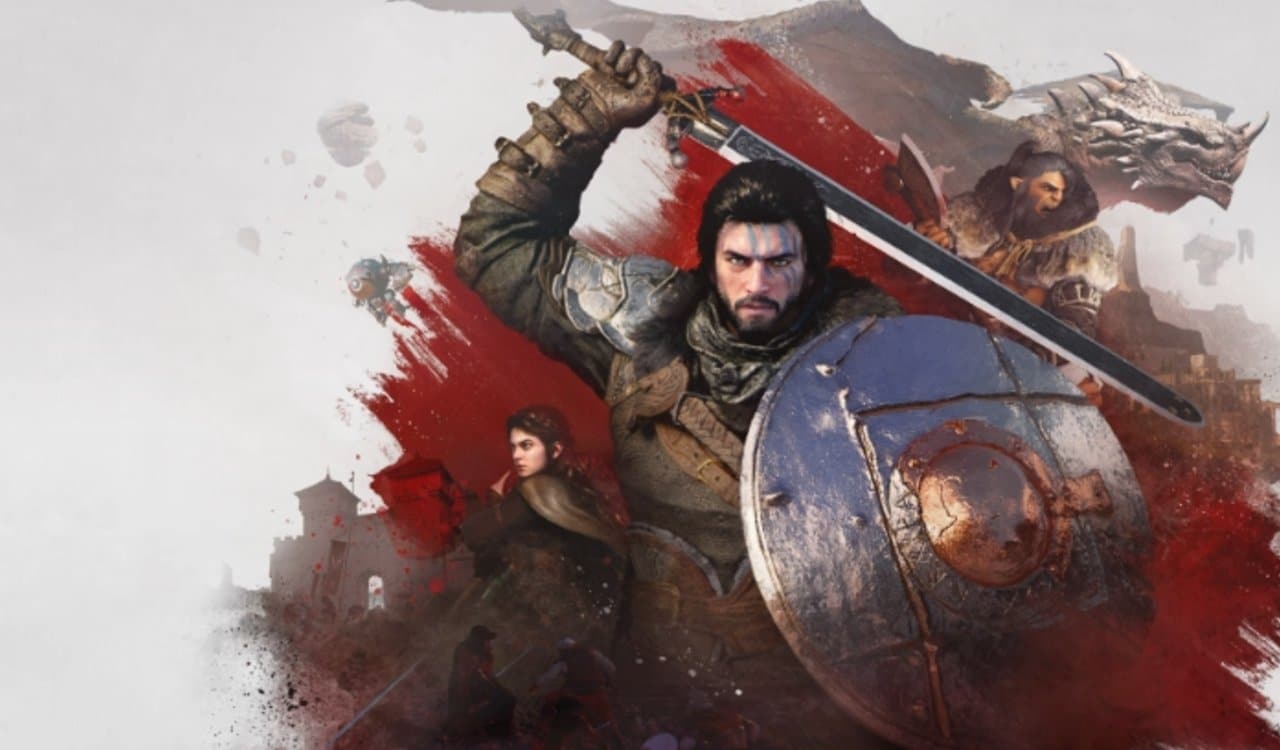
The work dynamics in audio studios were shaped by specific factors that changed the course of production over half a decade:
– The transition from the massive multiplayer format to a single-player focused experience.
– The fragmentation of the story into faction cards before consolidating a linear script.
– The cast’s initial belief that the work would only be intended as a technical demonstration.
– Changing the name and identity of the main character during the capture process.
These elements illustrate the behind-the-scenes of a high-budget project where experimentation dictates the pace of development. The voice acting team needed to maintain an unusual level of flexibility to ensure that the protagonist’s voice reflected the constant changes implemented in the design of the virtual world.
Format transition and impact on the South Korean studio’s production
Pearl Abyss initially conceived the project as an MMORPG, a genre in which the company already had a consolidated infrastructure and previous commercial success. However, internal design decisions redirected the development team’s focus to creating an exclusively single-player action experience. Essa Paradigm shift required a complete overhaul in the way the story would be presented to the public. Instead of relying on text boxes and generic missions spread across the map, the studio needed to invest in creating complex cinematic scenes and developing a strong central protagonist, which drastically altered the schedule and demands placed on the voice acting and motion capture team.
During this structural transition phase, the software engineering department prioritized optimizing a proprietary graphics engine capable of handling highly realistic physical interactions. The objective was to ensure that the environment reacted organically to the player’s actions, from the combat system to the destruction of scenarios. Consequentemente, the script department had to wait for technical milestones to be reached before finalizing the dialogues. Isso meant that actors often recorded their lines without knowing the full context of the scenes, basing their interpretations on fragmented information about the geography of the world and the political motivations of the factions involved in the conflict.
Adaptation of the cast to the protagonist’s changes in identity
The main character of the plot underwent fundamental changes during the extensive recording period in the audio studios. Nas preliminary versions of the script delivered to the actors, the protagonist went by the name MacDuff, a detail that highlights the fluidity of the creative process in the first years of production.
The narrative direction team later settled on the name Kliff, adjusting the warrior’s background and motivations to better fit the new solo campaign structure. Alec Newman needed to modulate his vocal performance to accompany these personality changes, ensuring that the character’s tone remained coherent despite constant revisions to the text.
During the first eighteen months of work in the recording studios, the actor operated under the premise that he was providing voice material solely for an in-house technical demonstration. The true scale of the epic adventure and the volume of dialogue required only became apparent to the cast at a much later stage in the production cycle.
Technical priority over traditional literary structure
The strategy adopted by South Korean developers placed gameplay mechanics and visual fidelity above a rigid and pre-established narrative line. The company’s CEO, Heo Jin-young, publicly acknowledged that the engineering team’s primary goal was to deliver revolutionary combat systems and deep interactivity with the virtual environment. By focusing heavily on emergent gameplay, where players’ actions dictate the flow of events rather than a strict script, writers were forced to continually adapt their work to fit the ever-evolving code. Essa development approach requires audio and storytelling teams to operate in a perpetual state of technical review and adjustment. Linhas dialogue are frequently rewritten and re-recorded to ensure they make sense within the latest iteration of the game’s physics and level design. The focus on complex artificial intelligence systems and the reaction of NPCs ended up taking up processing space and development time that, in traditional projects, would be intended for more linear literary polishing. Essa methodology creates a highly demanding work environment for voice actors, who need to deliver convincing performances even when the rules of the virtual world around them change from one week to the next.
Geographic adjustments in the vast landscape of Pywell
The fictional world of Pywell served as a huge testing ground for the level design and virtual architecture team. Territórios, cities and borders have been redesigned multiple times to accommodate new exploration and combat mechanics.
These geographic changes had a direct and immediate impact on the voice cast recording schedule. Sempre Once a region was modified or renamed in the game’s code, the corresponding dialogue referencing those locations needed to be updated and re-registered with the studios.
The initial narrative was distributed to the actors in the form of faction cards, providing only basic context about the political landscape rather than a cohesive central arc. Essa modular scripting technique allowed the development team to move story pieces around without breaking the game’s logic.
This fragmented approach required the cast to maintain a high level of professional versatility. Your characters’ loyalties, alliances, and goals could change drastically from one recording session to the next, depending on the needs of your mission design.
Contractual stability amid industry uncertainties
Despite the unpredictable nature of the script and constant re-recordings, the long development cycle provided an unusual level of job security for the voice cast. A five-year commitment to a single character is a rare occurrence in the video game industry, which generally operates on short contracts and one-off work.
This long-term involvement allowed Alec Newman to develop a deep technical understanding of Kliff’s intonation and personality. The consistency in vocal performance helped anchor the protagonist’s identity, providing a solid audio foundation while the visual and mechanical environment underwent the normal turbulence of a large-scale development.
Market reception and focus on high-performance gameplay
The title’s presentation to the global market sparked debates about the balance between narrative and mechanics in high-budget action games. The public and technical critics validated the studio’s investments by praising the fluidity of the combat animations and the graphic complexity of the scenarios. The choice to prioritize sensory aspects and control response proved to be an effective commercial strategy, even though the story creation process took place in a modular and irregular manner over the years.
Seamless balance between combat and immersion systems
The studio remains focused on refining the software, seeking to align the exploration experience with the delivery of new technical content. The ongoing priority is to ensure that combat situations and interaction with the game ecosystem occur organically, without sudden interruptions caused by programming errors.
The production trajectory of this title highlights how the evolution of graphics engines dictates the limits of narrative in contemporary interactive media. The joint effort of hundreds of programmers, designers and actors resulted in a product that reflects the relentless pursuit of mechanical innovation in digital entertainment.