Pressure on exams in Japan worsens isolation of students with neurodevelopmental disorders
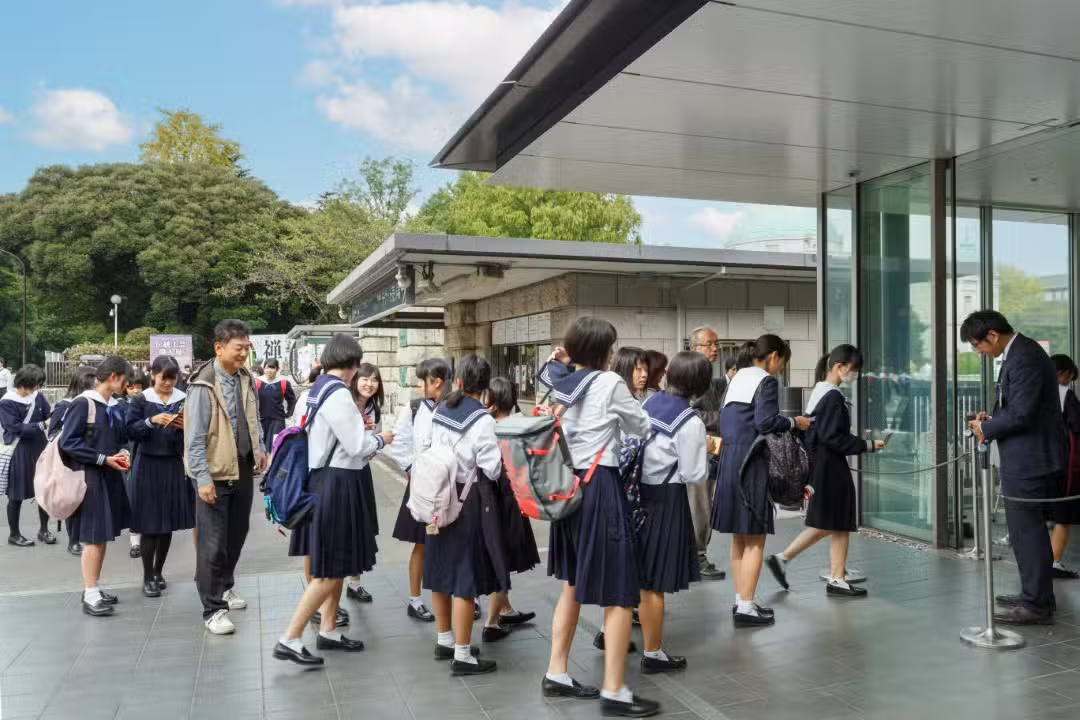
The strict Japanese education system imposes significant barriers for students with neurodevelopmental disorders during the school transition phase. Preparing for entrance exams requires an exhaustive workload of individual studies, which drastically reduces opportunities for social interaction. Especialistas in education point out that the absence of coexistence with peers directly affects the development of fundamental socio-emotional skills. Alunos with high cognitive abilities associated with the autism spectrum represent the most vulnerable group to this rigorous assessment model.
The preparation routine often involves enrolling in intensive courses, known locally as jukus, which extend the study day into the evening. Esse highly competitive environment focuses exclusively on academic performance and memorization of dense curricular content. Consequentemente, free time that should be allocated to recreational and sporting activities ends up being removed from the daily routine of teenagers. The lack of unstructured moments prevents these young people from practicing reading social situations in an organic and natural way.
Reports from families who experienced the selection process for elite institutions in Tóquio illustrate the complexity of the educational scenario. Após approval, many students continue to have severe difficulties in establishing friendships in the new school environment. Extreme dedication to books during the preparatory years creates a gap in the socialization experience that is not easily filled later. Chronic isolation becomes a striking feature in the school lives of these individuals, generating concerns among mental health professionals.
Difficulties in forming interpersonal bonds
Students with neurodivergent characteristics tend to seek refuge in solitary activities during breaks from regular classes. The preference for isolation arises from the intrinsic difficulty in processing multiple sensory and social information simultaneously in busy environments. The school yard, with its noise and unpredictable dynamics, becomes a space of overload instead of relaxation.
Research in the area of developmental psychology demonstrates that the systematic evasion of collective dynamics harms the assimilation of unwritten rules of coexistence. Learning these norms occurs primarily through observation and trial and error in free play situations. Sem During this exposure, the young person’s behavioral repertoire remains restricted and rigid.
Fine and gross motor coordination also poses an additional challenge for many of these young people during group physical activities. The inability to keep up with peers in sports or recreational games generates frustration and reinforces social avoidance behavior. The fear of failing publicly keeps students away from the courts and spaces for mutual coexistence.
Traditional pedagogical guidelines that suggest only natural exposure to the school environment prove to be ineffective for this student profile. The complexity of interactions in adolescence requires more targeted and structured interventions from teaching staff. Simply physically present in the same space as colleagues does not guarantee effective integration.
Risks associated with exclusion in the school environment
Continuous marginalization within the school environment substantially increases the likelihood of episodes of bullying and moral harassment. Colegas class members often interpret atypical behavior and voluntary isolation as signs of hostility or disinterest, which feeds the cycle of rejection. The lack of clear communication about neurological differences perpetuates stigmas that are harmful to peaceful coexistence.
The accumulation of negative experiences in daily life acts as a trigger for the development of serious psychiatric comorbidities. Quadros of chronic social anxiety and severe depression are diagnosed with increasing frequency among adolescents enrolled in educational institutions with a high degree of academic demands. The pressure for perfect grades, combined with loneliness, creates a psychologically unsustainable environment.
Family dynamics and the search for specialized support
Parents and guardians face daily dilemmas when trying to balance the demands of the educational system with the therapeutic needs of their children. The cultural pressure to pass into prestigious schools often overshadows the urgency of prioritizing psychological well-being and social integration. The decision to keep the student at a frenetic pace of studies generates internal conflicts in families.


The shortage of professionals trained to mediate conflicts and promote effective inclusion within private schools worsens families’ feelings of helplessness. The support offered by institutions tends to focus only on curricular adaptations, neglecting the relational sphere. Reuniões with pedagogical coordination rarely result in action plans aimed at socialization.
Many family support groups have mobilized to demand changes to admission and retention policies for neurodivergent students. The main demand involves the creation of safe spaces for socialization that work alongside the mandatory curriculum. The exchange of experiences between parents strengthens the network to combat the rigidities of the system.
Effects of the competitive model in adulthood
Deprivation of social experiences during the formative years of elementary and secondary school casts long shadows over these individuals’ adult lives. The transition to the job market requires a set of interpersonal skills, such as assertive communication and teamwork, that were not adequately stimulated during youth. Profissionais of human resources report that candidates with excellent academic records often fail in selection processes due to their inability to deal with complex corporate dynamics. The inability to read between the lines in negotiations or manage conflicts in the office becomes an insurmountable obstacle to professional career advancement.
The phenomenon of extreme social withdrawal, widely documented in Japanese society, finds deep roots in the inadequacy of the educational system in embracing neurological diversity. Jovens Adults who are unable to enter professionally or establish support networks tend to permanently isolate themselves in their homes. Prolonged dependence on family members and the lack of prospects for financial autonomy become public health issues that demand immediate government attention. The social cost of keeping an entire generation on the margins of productivity and community life raises alarms in various sectors of public administration.
Pedagogical strategies for harm mitigation
Neuropsychology experts advocate the implementation of early assessment protocols to identify support needs before the exam preparation cycle begins. The adoption of social skills training programs, led by occupational therapists and psychologists within the school environment, appears as a viable alternative to reversing the situation of isolation. Esses programs use simulations of everyday situations and role-playing games to teach students how to decode facial expressions, tone of voice, and body language. Além Furthermore, the continuous training of teachers is seen as a determining factor in creating a truly inclusive school culture. The teaching staff needs to be able to intervene constructively in moments of tension and mediate the formation of mixed study groups, ensuring that neurodivergent students are incorporated into the class dynamics in a respectful and productive way, without their academic performance being harmed by a lack of methodological adaptation.
Need to restructure the selection process
The review of admission criteria by secondary education institutions represents a fundamental step towards ensuring equity in access to quality education. The inclusion of interviews focused on the behavioral profile and the appreciation of extracurricular activities can reduce the exclusive weight of standardized written tests, allowing a more holistic assessment of the candidate’s capabilities.
Importance of continuous multidisciplinary monitoring
Maintaining a support network made up of doctors, therapists and educators ensures that interventions are adjusted as the adolescent matures. Constant monitoring allows you to quickly identify signs of mental exhaustion and redirect study strategies to preserve the student’s overall health.
Academic success loses its practical value when disconnected from the ability to interact and contribute to the community. Building an educational environment that celebrates neurodiversity requires the joint commitment of government authorities, school managers and civil society to formulate more humane guidelines.
Veja Tambem em Latest News (EN)

Atlético-MG confirms agreement with defender Léo Duarte after period of prominence in Turkish football

Tiger shark bites 19-year-old girl and rips off her leg in Boa Viagem, Recife

2026 World Cup will have 32 athletes who play in Brazilian football

OnePlus develops portable video game with Android system focused on competitive shooters

New BYD Seal 6 DM-i Touring hybrid station wagon debuts in Europe with ample interior space and super-efficient engine

Costco reaches historic volume in gasoline sales in the United States with prices below market

June PlayStation Plus Catalog Brings Grounded and Warhammer 40,000 Darktide to Subscribers

Disney+ brings Avatar Fire and Ash finale to The Bear and new Pixar animation in June

Netflix updates June catalog with new season of Avatar and classic cinema sagas

Geely Xingyuan electric compact gains 47 kWh battery and autonomous driving system in China

Episode 1156 of One Piece marks arrival at Elbaf with decisive actions by Shanks and Blackbeard