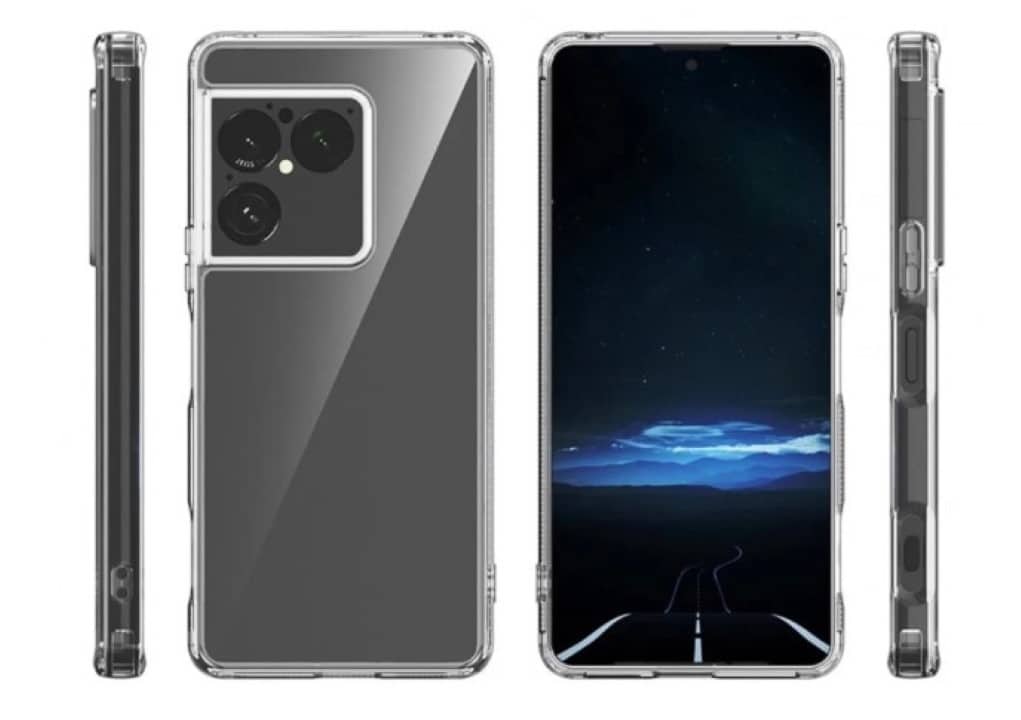
Recent images released by sources linked to the technology supply chain indicate a drastic change in the visual identity of the Japanese manufacturer’s next generation of high-performance smartphones. The device, which should succeed the brand’s current premium line, presents significant changes to its external structure, abandoning visual characteristics that have accompanied the series for years. The leaked renderings show a front panel with maximum screen usage and a completely redesigned rear photographic block, signaling the company’s attempt to attract new consumers and align with dominant aesthetic trends in the global mobile device market.
Break with the traditional visual identity of the premium line
Over the past few generations, the company has maintained a conservative approach to the design of its more expensive devices. The screen with a cinematic aspect ratio has always been accompanied by visible top and bottom edges, specifically designed to house the front camera and stereo speakers without resorting to cutouts in the display.
Sony Xperia 1 VIIIからインスピレーションを得たようです 😅pic.twitter.com/h3MbxJc92K
— テック・アルティメイタム (@TechieUltimatum)2026年4月2日
Industry experts point out that this insistence on an exclusive format pleased content creators and technology purists, but limited the product’s appeal among the general public. The new structure leaked on the internet suggests that the company decided to give in to market pressure, adopting a look closer to that of its main direct competitors.
Changes of this magnitude tend to generate intense debates in specialized forums and networks. Consumidores brand loyalists express concern about the possible loss of resources aimed at audiovisual professionals, while market analysts see the change as a necessary step to guarantee the survival of the Japanese giant’s mobile phone division.
New format of the rear photographic module
The detail that draws the most attention in the unofficial images is the transition from the classic vertical lens arrangement to a square-shaped block. Historicamente, the manufacturer used a pill-shaped module positioned in the top left corner, a design feature that made its devices immediately recognizable from a distance.
The adoption of a wider square housing indicates the possible integration of larger image sensors and improved optical stabilization systems. Engenheiros of hardware evaluate that this new internal arrangement facilitates the distribution of complex components, such as periscopic lenses for long-range optical zoom and advanced depth sensors.
Front utilization and screen technology
On the front, the device displays a panel that extends to the physical limits of the metal casing. The elimination of traditional edges raises technical questions about the positioning of the selfie camera and light sensors.
Assembly industry sources suggest that the manufacturer may have adopted under-screen camera technology, a feature that hides the lens behind the display’s pixels when not in use. Outra A viable technical possibility would be to use a tiny, centralized hole, a standard widely used by current competitors.
The display must maintain very high resolution and a variable refresh rate, features that have become standard in the luxury category. Color calibration aimed at cinema standards will continue to be one of the device’s main selling points for specialized audiences.
Asian suppliers report that producing these edgeless panels requires extremely precise manufacturing processes. Mounting the protective glass on the aluminum chassis must ensure resistance against drops and maintain unchanged water and dust protection certification.
Optical partnership and advanced thermal management
The collaboration with renowned lens manufacturer Zeiss remains a fundamental pillar in the new smartphone’s photography strategy. The special coating that reduces unwanted reflections on the lenses will continue to be present, ensuring the color fidelity and contrast required by professional photographers. The camera software, known for emulating the brand’s own dedicated camera interface, will undergo updates to integrate faster image processing algorithms, taking advantage of new photographic hardware and offering even more precise manual controls for high-resolution video recording.
Para support intense visual data processing and heavy gaming, the device’s internal design includes a significantly resized cooling system. Prolonged use of recording apps at extreme resolutions used to generate overheating alerts on previous models. To mitigate this problem, the company’s engineering implemented an expanded area vapor chamber and layers of high-conductivity graphene. Essa Improved thermal structure allows the main processor to operate at maximum frequencies for longer periods, preventing reduced thermal performance during tasks that are highly demanding on internal hardware.
Market strategy and global positioning
The launch of this device comes at a time of restructuring of the manufacturer’s mobile phone operations, as it seeks to consolidate its presence in strategic Europa and Ásia markets. By modernizing the design and maintaining niche features, the company is trying to balance the satisfaction of its loyal user base with the urgent need to attract consumers who would normally opt for established competing brands. The premium smartphone segment requires constant innovation to justify the high acquisition costs, and the visual change serves as a clear indication that the company is willing to invest heavily in research and development. Analistas financiers note that the commercial success of this specific model will dictate the pace of the consumer electronics division’s next investments. Distribution logistics must also undergo changes, prioritizing direct-to-consumer sales channels and partnerships with selected operators to optimize profit margins and ensure more efficient availability in regions where the brand still has strong commercial appeal.
Ad forecast and availability
The production schedule points to an official announcement at the end of the first half of the year, following the company’s usual calendar for cutting-edge hardware reveals. Test units are already circulating among commercial partners and software developers, indicating that the physical development of the product is complete and the current focus lies on optimizing the operating system before it hits international retail shelves.