Hidden Resident Evil Requiem files reveal unprecedented snake form for Victor Gideon
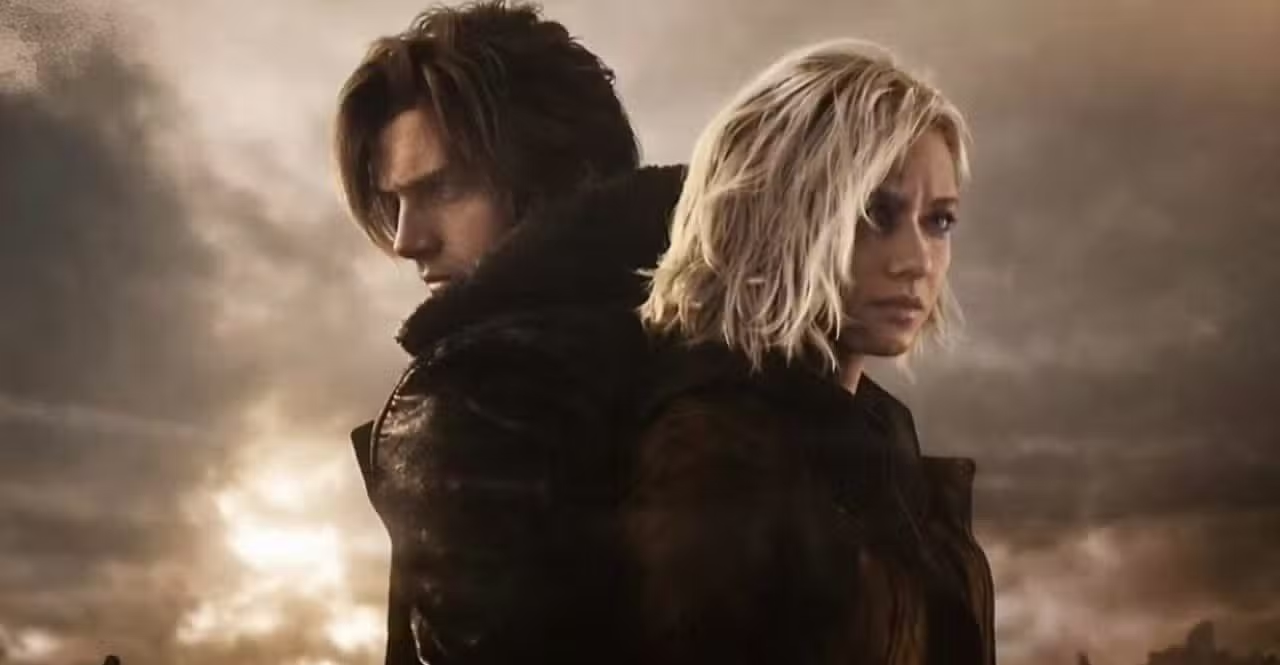
The end of the main campaign of the latest title in the famous survival horror franchise features a direct clash against the mutated form of the central antagonist. The official version of the software features a creature of gigantic proportions that strongly resembles the classic Nemesis, establishing a direct visual bridge with the series’ past. Essa Art decision adopted by the production team generated extensive conversations among users about reusing aesthetic concepts instead of creating something completely new for the current generation of consoles and computers.
A deep exploration of the game’s internal directories recently revealed that the developer considered completely different visual paths for this decisive confrontation. Especialistas in information extraction located non-textured three-dimensional models showing mutation stages discarded before the official launch on the global market. The material found points to an artistic vision that valued the previous visual identity of the human character, maintaining specific characteristics that were abandoned in the final version.
Leon Kennedy Statue 1/4 and 1/6 Scale by Raccoon City Studio × Super Hero Studio 💥
Available in two scales and two versions: 1/4 (Requiem Suit or Swimsuit) and 1/6 (Requiem Suit or Swimsuit)
• 1/4 scale: (Height) 36 cm x (Width) 25 cm x (Depth) 25 cm
• 1/6 scale: (Height) 24…pic.twitter.com/NrGnekSxlg— ᴋᴀᴛʜʏᴀɴʜʏ ✨ (@kathyanhy)April 7, 2026
The data extracted points to a progression focused on the identity of the villain himself, with unique characteristics found in the hidden programming codes. The information details the appearance of a single wing on the right shoulder during the initial phase of the transformation, followed by a gradual evolution based on the concept of extreme body horror. The presence of multiple heads and appendages that imitate the shape and movement of snakes would culminate in the formation of a biological chimera that respects the symbolisms presented throughout the narrative.
Visual elements of ophidic transformation
The central character of this discovery carries strong ophidian symbolism throughout his appearances in the main plot of Resident Evil Requiem. The antagonist’s human characterization includes rings with specific shapes, clothes with scaly textures and body language that suggests sinuous and calculated movements. The hidden files show that the final transformation would take advantage of exactly this narrative construction to create a unique and intimidating monster, in line with the clues left in the opening hours of the gameplay.
The discarded three-dimensional model displays a complex chimeric structure, where the human body falls apart to make way for multiple tentacles and snake heads. Essa visual approach would create a direct contrast with the brute and mechanized force seen in the version that hit stores, prioritizing a more organic and disturbing horror. The geometric complexity of the models found suggests that the art team invested considerable time in developing this alternative form before changing direction in executive production.
Intermediate phases of biological mutation
The extracted data also details the intermediate stages of the villain’s transformation before reaching his definitive form on the battlefield. One of the most talked about concepts presents the development of a single wing of abnormal proportions on the right side of the antagonist’s body. Essa characteristic gives an appearance that mixes distorted angelic elements with the biological degradation typical of organic weapons developed by the series’ corporations.
The visual progression documented in the leaks indicates a much slower and more painful transition for the plot’s central character. Instead of the instant mutation seen in the final product, the player would follow the gradual loss of humanity through multiple phases of combat in different arenas. Especialistas in game design point out that this choice would increase the dramatic charge of the confrontation, keeping the focus on the facial expressions and the original scars of the human model.
The emphasis on body horror has always been a trademark of the franchise focused on biological disasters and extreme survival. The discarded concepts elevate this premise by showing skin cracking and tissues merging in an asymmetrical and chaotic manner. The decision to abandon this detailed progression resulted in a more abrupt transition that prioritizes enemy scale over ongoing visual disruption.


Repercussion among players and virtual debates
The release of these images on forums dedicated to the series provoked immediate and polarized reactions among enthusiasts of the survival horror genre. A significant portion of users expressed frustration with the developer’s choice to discard a design considered highly original and consistent with the story. The similarity of the official version with the monster from the remake of Resident Evil 3 was pointed out as a sign of creative exhaustion by some critics specializing in the games industry.
Discussion platforms and image sharing networks were flooded with comparative analyzes between the two three-dimensional concepts found. Players highlighted that the snake-focused version would make much more sense within the narrative context established in the previous hours of the main campaign. The construction of the mystery around the villain seemed to prepare the ground exactly for the chimera found in the hidden files, making the final change somewhat disjointed for part of the audience.
On the other hand, there are consumers who defend the development team’s final decision based on the fluidity of combat and mechanical clarity. The creature of colossal proportions that made it into the definitive game offers a clear battle arena and well-defined dodging mechanics for character control. Implementing a monster with multiple independent appendages could result in hit detection failures and frustration during high-tension gameplay.
The debate illustrates the constant need faced by studios when it comes to balancing artistic vision with technical limitations and the expectations of the consumer market. The franchise has a documented history of changing final bosses in the late stages of production to ensure the climax of the experience is technically flawless. The recent leaks only make this internal process visible to end buyers looking to understand the behind-the-scenes of creating entertainment software.
Mechanical differences compared to the classic monster
The visual connection between the final boss of Resident Evil Requiem and the bioweapon Nemesis is not accidental, based on the use of specific parasites in the mythology of the digital universe. The released version adopts the same upright stance, the use of thick, whip-like tentacles and the ability to absorb massive damage before changing attack patterns. Essa Mechanical familiarity allows series veterans to quickly understand the rules of combat without the need for intrusive on-screen tutorials, ensuring a seamless flow of action. The vertical body structure facilitates the reading of anticipatory movements, allowing the player to react with precision to blows delivered in sequence.
In contrast, the serpentine model would require a completely different set of animations focused on crawling movements and area constriction attacks. The absence of textures in the leaked files prevents a full assessment of how the scene’s lighting would interact with the monster’s scales during firearms fire. However, the digital mesh proves that the character’s collision would occupy a much larger horizontal space in the battle arena, changing the dynamics of movement and positioning. The player would need to manage space differently, avoiding being cornered by appendages that could attack from unforeseen and simultaneous angles.
Software optimization and stability process
The process of creating a high-budget game involves hundreds of daily decisions that shape the final product that hits shelves and digital stores around the world. The discovery of Victor Gideon’s three-dimensional models serves as a practical case study in how the scope of a project can drastically change during the code polishing and optimization phase. Implementing a creature with multiple moving heads and thin tentacles requires complex physics processing to prevent polygons from unintentionally crossing the floor or walls of the scene. At a moment of narrative climax, where the frame rate per second needs to remain stable to ensure the accuracy of the player’s shots, developers often opt for more compact and predictable designs in terms of hardware processing. Choosing a vertical and bipedal mutation makes it easier to control the virtual camera and ensures that the enemy’s weak points remain visible during most of the armed confrontation. Além Additionally, standardizing boss behavior reduces the time needed for quality assurance testing, a crucial factor in the months leading up to the software’s global launch. The preservation of energy absorption mechanics and the use of heavy weaponry in the scenario demonstrate that, regardless of the monster’s appearance, the rhythm of the battle was already established from the initial structural planning phases. The sacrifice of original aesthetics for the sake of technical stability is a common practice in the industry, highlighting the difficult concessions made by art and programming teams to deliver a functional product free from critical execution flaws.
Continuity of data mining
The work of data mining specialists does not end with the discovery of alternative forms of the main antagonist of the survival campaign. Equipes Independents continue to scour software directories looking for unused audio, discarded textures, and notes left by programmers in the original source code. Esse Collective effort helps document the untold story of development and preserves ideas that would otherwise be lost on technology companies’ servers.
Side projects and visual modifications
The current expectation of the technical community is that new extraction tools will allow the import of these hidden models into modified versions of the game on the computer. Programadores independents have already expressed interest in animating the snake chimera and recreating the final battle according to the original concept planned by the production company’s conceptual artists. The process involves creating digital skeletons compatible with the current graphics engine, a task that requires advanced knowledge in reverse engineering.
This modification practice extends the title’s useful life on the market and keeps the user base engaged in creating unofficial content of high technical quality. The continuous exploration of the archives demonstrates the public’s level of dedication to understanding all facets of the digital work made available. The villain’s legacy, whether in its official form or discarded concepts, has already secured its place in discussions about creature design in the modern interactive entertainment industry.
Veja Tambem em Latest News (EN)

Atlético-MG confirms agreement with defender Léo Duarte after period of prominence in Turkish football

Tiger shark bites 19-year-old girl and rips off her leg in Boa Viagem, Recife

2026 World Cup will have 32 athletes who play in Brazilian football

OnePlus develops portable video game with Android system focused on competitive shooters

New BYD Seal 6 DM-i Touring hybrid station wagon debuts in Europe with ample interior space and super-efficient engine

Costco reaches historic volume in gasoline sales in the United States with prices below market

June PlayStation Plus Catalog Brings Grounded and Warhammer 40,000 Darktide to Subscribers

Disney+ brings Avatar Fire and Ash finale to The Bear and new Pixar animation in June

Netflix updates June catalog with new season of Avatar and classic cinema sagas

Geely Xingyuan electric compact gains 47 kWh battery and autonomous driving system in China

Episode 1156 of One Piece marks arrival at Elbaf with decisive actions by Shanks and Blackbeard