Artemis II astronauts report unprecedented views of the Moon in space press conference
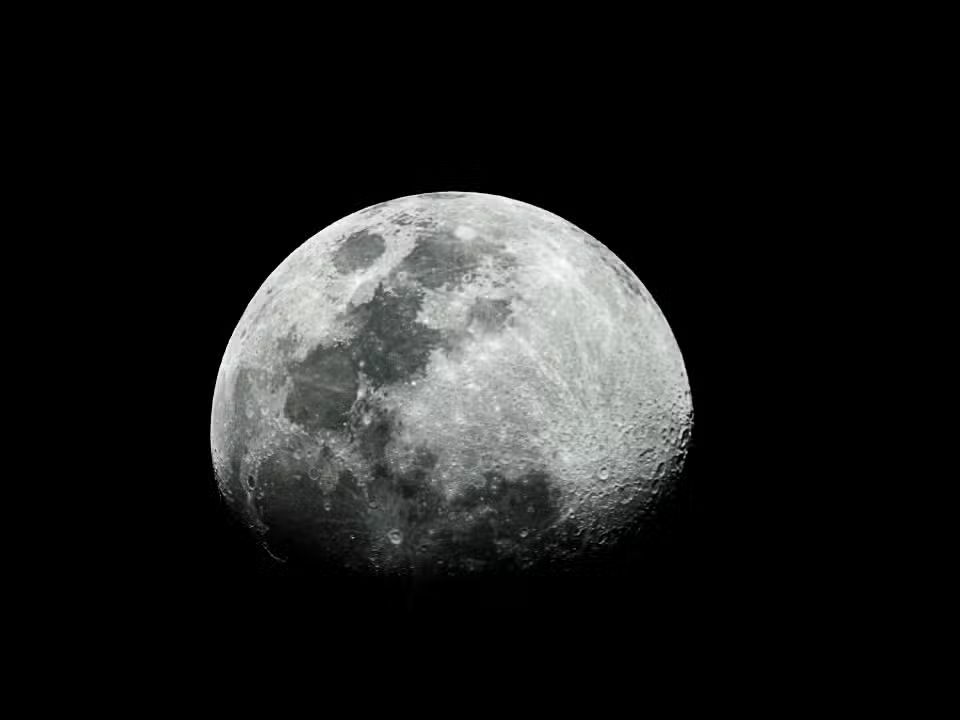
The four astronauts from mission Artemis II completed the lunar observation phase and held the first press conference directly from space. Reid Wiseman, Victor Glover, Christina Koch and Canadian Jeremy Hansen described the images they saw of the lunar surface as something that exceeded any previous expectations. Spacecraft Orion heads towards Terra, with landing scheduled to occur in the ocean Pacífico near the coast of Califórnia in the coming days.
The press conference took place as the crew traveled back after surpassing the Terra distance record set by Apollo 13 in 1970. Durante the flyby, the astronauts dedicated hours to visually documenting both the visible and hidden sides of Lua. Eles highlighted details such as craters, basins and formations that appear with greater clarity when observed directly by human eyes.
- Reid Wiseman commanded the mission and actively participated in the descriptions.
- Victor Glover acted as pilot and contributed technical observations.
- Christina Koch, mission specialist, focused on scientific aspects.
- Jeremy Hansen, from the Canadian space agency, joined the international team.

Astronauts’ reactions to the lunar flyby
The crew reported that the lunar landscapes presented aspects that did not exactly correspond to the simulations or previous images available. Eles mentioned the depth of shadows in craters and the varied surface textures that emerged as the orbit advanced. Observation occurred in pairs to maximize use of capsule Orion’s limited windows.
During the seven-hour period dedicated to documentation, the team alternated tasks between visual recording and other onboard activities. The astronauts captured thousands of images that are now undergoing initial analysis by the team on the ground. Esses records include both the near and far sides of the satellite, offering unprecedented data for future studies.
The crew maintained constant communication with the control center at Houston, where lunar scientists followed the descriptions in real time. Esse exchange allowed rapid adjustments to observation priorities as new details emerged. The experience reinforced the importance of human presence in space exploration missions.
Observation phase details
Mission Artemis II represents the first manned flight around Lua since the Apollo program, which took place more than five decades ago. The spacecraft completed a journey that took astronauts to distances exceeding 400,000 kilometers from Terra at certain times. The flyover included passing through the hidden side, where communication with Terra is temporarily interrupted.
The astronauts divided their observation time to cover different angles and phases of solar illumination on the lunar surface. Eles recorded extensive impact basins, craters with defined edges and regions with marked variations in relief. Essas images complement data collected by robotic probes in previous decades.
Capsule Orion performed as expected throughout the critical approach and flyby phase. Sistemas life support, navigation and communications operated within planned parameters. The crew carried out regular checks and reported good physical condition throughout the journey.
Technical aspects of the ongoing mission


The team is now preparing for re-entry into the Earth’s atmosphere, a phase that requires precise alignment and robust thermal protection. The Orion will use the heat shield to withstand high temperatures during return. Após deceleration, the capsule must land in the water with the aid of parachutes and inflatable airbags.
Rescue teams from Marinha of Estados Unidos are positioned in the recovery zone at Pacífico, close to the region of San Diego. The procedure includes stabilizing the capsule after contact with the sea and transferring the astronauts to support vessels. Todo The plan follows protocols tested in previous unmanned missions.
Scientists on the ground continue to process data transmitted by the crew, including environmental measurements and photographic records. Essas information contributes to the planning of subsequent stages of the program Artemis, which aims to return humans to the lunar surface. The international collaboration, with Canadian participation, marks another step in preparing for long-term exploration.
Preparations for returning to Terra
The crew dedicates the final days of the trip to packing equipment and checking systems for reentry. Seats are reinstalled and loose items are secured to withstand forces during descent. Astronauts perform exercises and monitor their own physical condition to facilitate readaptation to Earth’s gravity.
The Artemis II program serves as a fundamental test for technologies that will be employed in future missions landing at Lua. Experience accumulated from the current orbital flight informs adjustments to vehicles, suits and operational procedures. Especialistas highlight that human presence allows observations that automatic instruments do not yet replicate with the same nuance.
Nasa maintains regular updates on mission status through official channels. The current focus remains on crew safety and the successful completion of the crewed test flight. Dados collected throughout the journey will be analyzed in depth in the weeks following return.
Scientific importance of flight
Direct observations of Lua by the crew generate records that enrich knowledge about the formation and evolution of the satellite. Detalhes Visuals of specific geological formations help researchers interpret data collected by past robotic missions. The mission also tests communication and operation capabilities at extreme distances.
Artemis II integrates larger efforts to establish a sustainable presence in the lunar environment. Esses advances set the stage for operations that include building infrastructure and conducting extended scientific experiments. The participation of astronauts from different agencies reinforces the collaborative nature of the project.
Veja Tambem em Latest News (EN)

Atlético-MG confirms agreement with defender Léo Duarte after period of prominence in Turkish football

Tiger shark bites 19-year-old girl and rips off her leg in Boa Viagem, Recife

2026 World Cup will have 32 athletes who play in Brazilian football

OnePlus develops portable video game with Android system focused on competitive shooters

New BYD Seal 6 DM-i Touring hybrid station wagon debuts in Europe with ample interior space and super-efficient engine

Costco reaches historic volume in gasoline sales in the United States with prices below market

June PlayStation Plus Catalog Brings Grounded and Warhammer 40,000 Darktide to Subscribers

Disney+ brings Avatar Fire and Ash finale to The Bear and new Pixar animation in June

Netflix updates June catalog with new season of Avatar and classic cinema sagas

Geely Xingyuan electric compact gains 47 kWh battery and autonomous driving system in China

Episode 1156 of One Piece marks arrival at Elbaf with decisive actions by Shanks and Blackbeard