Moto Champ Scooter Meeting reached its twenty-sixth edition, consolidating itself as one of the main global stages for creative engineering and customization of high-performance mopeds. Entre the various projects presented to experts and the public, an Suzuki Hi-R modified by owner Anikō Bonsai-gō captured immediate attention due to its extreme mechanical complexity and the aesthetic refinement of each component. The vehicle not only has an imposing appearance reminiscent of the racetrack, but it has a technical configuration that directly challenges the conventional limits established for low-displacement urban scooters. The construction of this example required meticulous work to adapt the chassis and engine, aiming to support an increase in power much higher than the original factory design. Engenheiros and customizers present at the site observed that the machine acts as a laboratory on wheels, testing the feasibility of combining parts from competing manufacturers into a single compact chassis. The result delivers aggressive dynamic behavior, aimed at displays and straight-line acceleration tests.
The assembly of this project required the application of advanced technical solutions, highlighting the following structural and mechanical modifications:
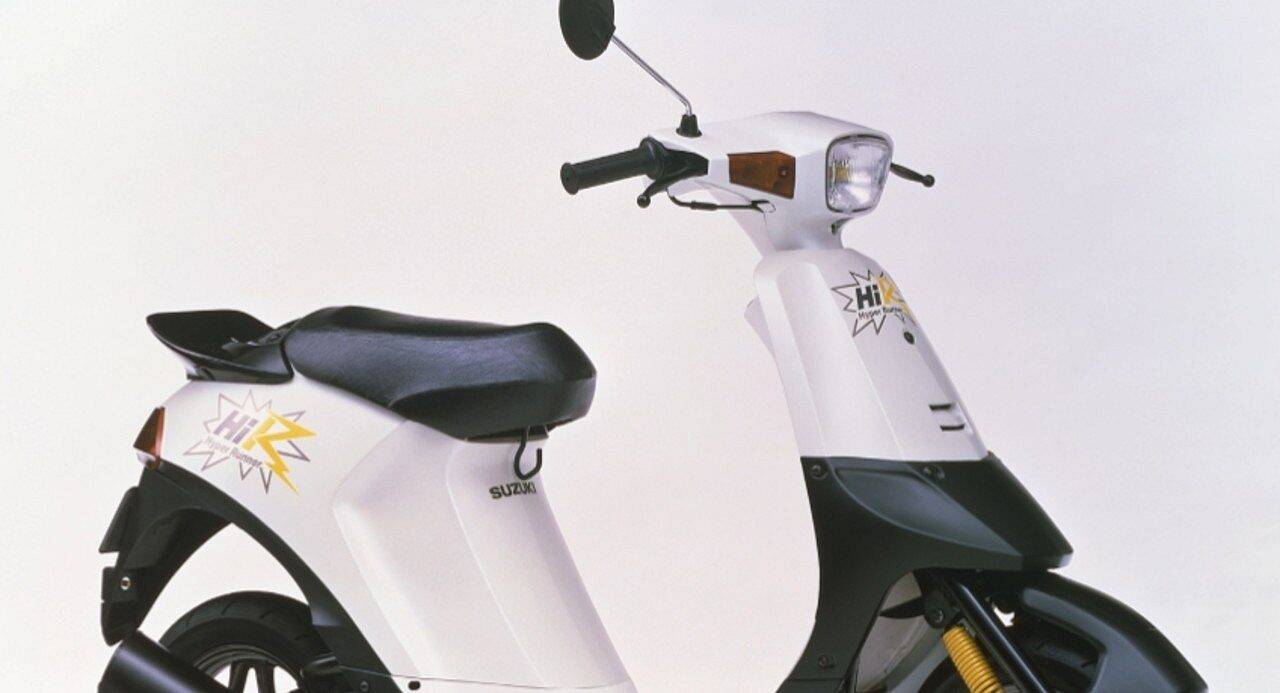
- Installation of a crankcase from a Address 110 to safely accommodate the new transmission.
- Adaptation of an original cylinder from a Honda RS125, a model developed exclusively for motorbike competitions.
- Complete resizing of the cooling and exhaust system to guarantee the thermal durability of the mechanical assembly.
- Use of front suspension components from Honda Zoomer with the aim of improving directional stability at high speeds.
Engineering applied to the hybridization of the powertrain
The mechanical heart of this Suzuki Hi-R represents a practical example of hybridization aimed at maximum drag racing performance. The choice of cylinder in the competition Honda RS125 allows the engine to reach extremely high speeds in short periods of time. Essa change transforms the calm dynamic behavior of the original scooter into something comparable to sports motorcycles with larger cubic capacity.
To support this drastic change in power delivery, the Address 110’s crankcase was transplanted with millimeter precision. Essa part acts as a solid and reliable base for mounting the new engine peripherals and stepless speed variation system. Fixing required special welding and laser alignment to avoid any deviation in the primary drive belt.
The harmony between components from different brands demands a fine and constant adjustment of carburetion and electronic ignition. Integrating a track engine into a lightweight scooter chassis requires specific structural reinforcements in the tubular frame to prevent dangerous twisting during sharp accelerations. The final vehicle combines the characteristic agility of the Suzuki model with the brute strength of the competition machines manufactured by Honda.
Braking system and directional stability upgrade
To control the power generated by the new hybrid propellant, the braking system received a significant improvement with the adoption of radial mounting technology. The front part of the machine is equipped with four-piston brake calipers, mounted on a machined support that offers greater rigidity during severe decelerations. Esse hydraulic assembly works in direct partnership with a 220 mm NCY brand floating disc, designed to optimize heat dissipation and prevent fluid fatigue.
Front stability was ensured by the use of suspension forks originating from Zoomer, widely known in the aftermarket for their structural robustness. The aluminum wheels of model Hurricane complement the front assembly, reducing the motorcycle’s unsprung weight and improving steering response in quick correction maneuvers. The careful selection of these components reflects a technical concern with the active safety of a vehicle that far exceeds the original factory specifications.
Digital monitoring and ergonomics at the command post
At the motorcycle’s command post, the owner chose to maintain a clean and functional aesthetic, integrating state-of-the-art digital gauges into the original factory dashboard space. The cockpit features the Acewell ACE3693 telemetry system, equipment that provides accurate and instantaneous information about engine speed, actual speed and fluid operating temperatures. The physical integration of the device was carried out in order to preserve the classic visual identity of the Suzuki Hi-R, while simultaneously offering the pilot crucial data for continuous monitoring of high-performance mechanics during intense use.
Choosing modern digital equipment allows the user to configure visual safety alerts, an essential function for highly prepared engines that routinely operate close to their mechanical tolerance limit. The panel’s navigation buttons and handle controls have been strategically positioned to facilitate quick access without compromising the scooter’s traditional ergonomics. Esse Exact balance between the retro look characteristic of the eighties and today’s data processing technology is one of the strongest and most praised technical signatures of this exclusive project.
Structural modifications to the enlarged rear wheel
The rear section of the scooter is visually dominated by a modified Douglas model 6J wheel, which gives the vehicle an aggressive stance and a wide track. Using a six-inch wide wheel on a small footprint machine requires extensive modifications to the swingarm and driveshaft alignment. The tire selected to fit the wheel was a 120/90-10 model, mounted with a slight lateral stretch to perfectly fit the extended edge of the rim.
To maintain an acceptable level of comfort and ensure straight-line handling, the original rear shock absorber was replaced by a component from KN Planning equipped with height adjustment and thread for spring preload. Essa suspension part allows the owner to adjust the rigidity of the rear according to the asphalt conditions or the type of static display, preventing the wide wheel from coming into contact with the vehicle’s fairing. The smooth metallic finish of the Douglas wheel creates a direct contrast to the exposed mechanical details of the engine.
Level of aesthetic detail and metal finish
The aesthetics of Anikō’s Suzuki Hi-R Bonsai-gō were meticulously planned to convey a sense of speed and technical precision even with the vehicle completely static. The painting of the fairings and the polishing of the metal parts were carried out with professional rigor, purposely highlighting the areas where the competition engine is most apparent for the public to observe. The brake caliper supports and steel mesh hoses were installed with organized passages through the chassis, demonstrating extreme care with the ease of maintenance and functionality of each operating system.
Relevance of the Asian event for the customization market
Event Moto Champ Scooter Meeting continues to act as an accurate thermometer for motorcycle customization trends in the Asian and international market, directly influencing builders and workshops in different parts of the world. The twenty-sixth edition of the meeting showed that the incessant search for larger displacement engines and the complex adaptation of sports motorcycle parts to small scooters continue on an upward curve of popularity. Projetos of a high technical level such as the Hi-R of Bonsai-gō serve as direct inspiration for new enthusiasts and engineers who wish to create exclusive vehicles, testing new metal alloys and machining methods. The longevity and prestige of this annual meeting allows the global community to exchange practical knowledge about welding techniques, injection programming and part compatibility between different manufacturers. The presence of a highly diverse audience, ranging from young amateur riders to veterans of the customization industry, reinforces the culture of scooters as an extremely versatile mechanical platform for technical expression. The motorcycle highlighted in this edition sets a new and high level of demand for what is expected from a complete and functional preparation today.
Technical advances and safety requirements in extreme projects
Over the past few decades, scooter modifications have evolved from simple exhaust system changes to complete engineering rebuilds, just like the one seen on this model Suzuki. The use of radial brake calipers and advanced digital instrumentation reflects the direct transposition of technologies developed for superbikes to the world of small wheels.
This growing mechanical sophistication attracts the attention of collectors and investors in the automotive sector, who see these machines as true works of art that are functional and ready for use on closed tracks. The computerized machining market also records growth driven by the need to create exclusive supports and adapters for these projects.
Although the main focus of modifications is to extract maximum performance, renowned manufacturers are increasingly paying attention to safety standards and the dynamic efficiency of new projects. The use of fully adjustable suspensions and oversized braking systems acts as a guarantee that the brutal increase in power is accompanied by proportionate and safe control of the vehicle.
The technical success achieved by the Suzuki Hi-R equipped with the RS125 engine proves that the limit for customizing mopeds lies only in the creativity and practical engineering knowledge of the responsible assembler. By combining high-performance parts with a classically designed chassis, the project creates a solid mechanical reference that will continue to be studied and replicated by other enthusiasts in the coming automotive event seasons.