UK reveals operation that expelled Russian submarines from its waters
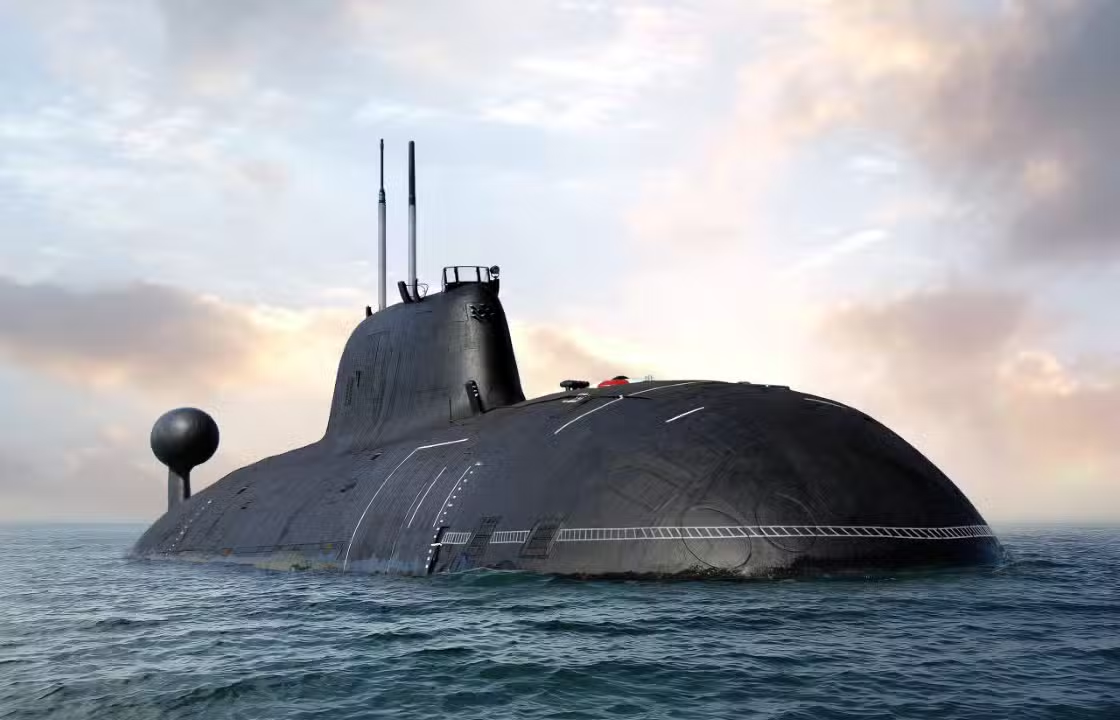
The minister of Defesa of Reino Unido, John Healey, revealed this Thursday that the British armed forces carried out an operation to monitor and remove three Russian submarines that operated in the country’s waters for about a month in early 2026. The action involved ships, helicopters and maritime patrol aircraft, with support from vessels and planes from the Noruega. The Russian submarines left the area without causing damage to European cables or pipelines.
The Russian vessels included a Akula-class attack submarine and two spy submarines from Diretoria Principal of Pesquisa and Águas Profundas of Moscou. Esses vehicles spent weeks in the northern region of Atlântico near critical communication and energy infrastructures. Allied forces maintained constant surveillance over their movements throughout the period.
- A Akula-class nuclear attack submarine was closely monitored
- Two submarines specialized in sabotage and espionage operations were also tracked
- There was no record of damage to submarine cables or pipelines in the area
Details of the monitoring operation on Atlântico Norte
British authorities decided to make the operation public to signal that Russian movements were detected from the beginning. Minister John Healey stated that the armed forces made it clear to the submarines that their actions did not go unnoticed. The Russian presence targeted areas near telecommunications cables and oil pipelines that connect Reino Unido to Europa.
Collaboration with Noruega included sending a frigate and maritime patrol aircraft. Essa partnership allowed broad coverage of the Russian submarines’ operating zone. The Russian vehicles ended up moving north and leaving British waters after the period of intensive monitoring.
Those responsible for the operation highlighted that hundreds of British soldiers participated directly in the tracking. Navios as well as the frigate Type 23 and helicopters Merlin were part of the surveillance teams. The action took place in a coordinated manner to avoid any risk to underwater infrastructure essential for European connectivity.
Official reaction and message sent to Rússia
John Healey addressed a direct statement to President Vladimir Putin during the disclosure of the facts. Ele emphasized that any attempt to damage cables or pipelines would receive a firm response. The minister reinforced that British forces guaranteed that Russian movements did not remain secret.
The revelation took place at a press conference on Londres. British Ministério provided images showing part of the operation, including ships and aircraft in action. Até At the moment, Kremlin has not issued an official position on the statements released this Thursday.
Norwegian authorities confirmed support with specific military resources. Essa cooperation reinforces defense ties between the two countries in Atlântico Norte. The focus of the operation remained on protecting strategic assets without escalating direct confrontation.
Context of the Russian presence in European waters
Russian submarines carried out the operation in January 2026, remaining in the region for more than 30 days. Constant tracking prevented any action against critical infrastructure from taking place. Especialistas in naval defense have been following the increase in Russian submarine activities in this area for years.
Class Akula represents one of the best-known attack models in the Russian fleet. Já GUGI submarines concentrate capabilities on intelligence operations and possible sabotage in deep waters. The combination of these vehicles indicates coordinated planning for actions in strategic environments.


Monitoring involved multiple air and naval platforms to ensure uninterrupted coverage. Essa strategy allowed us to map routes and intentions without interruptions. At the end of the period, Russian submarines chose to withdraw from the area without resisting the Allied presence.
Importance of protected underwater infrastructure
Submarine cables carry the majority of internet and data traffic between continents. Oleodutos guarantee the flow of energy to several European countries. Qualquer Disruption in these networks could affect large-scale economies and communications.
British and Norwegian forces acted preventatively to preserve these assets. The success of the operation demonstrates the capacity for coordinated response in complex maritime environments. Autoridades highlight that surveillance remains active in the face of possible new incursions.
Minister Healey used the announcement to reinforce the commitment to defending national and allied interests. The message conveyed seeks to discourage similar actions in the future. The episode occurred amid broader geopolitical tensions on the European continent.
Technical aspects of the surveillance operation
The frigate HMS St Albans and the support ship RFA Tidespring actively participated in the tracking. Helicópteros Merlin assisted in the detection and monitoring of submarines on the surface or periscope. Aeronaves maritime patrol completed the aerial surveillance picture.
This combination of features allowed for continuous monitoring day and night. Russian submarines operated at varying depths, requiring precise coordination between crews. In the end, the withdrawal of the Russian vehicles took place in an orderly manner towards the north.
The episode reinforces the relevance of anti-submarine capabilities in British defense strategy. Investimentos in detection technology and interoperability with allies remain on the agenda. The operation served as a practical demonstration of the readiness of the forces involved.
Reino Unido maintains a constant alert stance regarding foreign submarine activities in the region. Public disclosure seeks to promote transparency about threats to maritime security. Especialistas follow similar developments elsewhere in Atlântico Norte.
Veja Tambem em Latest News (EN)

Atlético-MG confirms agreement with defender Léo Duarte after period of prominence in Turkish football

Tiger shark bites 19-year-old girl and rips off her leg in Boa Viagem, Recife

2026 World Cup will have 32 athletes who play in Brazilian football

OnePlus develops portable video game with Android system focused on competitive shooters

New BYD Seal 6 DM-i Touring hybrid station wagon debuts in Europe with ample interior space and super-efficient engine

Costco reaches historic volume in gasoline sales in the United States with prices below market

June PlayStation Plus Catalog Brings Grounded and Warhammer 40,000 Darktide to Subscribers

Disney+ brings Avatar Fire and Ash finale to The Bear and new Pixar animation in June

Netflix updates June catalog with new season of Avatar and classic cinema sagas

Geely Xingyuan electric compact gains 47 kWh battery and autonomous driving system in China

Episode 1156 of One Piece marks arrival at Elbaf with decisive actions by Shanks and Blackbeard