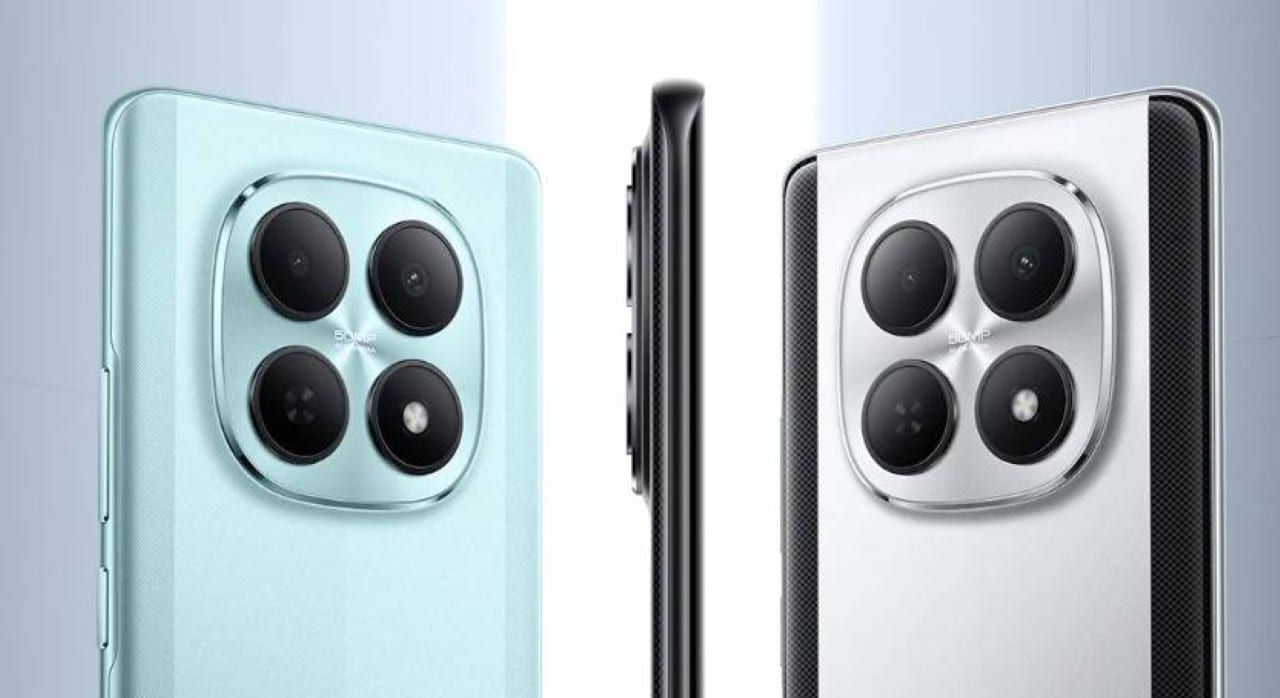
The Asian technology manufacturer expanded its portfolio of mid-range mobile devices with two new bets for the global electronics market. Consumers looking to upgrade their devices will find robust options that share premium features, but follow different paths in fundamental hardware specifications. The internal dispute in the brand’s catalog focuses on delivering maximum energy efficiency, processing power and physical resistance, requiring a detailed analysis of the technical sheets to make an assertive choice. The mid-range cell phone segment increasingly requires innovations that were previously exclusive to more expensive lines, forcing companies to raise the standard of their recent launches.
Design and physical resistance certifications
The external structure of the devices presents solutions aimed at durability in continuous daily use. The autonomy-focused model adopts exact dimensions of 163.3 x 78.3 x 8.3 mm and a weight of 206 grams, ensuring a firm grip for the user.

On the other hand, the version designed for high performance features a slightly more compact format, measuring 160.8 x 75.2 x 8.3 mm and 195 grams. Esta variant also offers a different finish in vegan leather, expanding the aesthetic options available on the shelves.
Protection against external elements represents a significant technical difference between the smartphones analyzed. The newly launched device raises the category standard by incorporating IP69K certification, allowing submersion in up to 1.5 meters of water for 30 minutes and resistance to high pressure jets.
The performance-focused device maintains the traditional IP68 certification, which already offers safety against dust and accidental dives into liquids. The front panels also differ in terms of protection, using different generations of tempered glass to prevent breakage:
- Glass Gorilla Glass Victus 2 for maximum drop resistance on the newest model
- Glass Gorilla Glass 7i applied to the screen of the high-performance version
- Back construction and side edges made of high-density plastic
Visual quality and fluidity of panels
The media consumption and navigation experience receives special attention through the implementation of high-fidelity AMOLED panels on both devices. The endurance-focused device sports a 6.83-inch display with a resolution of 1280 x 2772 pixels, resulting in a density of 447 ppi, which ensures crisp text and detailed images. In contrast, the model aimed at raw processing features a 6.67-inch display, operating with a resolution of 1220 x 2712 pixels and a density of 446 ppi, maintaining a practically identical visual standard in terms of clarity and color reproduction.
Lighting specifications and frame upgrades demonstrate the advancement from mid-range to high-end features. Both devices support a refresh rate of 120 Hz, providing smooth menu transitions and competitive advantages in fast-paced video games. Maximum brightness reaches an impressive 3,200 nits, making it easy to view content in direct sunlight, while support for HDR10+ and Dolby Vision technologies ensures superior dynamic contrast when playing films and series on streaming platforms.
Processing and memory architecture
The processing engine defines the exact target audience for each smartphone made available by the brand. The equipment designed for maximum performance houses MediaTek’s Dimensity 8400 Ultra chipset, which reaches a maximum clock rate of 3.25 GHz on its main core.
This set of hardware records scores exceeding 1,700,000 points in stress tests, consolidating its vocation for complex multitasking and running heavy games with graphics settings at the limit. The fluidity of the operating system is maintained even under prolonged thermal demands.
The autonomy-focused alternative uses the Snapdragon 7s Gen 4 processor, operating at a clock speed of up to 2.7 GHz. Memory configurations are standardized across both lines, offering variants of 8 GB or 12 GB of RAM, combined with internal storage of 256 GB or 512 GB, with no possibility of expansion via memory card.
Image and video capture systems
The rear photographic module follows a standardized dual configuration, led by a 50 MP main sensor assisted by an 8 MP ultrawide lens. Phase detection autofocus and optical image stabilization technologies integrate the two systems, ensuring accurate, blur-free nighttime captures.
The photographic divergence focuses on the front camera and the ability to record media files. The battery-focused device offers a 32 MP selfie sensor, surpassing the internal competitor’s 20 MP, but limits 4K video recording to 30 frames per second, while the high-performance version reaches 60 frames per second at the same resolution.
Energy capacity and recharge speed
Autonomy of use represents one of the fundamental pillars in the decision to purchase mobile equipment. The newly arrived model on the market impresses by housing a 6,500 mAh power cell, designed to support long days of intense use away from conventional sockets.
To complement the high capacity, the system supports 100W ultra-fast charging on the power supply. The gaming-focused device, in turn, houses a 6,000 mAh battery with 90W recharge, delivering enough power for a full day of mixed activities with excellent charge replenishment speed.
Software ecosystem and advanced connectivity
The integration between hardware and software occurs through the HyperOS 2 interface, developed on the basis of the Android 15 operating system, delivering optimized navigation and improved artificial intelligence resources to the end user. The upgrade policy establishes a clear advantage for the endurance-focused model, which is guaranteed four major system upgrades, significantly extending its life cycle in the mobile technology market. The performance-oriented device ensures three years of major updates, remaining competitive in the medium term. The connectivity package is identical and comprehensive, including support for very high-speed 5G networks, Wi-Fi 6 protocol for stable wireless connections, Bluetooth 5.4 for efficient pairing of accessories, and NFC technology for contactless payments in commercial establishments. Biometric security is managed by an optical fingerprint reader positioned under the screen, while the audio experience is enriched by stereo speakers certified Dolby Atmos. The traditional infrared emitter remains integrated at the top, allowing remote control of various compatible household appliances.
Financial positioning in retail
Pricing dynamics in e-commerce reveal distinct opportunities for different consumer budgets. The device with a 6,500 mAh battery can be found at retail for prices close to R$ 1,920, while the version equipped with the Dimensity 8400 Ultra chip, which initially cost R$ 5,199, registers strong depreciation and is already in promotions in the range of R$ 1,910 to R$ 2,100, depending on the memory configuration chosen by the buyer.