Ice reduction in Antarctica classifies penguins and elephant seals as endangered species
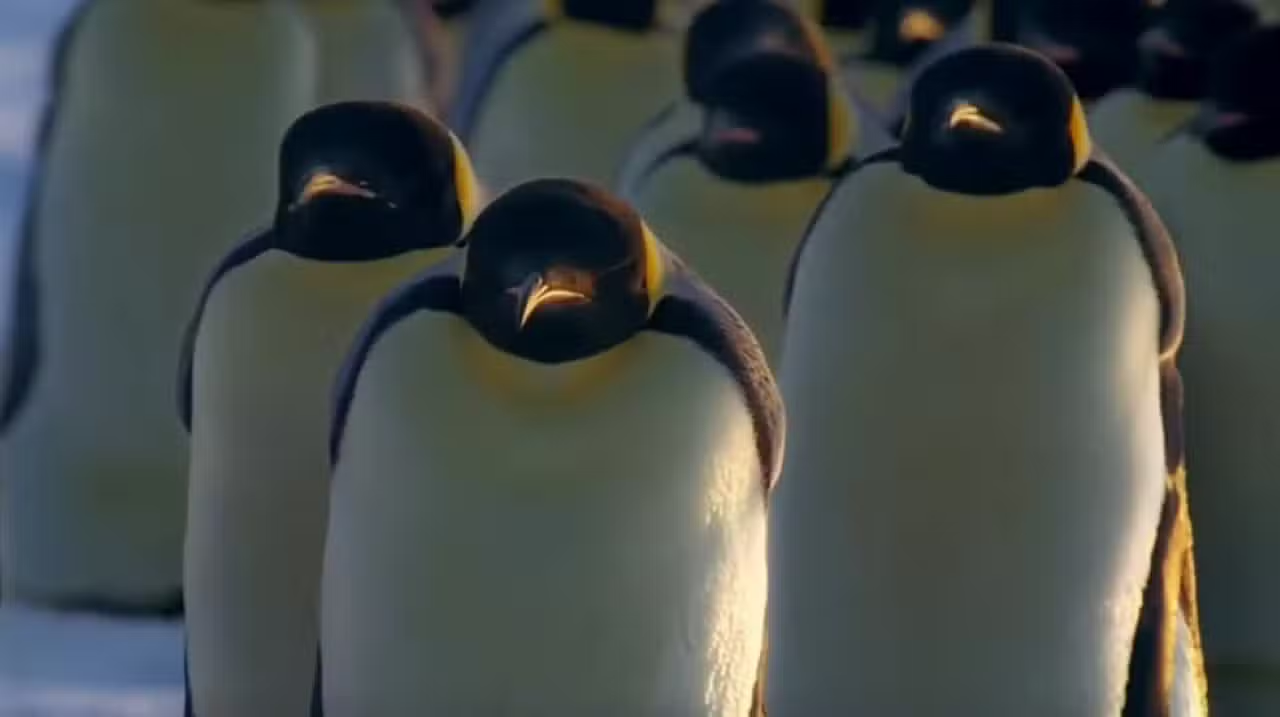
União Internacional to Conservação to Natureza recently updated its global records and changed the conservation status of two iconic species of the South Pole. The emperor penguin and the southern elephant seal were officially classified as threatened with extinction in the new edition of Lista Vermelha. The measure reflects the severe impacts of climate change on the planet’s extreme ecosystems.
The technical decision is based on extensive surveys on the increase in ocean temperatures and the consequent reduction in sea ice cover in the Antarctic region. Data compiled by experts demonstrate that the accelerated degradation of the natural habitat compromises the basic biological functions of these animals. The population decline recorded in recent decades led to emergency reclassification by environmental authorities.
These species are strictly dependent on polar conditions to maintain their life cycles, including the reproduction phases and the search for food. The continued loss of ice shelves acts as a limiting factor for calf survival and adult nutrition. The current scenario requires constant monitoring of the remaining populations on the ice continent to assess the future viability of the species.
Historical context of risk assessments in Antártica
The reclassification of the emperor penguin marks a worrying transition, as the species was previously in the near-threatened category. Levantamentos carried out using satellite images showed the loss of more than 20 thousand adult individuals in a period of nine years, which corresponds to a significant portion of the global population. Quase half of known colonies have experienced severe reproductive failures since 2016.
Early melting of ice shelves destabilizes the physical environment necessary for incubation of eggs and early development of seabirds. The researchers identified specific patterns that illustrate the severity of the situation in different regions of the continent, highlighting the direct correlation between climate and animal demography:
– The affected colonies are distributed across vast extensions of the Antarctic territory, without concentration in a single point.
– Ice fragmentation exposes chicks to freezing water before their waterproof plumage is fully developed.
– Projeções Mathematics indicate the possibility of a 50% reduction in the population by the 2080s, if warming rates remain unchanged.
Direct impact on seabird reproduction
The reproductive success of emperor penguins is intrinsically linked to the stability of sea ice during the winter months. The frozen shelf acts as a natural nursery, where males incubate eggs while females forage for food in the ocean. The premature breakdown of this substrate results in the direct loss of thousands of eggs and newborn chicks annually, interrupting the species’ renewal cycle.
High infant mortality prevents the natural replacement of the population, generating a demographic deficit that accumulates with each failed reproductive season. Cubs that survive initial ice breaks are often underweight and less able to withstand adverse weather conditions. Esse cycle of continuous losses underlies the urgency of the new risk classification and the need for climate mitigation policies.
Changes in mammalian feeding behavior
The southern elephant seal, which was previously in the least concern category, has undergone a drastic change in status due to the reduction of more than 50% of its population in monitored areas since the late 1990s. The primary cause of this decline is associated with the scarcity of krill, a small crustacean that forms the basis of the diet of these large marine mammals. With the progressive warming of the surface waters of the ocean Antártico, schools of krill tend to migrate to deeper, colder areas, moving away from traditional foraging areas. Essa vertical migration of prey forces elephant seals to substantially modify their hunting and diving patterns, altering the entire survival dynamics of the species.
To reach the necessary food, animals need to dive deeper and longer, which exponentially increases daily energy expenditure. Essa Additional physical demands disproportionately affect lactating females and weaning calves, which rely on thick fat reserves to survive the harsh polar winter. The difficulty in accumulating adequate body mass compromises the survival rate of younger individuals and reduces the fertility of adult females. The combination of reduced food availability and greater effort to obtain it creates a scenario of chronic stress for populations, limiting the herds’ ability to recover naturally.


Sea ice dynamics and impacts on survival
The extent of Antarctic sea ice has shown consistent negative anomalies in recent years, altering the temporary geography of the continent. Essa Seasonal frozen layer plays an irreplaceable mechanical and biological role for endemic fauna. Late formation and early melting reduce the time window available for vital processes in several species.
For penguins, firm ice is the only safe ground against marine predators during the molting and breeding phase. Surface instability forces birds to move to less suitable areas, increasing the vulnerability of flocks. The expenditure of energy in searching for new safe places weakens the adults even before the harsh winter begins.
In the case of elephant seals, ice shelves serve as crucial resting areas between long hunting expeditions in the open ocean. The absence of these floating islands forces mammals to swim even greater distances without taking breaks for physical recovery. Depletion directly affects the ability to evade top predators, such as orcas and sharks.
The synchrony between species’ biological cycles and ice formation has been shaped over millennia of natural evolution. The speed of current environmental transformations exceeds the adaptation capacity of these populations. The phenological mismatch results in losses that polar ecosystems cannot compensate in the short term.
Cascading effects on the polar food web
The decrease in krill biomass in the surface waters of Antártica triggers a domino effect that destabilizes the entire food web in the region, affecting everything from small fish to large cetaceans. Krill act as the main energy transfer link between phytoplankton and top predators, making their abundance a direct indicator of the health of the marine ecosystem. Quando thermal changes in the ocean force these crustaceans to seek deeper waters, the availability of food in the photic zone plummets, generating fierce competition between species that share the same ecological niche. Pinguins-emperador, elephant seals, several species of seals and whales suddenly find themselves competing for increasingly scarce resources in an environment that is already inhospitable by nature. Essa Overlapping food pressures amplify stress on populations, resulting in rates of malnutrition and failure to recruit new individuals. Continuous monitoring of predator-prey interactions reveals that scarcity at the base of the food chain compromises the resilience of the entire biome, making the recovery of threatened species a complex challenge that requires the stabilization of global oceanographic conditions.
Continuous monitoring and satellite data
The inclusion of species in Lista Vermelha is based on advanced remote sensing and space observation technologies. Satélites high resolution allows detailed mapping of penguin colonies through patches of guano on white ice. Essa Non-invasive methodology provides accurate population estimates in areas difficult for human access.
For elephant seals, telemetry trackers attached to the animals transmit real-time data on migration routes, dive depths and water temperatures. Cross-referencing this biological information with global climate models offers a clear picture of habitat shrinkage. Data-based science consolidates the urgency of conservation measures proposed by international entities.
Status of other species in polar regions
The pattern of environmental degradation observed in Antártica finds worrying parallels in the Northern Hemisphere, where Ártico seal species also record steep population declines. Animais how hooded seals and ringed seals face identical challenges related to the loss of sea ice shelves essential for breeding and resting. The similarity of impacts at both poles shows that global warming acts in a systemic way, requiring coordinated environmental protection responses on a planetary scale to preserve biodiversity adapted to extreme climates and guarantee the maintenance of marine ecological balance.
Veja Tambem em Latest News (EN)

Atlético-MG confirms agreement with defender Léo Duarte after period of prominence in Turkish football

Tiger shark bites 19-year-old girl and rips off her leg in Boa Viagem, Recife

2026 World Cup will have 32 athletes who play in Brazilian football

OnePlus develops portable video game with Android system focused on competitive shooters

New BYD Seal 6 DM-i Touring hybrid station wagon debuts in Europe with ample interior space and super-efficient engine

Costco reaches historic volume in gasoline sales in the United States with prices below market

June PlayStation Plus Catalog Brings Grounded and Warhammer 40,000 Darktide to Subscribers

Disney+ brings Avatar Fire and Ash finale to The Bear and new Pixar animation in June

Netflix updates June catalog with new season of Avatar and classic cinema sagas

Geely Xingyuan electric compact gains 47 kWh battery and autonomous driving system in China

Episode 1156 of One Piece marks arrival at Elbaf with decisive actions by Shanks and Blackbeard