Charging policy for improvements to the Switch 2 generates criticism and Nintendo returns money from Xenoblade
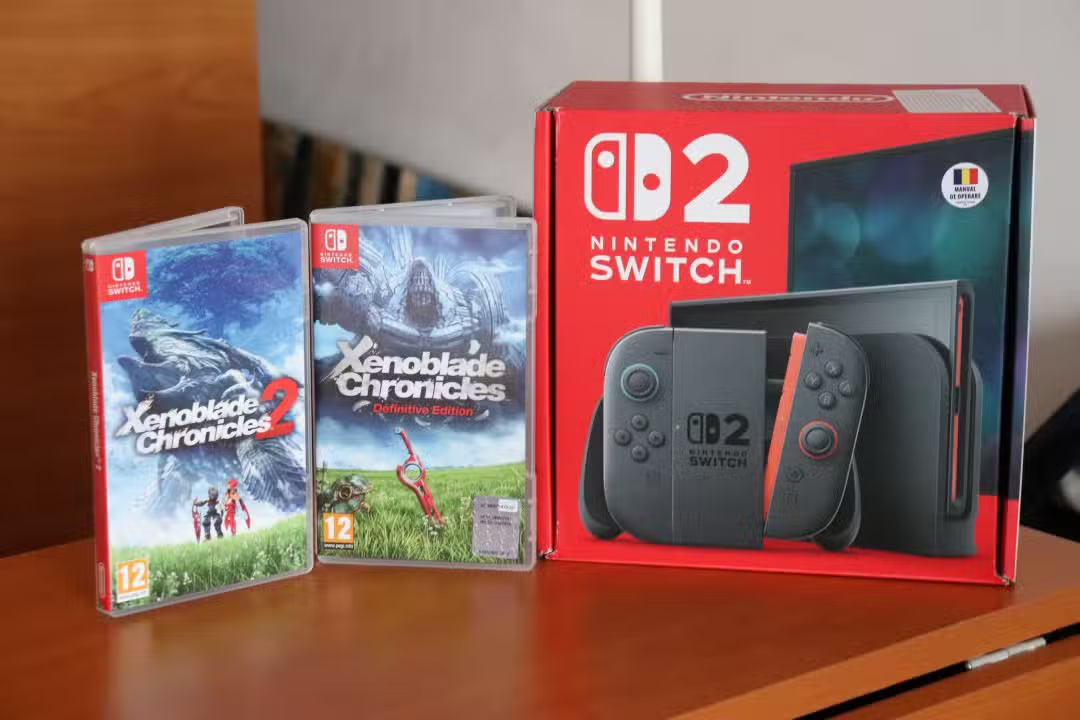
Nintendo’s decision to charge for graphical updates for older games in the recently released Switch 2 is generating strong dissatisfaction among consumers. The model requires additional payments for previous generation titles to run with better resolution and performance on the new console. The negative repercussions have already forced the company to make exceptions to its strict e-commerce policies.
The most emblematic case involves the improved version of Xenoblade X, which presented unexpected technical problems and led the manufacturer to offer financial refunds to buyers. Jogadores report that the promises of more powerful hardware were not reflected in practice during portable use. The Japanese giant’s stance contrasts with the practices of independent studios and direct competitors, raising debates about the preservation of digital catalogs.

Monetization strategy and amounts charged
Nintendo commercial planning for generation transition is based on individual charging per updated title. Obras of great commercial success, such as The Legend of Zelda: Breath of the Wild and Tears of the Kingdom, received improvement packages that cost around US$10 for users who already have the original editions. The only alternative to avoid paying in advance is to subscribe to the service expansion package Nintendo Switch Online, which guarantees access to a limited selection of these updates at no immediate extra cost. Essa fragmented approach frustrated a significant portion of the installed base, which expected a more fluid and consumer-friendly transition. The company argues that the work of adapting to the new architecture requires considerable development resources. However, the public argues that improved backwards compatibility should be a native feature of the new device, serving as an incentive for platform migration. The debate reignites old discussions about how the video game industry has dealt with digital property and the right to access virtual goods over the years.
In addition to updates to recent games, the company is also betting on the re-release of classics at full price. The versions of Pokémon FireRed and LeafGreen, scheduled for February 2026, will hit the online store for US$19.99 each, or US$40 in the double pack. The titles are direct adaptations of the 2004 works, without inclusion in the standard subscription service.
Performance glitches in portable mode
The trigger for the current public relations crisis was the launch of the Xenoblade X: Definitive Edition update. The package, sold for US$5, promised to deliver 4K resolution and a frame rate of 60 per second when the console was connected to the television base. Embora Although this goal was achieved on the big screen, the experience in handheld mode showed severe regressions. Usuários have documented rendering glitches, where objects and textures abruptly disappear from the scenery during exploration. The aggressive image resizing technique used to maintain fluidity ended up significantly damaging visual clarity.
Given the obvious flaws, many consumers stated that the original version running on old hardware offered a more stable experience. The limitation on the viewing distance of map elements was one of the most criticized points by fans of the franchise. The scenario shattered the expectation that the new processor would solve the technical bottlenecks of the past.
Exception to digital return rules
Pressure from social networks and specialized forums forced the Nintendo support team to adopt an atypical stance in the console market. Historicamente known for maintaining strict policies that prevent cancellation of digital purchases after download, the company began processing financial refunds for purchasers of the Xenoblade Essa Flexibility demonstrates a clear attempt to contain damage at a crucial moment in the adoption of the new system. Analistas indicate that maintaining consumer trust is vital, considering that the Switch 2 has already surpassed the mark of 17 million units sold at the beginning of 2026. The big question that hangs over the community is whether this attitude represents a permanent change in the virtual store’s guidelines or just an isolated emergency measure. The manufacturer has not yet issued an official statement detailing the exact criteria for approving these refunds.


Contrast with competitor practices
Public dissatisfaction gains strength when the Japanese giant’s strategy is placed side by side with the actions of other companies in the technology sector. Desenvolvedores Independents and medium-sized studios often make graphical improvements available completely free of charge to anyone who has already purchased the base game in previous generations. The computer ecosystem also serves as a frequent point of comparison, where resolution and frame rate adjustments are configurable without additional financial barriers. Essa disparity in treatment makes charging for optimizations seem like an outdated practice for many players.
Current market behavior has established a transition pattern that Nintendo appears reluctant to fully embrace. Para To illustrate the discontent, the community has highlighted several factors that worsen the perception of value of updates charged by the manufacturer:
- Lack of new story content or additional missions in paid packages.
- Lack of transparency about which games will require payment and which will receive free improvements.
- Unfavorable comparison with rival systems that offered no-cost transitions for most titles.
- Inability to transfer old licenses in a simplified way without going through bureaucratic processes in the online store.
The sum of these factors creates an environment of distrust among the first adopters of the new hardware. Fóruns threads are full of reports from users who have decided to delay purchasing updates until technical analyzes confirm the quality of the final product.
Perspectives for the future catalog
The current scenario places Nintendo in a delicate balance between maximizing revenue and satisfying its most dedicated fan base. The company continues to monitor user feedback through its official channels and promises to investigate technical glitches reported in newly updated titles. The technical expectation is that future system updates may correct the rendering bottlenecks that specifically affect portable mode. Enquanto That said, the market is waiting to see if the negative repercussions will force a review of the price list for the next relaunches scheduled for the year.
Transitioning digital libraries between console generations remains one of the modern industry’s biggest challenges. The case of Switch 2 serves as an important barometer to measure how much consumers are willing to pay for convenience and incremental improvements. The long-term success of the platform will depend on the company’s ability to adjust its business path and deliver promised performance.
Veja Tambem em Latest News (EN)

Atlético-MG confirms agreement with defender Léo Duarte after period of prominence in Turkish football

Tiger shark bites 19-year-old girl and rips off her leg in Boa Viagem, Recife

2026 World Cup will have 32 athletes who play in Brazilian football

OnePlus develops portable video game with Android system focused on competitive shooters

New BYD Seal 6 DM-i Touring hybrid station wagon debuts in Europe with ample interior space and super-efficient engine

Costco reaches historic volume in gasoline sales in the United States with prices below market
June PlayStation Plus Catalog Brings Grounded and Warhammer 40,000 Darktide to Subscribers
Disney+ brings Avatar Fire and Ash finale to The Bear and new Pixar animation in June

Netflix updates June catalog with new season of Avatar and classic cinema sagas

Geely Xingyuan electric compact gains 47 kWh battery and autonomous driving system in China

Episode 1156 of One Piece marks arrival at Elbaf with decisive actions by Shanks and Blackbeard