Young man from Campinas drowns on Guarujá beach; lifeguards help two other victims
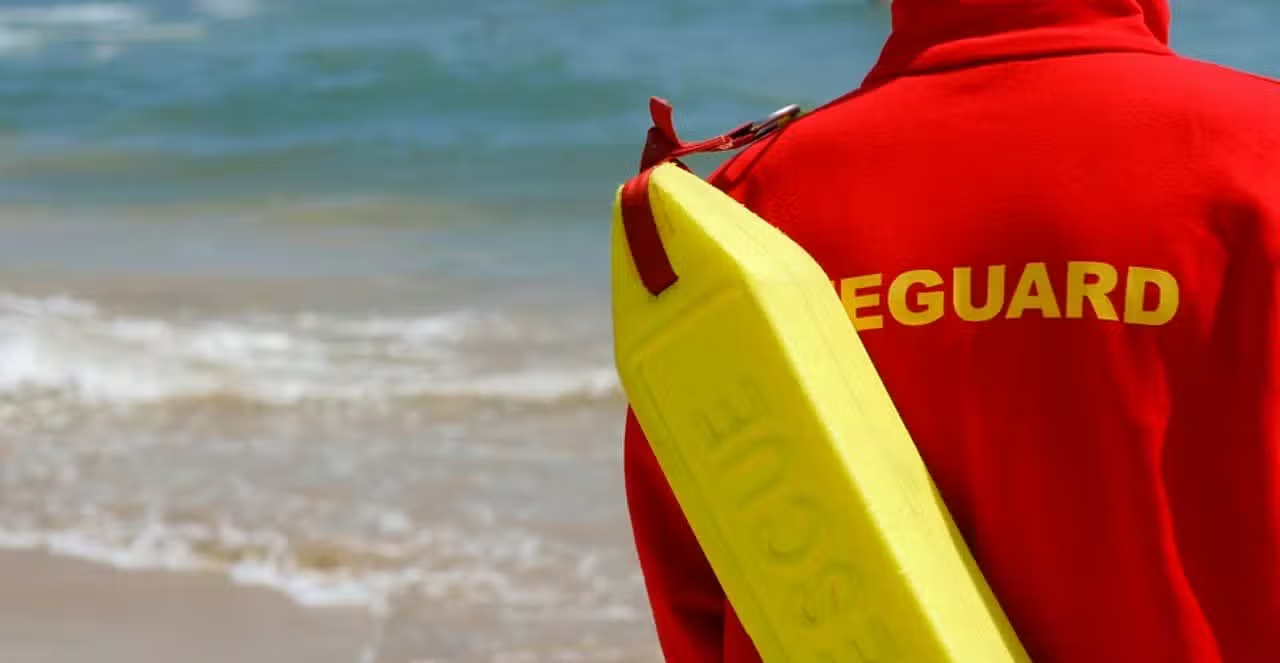
A 22-year-old man, from Campinas, died on Sunday (April 12) after drowning in the sea at Praia, Guarujá, on the coast of São Paulo. The incident occurred at around 2pm, when teams from the Grupamento of Bombeiros Marítimo (GBMar) were called to respond to an incident of a submerged victim. Guardas-lives, with the support of bathers, managed to rescue the boy from the water, who was suffering from grade 6 drowning, characterized by cardiorespiratory arrest. Apesar After resuscitation efforts in the sand and being taken to the hospital, the tourist did not survive.
Details of the incident and rescue
The mobilization to rescue the young man began immediately after the call to GBMar, at 2pm on Sunday. Sete lifeguards worked in a coordinated manner to locate and remove the victim from the sea, with the assistance of members of the public who were on the beach. The boy was brought to the sand strip in an extremely serious condition, with no signs of life, requiring cardiopulmonary resuscitation (CPR) procedures that were initiated on site. Speedy care is a crucial factor in cases of drowning, and the team acted with utmost urgency to try to save the young man’s life. Lifeguards used all available first aid techniques in an attempt to reverse the critical condition.
Assistance to other people involved
In addition to the young man who did not survive, two other people who were in the sea during the incident managed to get out of the water with the help of bathers. A 24-year-old man, also from Campinas, was rescued with grade 2 drowning, considered mild. Ele received first aid at the scene and was subsequently taken to medical care, where he underwent assessment and received the necessary assistance. A 25-year-old woman, also from Campinas, did not show any signs of drowning and, after being assessed by lifeguards, was released without the need for hospital referral. The situation highlighted the danger of sea currents and the importance of constant supervision.
Journey to the hospital and confirmation of death
After intense resuscitation procedures on the sand strip at Praia, the young man was quickly transported to Hospital Santo Amaro (HSA). Médicos and hospital emergency teams continued their efforts to try to reverse the cardiorespiratory arrest and stabilize the patient. However, despite all the efforts and dedication of the healthcare teams, the boy’s condition was irreversible. The tourist’s death was officially confirmed after medical attention, ending hopes of his recovery. The news brought consternation among family and friends.


Alerts and guidance from Grupamento of Bombeiros Marítimo
Grupamento of Bombeiros Marítimo (GBMar) highlighted the importance of the quick action of the lifeguards to respond to the incident, which allowed the rescue of the three victims. GBMar also took the opportunity to reinforce safety guidelines for bathers who frequent the beaches on the coast of São Paulo. Prevention is the best way to avoid accidents and drownings. Entre The main recommendations stand out:
- Observe sea conditions before entering the water, checking flags and signs.
- Respect the instructions of the lifeguards present on the beach.
- Avoid areas without the presence of rescue professionals.
- Do not swim after drinking alcoholic beverages or heavy meals.
- Keep constant attention to children and elderly people in and around water.
- Avoid risky games or entering areas with currents.
Preventing drownings on the coast
Incidents such as the one that occurred at Praia and Pitangueiras serve as a constant reminder of the dangers inherent in swimming in the sea, even on popular beaches. Prevention is the most effective tool against drowning. Muitos Accidents happen due to lack of attention to danger signs or underestimating the strength of currents. The sea presents variable risks, and apparently calm conditions can hide dangerous currents. Warning signs and risk flags, for example, should not be ignored, as they indicate areas that are unsuitable or dangerous for bathing. Knowledge of your own swimming skills and caution are essential before venturing into the water, especially in unfamiliar places or without the presence of lifeguards.
Veja Tambem em Latest News (EN)

Atlético-MG confirms agreement with defender Léo Duarte after period of prominence in Turkish football

Tiger shark bites 19-year-old girl and rips off her leg in Boa Viagem, Recife

2026 World Cup will have 32 athletes who play in Brazilian football

OnePlus develops portable video game with Android system focused on competitive shooters

New BYD Seal 6 DM-i Touring hybrid station wagon debuts in Europe with ample interior space and super-efficient engine

Costco reaches historic volume in gasoline sales in the United States with prices below market

June PlayStation Plus Catalog Brings Grounded and Warhammer 40,000 Darktide to Subscribers

Disney+ brings Avatar Fire and Ash finale to The Bear and new Pixar animation in June

Netflix updates June catalog with new season of Avatar and classic cinema sagas

Geely Xingyuan electric compact gains 47 kWh battery and autonomous driving system in China

Episode 1156 of One Piece marks arrival at Elbaf with decisive actions by Shanks and Blackbeard