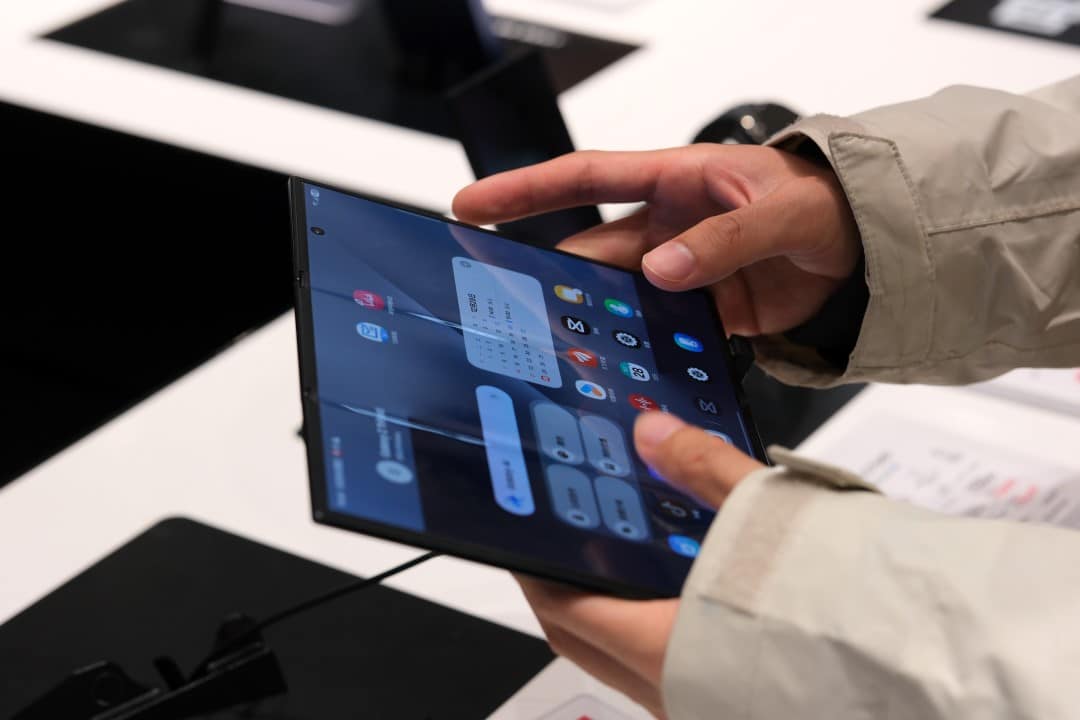
The South Korean manufacturer has resumed engineering work to create a new version of its smartphone with a triple screen, projecting the commercial launch for the year 2027. The strategic move comes months after the premature interruption of sales of the first generation of the device, which hit shelves in early 2026. The main goal of the development team now is to solve the physical challenges of the hardware, seeking a significantly thinner and more ergonomic profile for the end consumer.
To achieve this structural objective, engineers focused their efforts on completely redesigning the device’s central hinge mechanism. The technology market’s expectation is that the new device will fill the gap between the current thickness of the traditional line of foldables and the robust volume presented by the original triple model. Analistas in the industry point out that portability has become the decisive factor in the mass adoption of this premium category, forcing companies to innovate in construction materials without sacrificing the durability of flexible screens.
Advanced engineering and the challenge of thickness in mobile devices
The major technological obstacle in manufacturing cell phones with multiple folds lies in the overlapping of layers of glass, metal and internal components when the device is closed. The original model was 12.9 millimeters thick in its folded state, a number that alienated users accustomed to the traditional format of bar smartphones. The company’s new internal guidelines establish that the successor must reduce this mark, positioning themselves in an acceptable middle ground. The unofficial goal is to create a chassis that sits slightly above the 8.9 millimeters seen on the Galaxy Z Fold 7, ensuring the device can be carried in a pants pocket without causing discomfort. Essa reengineering requires the miniaturization of connectors and the adoption of aerospace-grade metal alloys, which offer high torsional strength at a fraction of conventional weight. The balance between lightness and structural robustness will dictate the pace of progress of the project over the next few months of laboratory tests.
In addition to thickness, the durability of the opening mechanism remains an absolute priority for the Asian brand. The new project aims to maintain strict certifications for resistance against the ingress of water and dust particles, essential characteristics for very high-cost equipment. Testes of mechanical stress are already being conducted to ensure that gears withstand hundreds of thousands of opening and closing cycles without exhibiting backlash or unwanted noise.
Impact on the global flexible display market
The insistence on the triple screen format demonstrates the manufacturer’s long-term vision for the mobile productivity segment. Enquanto traditional foldables offer a small tablet-like experience, the tri-fold form factor expands the panel to dimensions that rival ultra-compact notebooks. Essa feature directly appeals to corporate audiences and content creators who require vast viewing areas for simultaneous multitasking. Contudo, the high production cost of dual hinges and extended OLED panels still represents a significant commercial barrier. The economic viability of the new project will depend on the company’s ability to optimize its global supply chain by the launch year.
The competitive landscape also puts pressure on the accelerated evolution of flexible hardware. Fabricantes Chinese companies have presented increasingly thinner prototypes, forcing the sector pioneer to accelerate its research and development cycle. The South Korean answer needs to deliver not only a refined design, but also a seamless integration between the operating system and screen transitions.
Technical specifications and projected processing power
Although the commercial launch is far away, sources linked to the production chain already indicate the high-performance components that will equip the device. The internal architecture will be designed to withstand the thermal demands of cutting-edge processors, preventing overheating in such a restricted chassis. The battery will also undergo a redesign, adopting cells divided into three distinct modules to distribute weight and keep the center of gravity balanced in the user’s hands. Power management will be crucial to sustaining the lighting of such a large display area throughout a full day of heavy use.
The set of leaked specifications reveals the focus on maintaining the status of an ultra-premium product, with hardware capable of handling any modern application with high graphics or data processing demands:
- 10-inch LTPO Dynamic AMOLED 2X internal panel, QXGA+ resolution and variable refresh rate from 1 to 120 Hz.
- 6.5-inch external display with peak brightness of 2,600 nits and protective glass Gorilla Glass Ceramic 2.
- Mobile platform Snapdragon 8 Elite for Galaxy, optimized specifically for the brand’s ecosystem.
- 16 GB RAM memory combined with internal storage options that can reach 1 TB.
- Native support for the new Wi-Fi 7 connectivity networks and high-fidelity stereo sound systems.
The 6.5-inch external screen was sized to allow full use of the device without the need to unfold it for quick tasks, such as responding to messages or checking notifications. Quando fully opened, the 10-inch display transforms the smartphone into a true portable workstation. LTPO technology ensures that the refresh rate drops to just 1 Hz when displaying still images, intelligently saving battery. The intense brightness of 2,600 nits ensures perfect readability even in direct sunlight, correcting one of the main complaints of early adopters of flexible screens.
Integration with artificial intelligence and adaptive software
The cutting-edge hardware will serve as the foundation for the next evolution of the company’s suite of artificial intelligence tools. The Galaxy AI, which has become the brand’s main selling point in recent years, will receive exclusive functions designed for the triple screen format. Desenvolvedores software works on interfaces that allow you to drag and drop AI-generated elements between three simultaneously open applications, maximizing productivity. Recursos of simultaneous translation in calls will be able to use the different sides of the folded device to display the text in the corresponding languages for two people talking face to face. Furthermore, image editing using generative artificial intelligence will gain unprecedented precision on the 10-inch screen, bringing the experience closer to that found on professional graphics tablets. Optimizing the Android operating system to instantly recognize physical shape changes will require close collaboration with the Google engineering team. The success of the product will depend heavily on how natural and fluid this transition between usage modes will be.
Adapting third-party applications continues to be a point of concern for software engineers. Programas popular social media and video editing platforms will need specific updates to avoid distorting their interfaces into the atypical proportion of the expanded display. The company plans to release early development kits to ensure a robust ecosystem on launch day.
Portfolio expansion with sliding screens for the future
In parallel with the development of the three-fold model, the company’s research laboratories are advancing the creation of an entirely new category of mobile devices. Trata is a smartphone equipped with a slideable OLED screen, a concept that has already been shown behind closed doors at international technology fairs such as CES and MWC. Esse alternative format promises to deliver a viewing area of approximately 7 inches without the need for complex hinges, using an internal scrolling mechanism. The sliding approach can definitively solve the problem of the visible crease in the center of the screen, a physical limitation that still affects all foldables on the market today.
Currently, the sliding cell phone project is in its embryonic stages, with engineers focused on perfecting the manual opening system. The internal forecast indicates that this technology will only reach the necessary maturity for large-scale production in mid-2028. Até there, the line of traditional foldables and the future triple screen model will continue to be the pillars of the company’s innovation strategy. The diversification of physical formats indicates that the mobile phone industry is actively searching for the next design standard that will replace conventional glass rectangles in the coming decades.