Scientists find clues about stellar evolution in magnetism of white dwarfs that have been dead for billions of years

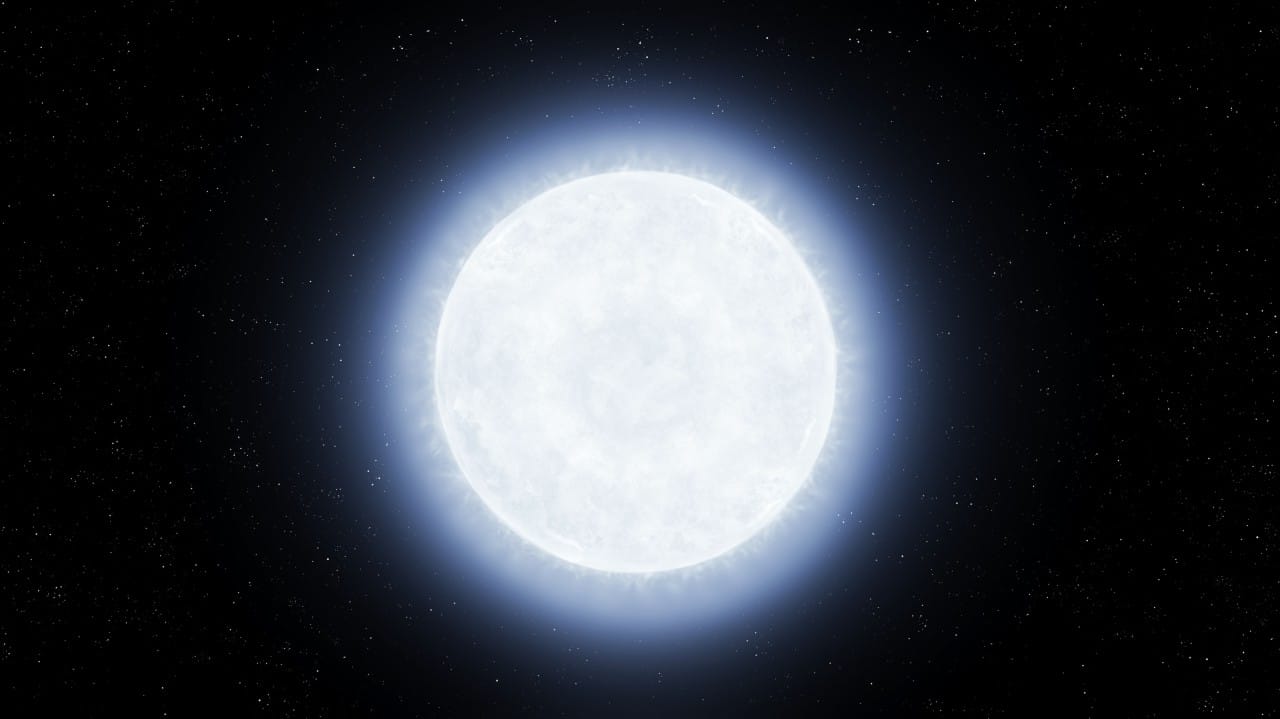
Cientistas who serve as stellar archaeologists have identified traces of fossil magnetism in dead stars known as white dwarfs. The discovery offers an unprecedented explanation about the process of evolution of stars like the sun. The phenomenon describes the transition from the red giant phase to the compact, smoking stellar remnant stage. Pesquisadores estimate that the sun will go through this process in approximately 5 billion years. The team linked theoretical models to observations of stars at different stages of development.
The study indicates that magnetic fields formed at the beginning of a star’s life persist throughout all subsequent stages. Eles emerge on the surface of white dwarfs billions of years later as fossil fields. Para reached this conclusion, experts used measurements of stellar oscillations, called stellar earthquakes. Essa technique, coming from asteroseismology, made it possible to connect the magnetism in the cores of red giants to the evidence found in white dwarfs.
Colapso of the solar core will mark the beginning of the red giant phase
The sun’s transformation will begin when the hydrogen in its core is completely depleted. Sem the fuel for nuclear fusion, the external pressure that supports the star against gravity will cease to exist. The core will immediately collapse, while the outer layers will expand dramatically. Estimativas point out that the sun will grow up to 100 times its original width during the red giant phase.
Esse expansion process will have direct consequences for the solar system. The solar atmosphere could swallow the inner rocky planets, possibly reaching the orbit of Marte. Embora the red giant phase is short in astronomical terms, lasting about 1 billion years, it defines the final fate of stellar matter. Após During this period, the outer layers will cool and disperse into space.
- Esgotamento total hydrogen in the solar core
- Fim of external pressure against the force of gravity
- Expansão of the outer layers up to 100 times
- Possível destruction of Terra and other rocky planets
- Formação of a nebula around the exposed core
- White dwarf Surgimento as final remnant

Magnetismo fossil dictates the pace of star evolution
Research led by Lukas Einramhof, Instituto of Ciência and Tecnologia of Áustria, highlights that magnetism influences stellar longevity. The magnetic field works like an internal engine that dictates how the star works and evolves. Dados observations show that older white dwarfs tend to be more magnetic than young ones. Isso reinforces the thesis that magnetism “emerges” with greater strength as time passes.
Understanding this mechanism helps predict the behavior of stars with a mass similar to that of the Sun. Até then, the exact influence of these fields on the stellar life cycle was little understood by modern science. Current models can now map the strength of these magnetic effects from the birth to the thermal death of the star.
Stellar Arqueologia uses technology to observe the past and future
The technique of asteroseismology has allowed scientists to “look” inside stars to detect hidden magnetic fields. By analyzing stellar vibrations, space archaeologists can identify the internal structure of stars that no longer shine as they used to. Esse technological advancement fills gaps regarding the transition of matter that occurs on a billion-dollar scale.
The sun, after expelling its outer layers, will become an exposed, cold core. Esse dense object, the white dwarf, is the end stage for the vast majority of stars in the universe. Studying fossil fields ensures that models of stellar evolution are more accurate for future generations of astronomers. The ISTA discovery puts magnetism at the center of the debate about the aging of the cosmos.