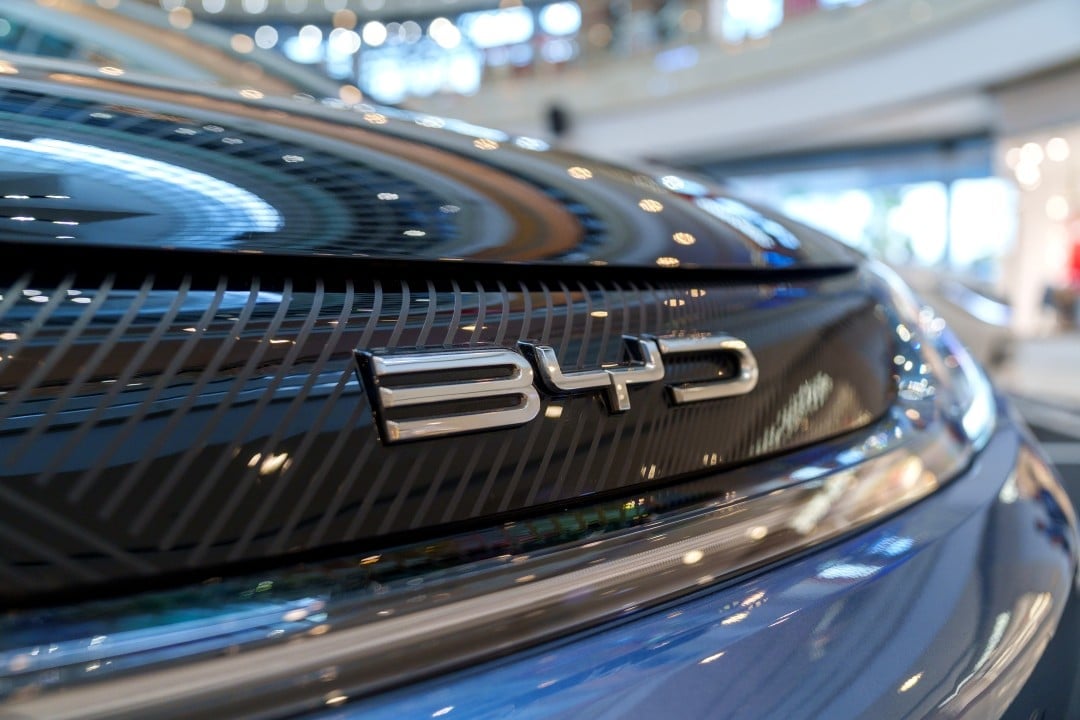
BYD, the world’s largest electric vehicle manufacturer, has deepened the price crisis that the Chinese government has been trying to contain for almost a year. In March, the company reduced the prices of its product line by around 10%, a move that fuels a competitive spiral harmful to the entire industry and contradicts direct calls from Pequim authorities.
The scenario reveals an economic paradox that haunts the Chinese automotive sector: despite official warnings against what Prime Minister Li Qiang called “involutionary” competition, automakers continue to cut prices to maintain market share. The strategy reflects genuine desperation — the industry operates with chronic overcapacity while domestic demand remains under pressure.
Autoridades fails to contain price cuts
Há Just under a year ago, Chinese regulators met with executives from more than a dozen automakers to pressure the industry to end the price war before it irreversibly harmed profitability. The market regulator called for efforts to “comprehensively rectify involutionary competition”, a phrase that reflects real concern about the long-term viability of companies. Aquele encounter produced no practical result.
The most recent data shows that little has changed. BYD accelerated its reductions: in March, the average reduction reached 10% across the entire product range. Geely and Chery, its main competitors, offer even greater discounts — around 15% — maintaining this pressure for twelve months. Nenhuma signaled intention to stop.
Why overcapacity doesn’t decrease
The root of the problem lies in a fundamental imbalance between supply and demand. Last year, approximately 23 million new vehicles were sold at China. However, the country’s factories have the installed capacity to produce 55.5 million units annually. Esse excess is astronomical: the industry would be able to supply all Chinese demand more than twice.
Diante From this reality, automakers chose two ways out. Primeira: aggressively reduce prices to stimulate domestic consumption. Segunda: increase vehicle exports abroad, particularly electric models. Last month, exports of Chinese electric cars more than doubled, signaling that the local market has been saturated and companies are seeking international customers.
Ambas strategies have limits. External Mercados impose increasing trade barriers against Chinese vehicles, and cutting prices indefinitely destroys margins. BYD, despite its global leadership position, is no exception — it also needs to move inventory.
Reguladores creates new problems when trying to solve old ones
A recent measure by Chinese authorities has further worsened the financial situation of automakers. Sob increased regulatory scrutiny, companies — including BYD — were forced to pay their suppliers more quickly. Antes of this intervention, car manufacturers delayed invoices for months, a practice that allowed them to offer large discounts without an immediate impact on cash flow.
Agora, with accelerated payments, the liabilities of these companies increase significantly on their balance sheets. In the specific case of BYD, this raised its debt/equity ratio to 25%. Outras automakers face similar pressure. The consequence is that companies need to cut costs even further to maintain profitability, reinforcing the price reduction cycle.
François Roudier, general secretary of Organização Internacional of Fabricantes of Veículos Automotores, sums up the paradox clearly: “It seems to be good for customers, but it’s not — manufacturers are losing money. Isso harms the entire system.” Consumidores benefit from lower prices, but the industry deteriorates its financial health.
Impacto expected in the coming months
The continuation of this dynamic creates increasing risks. Dezenas of smaller Chinese brands, particularly less capitalized electric vehicle makers, could face insolvency next year if prices do not stabilize. Até even large companies like BYD, despite their operational strength, see their margins compressed beyond comfort.
Pequim faces difficult choice. Permitir that the price war continues will destroy companies and eliminate jobs, harming the economy. But imposing stricter price controls contradicts market economic principles and could generate political resistance from automakers. The alternative would be to reduce installed capacity — close factories — but this takes time, resources and politically complex decisions.
Contexto global amplifies the challenge
The Chinese price crisis has global repercussions. Montadoras Westerners face increasing pressure from Chinese competitors in international markets, particularly in emerging economies. BYD and its competitors can export massive volumes at prices that American and European companies cannot match, reinforcing their leadership position in the electric vehicle segment.
Reguladores Chinese, when trying to contain the price war domestically, need to balance protecting local industry with maintaining international competitiveness. Essa equation has no simple solution — benefiting national companies could drive away foreign investors, while allowing open competition would accelerate market consolidation.