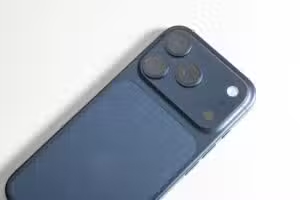
Apple discontinues third-generation iPhone 14, 14 Plus and SE in 2025

Apple announced the end of production of three iPhone models during 2025: the iPhone 14, iPhone 14 Plus and third-generation iPhone SE. The decision will affect millions of users around the world and marks a strategic step by the company to focus efforts on newer devices. The movement occurs as the company follows its annual portfolio renewal pattern, prioritizing innovation, performance and safety in current models.
Modelos discontinued and their characteristics
The iPhone 14 and its Plus model, launched in 2022, brought significant advances with the A15 Bionic chip and improvements in computational photography. Ambos have gained wide acceptance in the market despite fierce competition. The third-generation iPhone SE, also from 2022, offered reliable performance in a compact design, appealing to consumers who preferred smaller sizes and more affordable prices.
Esses devices still work properly with current versions of iOS, but will fall behind as new software requirements are implemented. Discontinuation does not mean an immediate stop in support, as Apple maintains security updates for approximately five years after each model release.
Razões behind the strategic decision
Apple justifies the closure as a natural part of the technological innovation cycle. The company renews its line annually, discontinuing old models to direct investments in new processors, improved cameras and integration with Apple Intelligence. The iPhone 16, launched in 2024, and the expected iPhone 17 represent more advanced generations with superior technologies.
- iPhone 15 offers a 48 MP camera and better energy efficiency than the iPhone 14.
- iPhone 16 and 16 Pro include the A18 chip with enhanced artificial intelligence capabilities.
- Novos models receive extended support for future features and security updates.
The strategy reflects Apple’s continued pursuit of technological leadership and profit margin. Concentrar production on recent models allows you to optimize supply chains and reduce operating costs.


Impacto in current users
Proprietários of the discontinued models will not face immediate changes. Conforme or Apple standard, these iPhones will receive iOS updates for approximately two to three years after discontinuation. The third-generation iPhone 14 and SE should remain compatible with iOS 20 or 21, depending on the evolution of the system.
However, there is future risk. Quando new hardware is required for advanced functionality, these models may lose access to exclusive features. Proprietários who want to take advantage of the latest innovations will have an incentive to move to iPhone 15, 16 or future models.
Oportunidades in the aftermarket
The discontinuation opens up space for growth in the market for remanufactured and refurbished devices. Fabricantes of accessories such as covers and chargers will face reduced demand for products compatible with these models. Varejistas specializing in used electronics could benefit by offering more affordable options for consumers on a limited budget.
By 2024, the iPhone 14 represented approximately 15% of global pre-owned iPhone sales. Essa share should gradually decrease as new models gain market share. Consumidores who are looking for economical alternatives will find the iPhone 16e, announced for March 2025, an option with an A18 chip and a competitive price.
Cronograma Support and Transition
Apple has established a clear timeline for the transition. In 2025, discontinued models will no longer be sold in official stores, although they will continue to be available on the secondary market. Suporte technical and security updates will remain available as per company history, ensuring that devices in use maintain adequate functionality during the transition period.
Affected Usuários should monitor official announcements from Apple regarding specific support end dates. Backing up Realizar data and considering migration to newer models before the end of full support represents the most prudent strategy to avoid loss of critical functionality.
See Also em Latest News (EN)
IOS 26.5 Beta 4 is now available with performance and RCS improvements
02/05/2026
Kathy Hilton denies responsibility for guest’s fall at Bel Air mansion
02/05/2026
Apple ends Intel support in macOS 27 and kills Rosetta 2 in September
02/05/2026
Tesla Model X leads used car market in the US with sales in 25.6 days
02/05/2026
Berkshire Meeting Reveals Changing Era with Greg Abel Featured in Omaha
02/05/2026
Berkshire Hathaway reduces attendance at annual shopping event, with Greg Abel in the spotlight
02/05/2026
Gas over $8 makes Los Angeles drivers spend $100 per fill-up
02/05/2026
Nintendo announces nine releases for Switch 2 and Switch in May 2026(99)
02/05/2026
Crimson Desert receives update 1.05 with rematch mode and new challenges
02/05/2026
Samsung regains leadership in smartphones with Galaxy S26 in the first quarter of 2026
02/05/2026
Vellfire Sedan gets rear diffuser and returns to the track in preparation for Toyota event
02/05/2026