Adaptation of Final Fantasy VII Rebirth for Nintendo Switch 2 requires deep graphical cuts
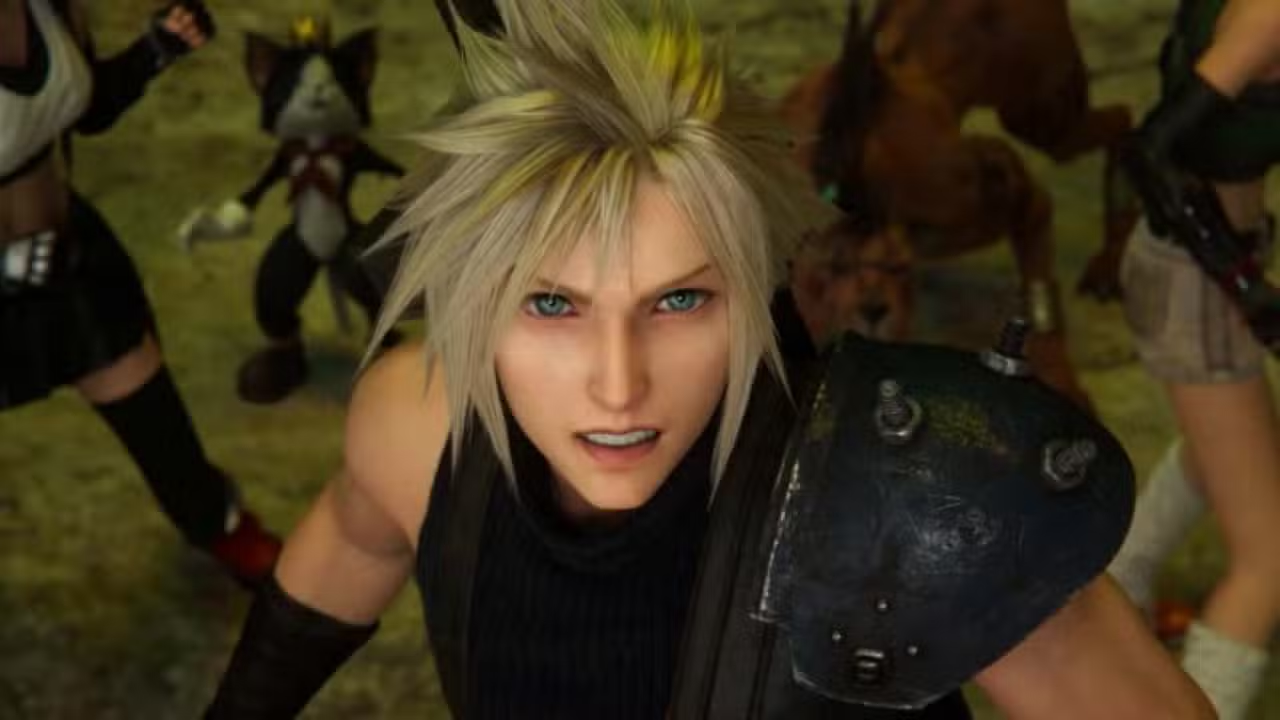
The recent technical demo of Final Fantasy VII Rebirth running on Nintendo Switch 2 hardware exposed the challenges of adapting a large-scale title for portable platforms. Square Enix needed to implement significant visual reductions to keep the game functional on the new console. The project requires a delicate balance between the portability of the system and the graphical complexity required by the original work. Especialistas in technology assesses that the conversion process has reached the limit of processing available on the device.
Preliminary tests indicate that the development team has profoundly changed the game’s visual structure. The conversion resulted in a fluctuating frame rate, which varies depending on the intensity of the action on screen. The adaptation required notable sacrifices in textures, lighting and density of elements in the open scenes. The company responsible for the title seeks to deliver a playable experience, even if this means distancing the presentation from the version previously released for more robust desktop consoles.

Modificações structural features in game graphics
The porting process for the hybrid console required the abandonment of several layers of detail present in the native PlayStation 5 version. The developers replaced the high-resolution textures with compressed files. Esses elements now operate in 1024×1024 pixel formats or lower resolutions in much of the environment. Essa change directly affects the visual perception of terrain surfaces, building walls and characters’ clothing while exploring the map.
The global illumination system has also undergone a complete restructuring to ease the processing load on the graphics unit. Real-time calculated reflections have given way to static, pre-rendered reflection maps. Dynamic shadows have suffered severe limitations. Elas now operates with just two cascade levels, which generates less defined contours in areas of strong light contrast and reduces the realism of projections on the floor.
The population density of cities and towns suffered noticeable cuts on the new Nintendo platform. The three-dimensional models of secondary characters feature a drastically reduced polygon count. The sudden appearance of elements on the screen often occurs in high-traffic areas. Esse visual phenomenon highlights the device’s RAM memory restrictions and the difficulty in loading data from storage in a timely manner.
Performance Oscilações during exploration
Frame rate stability represents the biggest technical hurdle for the software engineering team at this point in development. The Nintendo Switch 2 can sustain an average of 40 to 45 frames per second in closed and static environments. However, moving the camera quickly in open world zones causes immediate crashes. Performance often drops into the 30 to 35 frame range in areas with lots of foliage or complex structures.
Confrontations against stage bosses expose the greatest weaknesses of current hardware in the game’s graphics engine. The simultaneous presence of multiple enemies and the execution of spells with intense visual effects drop performance abruptly. Technical records documented moments when fluidity fluctuated between 28 and 40 frames per second. Essa instability impairs the accuracy of dodge and attack commands during the most demanding battles.



Non-interactive story sequences are able to maintain a slightly more consistent visual presentation compared to actual gameplay. These scenes are rendered at native resolutions of 720p when the device operates in portable mode. Connecting the console to the charging dock raises the pixel count to 900p. Isso provides a slightly sharper image on televisions, although still far from the current high definition standard.
Principais technical adaptation commitments
The project’s technical documentation details the exact concessions made by the programming team to make the software work. The modifications affect practically all rendering subsystems, requiring detailed work to readjust resources.
- Resolução dynamics locked at 720p in handheld mode and 900p in desktop mode during action.
- Compressão of scenery textures reduced from 2048×2048 to 1024×1024 pixels.
- Limitação shadow system for just two render cascades and shorter throw distance.
- Remoção completes advanced reflections in favor of static screen space solutions.
- Corte sixty percent density and visual particle generation rate.
- Encurtamento draw distance by thirty-five percent compared to PlayStation 5.
- Taxa of frames with dynamic target of 40 fps, showing constant variations.
- Qualidade compressed audio when playing video files and cinematic sequences.
Esses tweaks demonstrate the disparity in computing power between traditional desktop platforms and mobility-focused devices. The massive scale of the world of Final Fantasy VII Rebirth amplifies the difficulties inherent in any conversion process. The volume of data processed simultaneously overloads the hybrid console architecture.
Etapas Optimization and Market Finals
Square Enix maintains teams dedicated exclusively to refining the source code for this specific version. Engineers seek to optimize cache memory management and improve data compression algorithms. The central objective is to free up additional resources for the graphics processor. The technical team’s main goal is to stabilize the frame rate during combat and minimize the abrupt appearance of textures during scene transitions.
The electronic games market is closely watching the development of this project, comparing it with other recent adaptations. Large-scale Títulos like Starfield and Dragon Age Veilguard also faced similar technological barriers when testing on new hardware. Analistas from the sector consider that the final result will serve as a thermometer for the capacity of the Nintendo Switch 2. The expectation points to a catalog rich in conversions, but with obvious technical limitations in relation to competing consoles.
Closed testing with external developers will provide the data needed for last-minute programming adjustments. The company plans to apply corrections based on technical feedback from these assessment sessions scheduled for December. The polishing work will continue uninterruptedly until final approval of the software. The distributor promises to update the public on optimization progress before the end of the calendar year.
See Also em Latest News (EN)

Physical exercise strengthens memory and reasoning, research shows
04/05/2026
Valve confirms development of Steam Deck 2 with focus on global availability
04/05/2026
Champions League final without Brazilians is a real risk if Atlético and Bayern win knockout stages
04/05/2026
Third victim of plane crash that crashed into building in BH dies
04/05/2026
Netflix sets “O Sobrinho do Mago” to premiere in February 2027
04/05/2026
Retailer reduces the value of the MacBook Air M4 with 16GB to the lowest historical level in the digital market
04/05/2026
PlayStation 5 owners redeem three high-budget games at no cost in the digital store
04/05/2026
Rockstar Games’ commercial strategy releases Grand Theft Auto V for free in the main digital stores
04/05/2026
Japanese corporation changes schedule and guarantees title on PlayStation Plus for May 2026
04/05/2026
Nintendo reveals Switch successor with eight-inch LCD screen and remake of Zelda Ocarina of Time
04/05/2026
Nintendo confirms launch of nine games for Switch and new console during May
04/05/2026