Threat of severe storm forces Formula 1 to bring forward start of the Miami GP by three hours
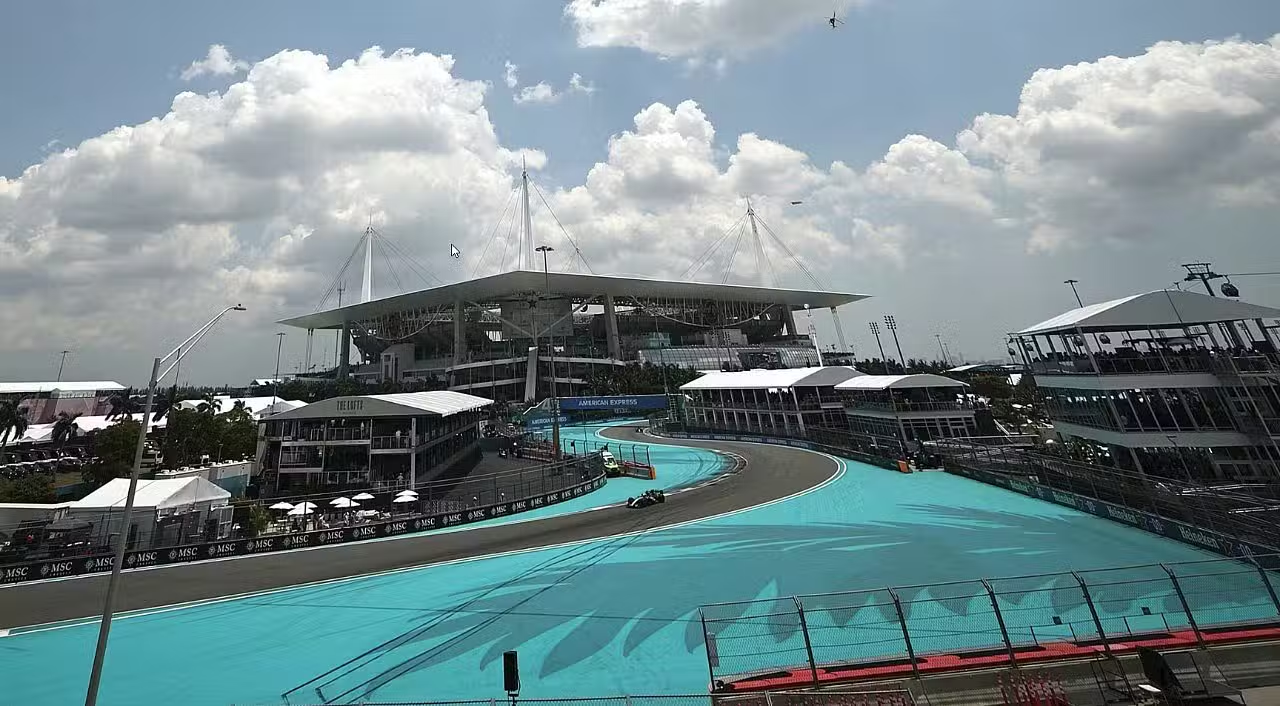
Automobilismo’s Federação Internacional and Fórmula 1 management have confirmed a drastic change to Miami’s Grande Prêmio’s official schedule. The start of the race was brought forward by three hours compared to the original plan. The cars will line up on the grid at 1pm local time, replacing the scheduled 4pm start. The emergency measure responds directly to meteorological warnings indicating the arrival of a severe storm system in the racetrack region during the afternoon. The event promoters prioritized the physical integrity of everyone present at the sports complex.
Prevenção against weather impacts on the circuit
The south of the Flórida state has a tropical climate prone to sudden changes during spring. Weather radars indicated a very high probability of torrential rain accompanied by electrical discharges exactly in the original race window. The race management chose to act in advance to guarantee an operational safety margin. Correr under extreme precipitation conditions compromises water flow on the asphalt. Anticipation creates a more favorable scenario for the full completion of the regulatory laps.
An official document signed jointly by the motorsport authorities detailed the reasons for the schedule transfer. The text emphasized the need to ensure the largest possible window for carrying out the stage without prolonged interruptions. Red Bandeiras causes unpredictable delays. Drivers’ visibility drops dramatically as water spray rises from the rear tires of the cars in front. Controlling single-seaters at speeds exceeding three hundred kilometers per hour requires a track with minimum levels of grip.
Protocolos safety for riders and spectators
Risk management represents the central pillar of operations in the highest category of world motorsport. The phenomenon of hydroplaning occurs when tires completely lose contact with the ground due to the accumulation of water. Accidents in these circumstances usually involve multiple vehicles and high-energy impacts against protective barriers. Changing the schedule mitigates competitors’ exposure to this critical level of danger. The governing body maintains strict procedures for releasing or vetoing the presence of cars on the track.
Technical evaluations follow guidelines established in international sporting regulations. Commissioners apply the following measures during weekends with unstable weather:
- Monitoramento continuous monitoring of official radars to identify approaching storm cells and strong winds.
- Inspeção physical layout to check the functioning of the drainage drains and the presence of dangerous puddles.
- Comunicação directly via radio with competitors to collect reports on drivability in the most critical sections.
- Acionamento immediate virtual or real safety car to neutralize the fleet’s pace in case of sudden deterioration.
- Preparação of medical rescue teams for rapid interventions in escape areas with slippery asphalt.
The public present in the temporary stands and in the common areas also enters into the organizers’ security equation. Evacuating tens of thousands of people under heavy rain and lightning creates a massive logistical risk. Metallic structures require specific insulation protocols during electrical storms. The time change allows fans to follow the race and leave the racetrack before the weather conditions worsen.
Desafios logistics in the pits and broadcasts
The postponement of the start triggers a domino effect on the work routine within the paddock. Mechanics need to speed up the final assembly of aerodynamic components and the checking of hydraulic systems. Strategic meetings between engineers and pilots are shortened. The physical and mental preparation of athletes also undergoes adjustments, changing eating and warm-up times. The choice of car setup takes on dramatic aspects, as teams must decide between a dry or wet track configuration with less analysis time. The transport of spare parts from the warehouses to the pit lane area takes place under intense pressure against the clock.



Broadcasters who hold image rights face a considerable technical obstacle with the change in schedule. Television signal generation meets a rigorous global programming schedule. Channels need to relocate local attractions to accommodate live broadcast of the race three hours earlier. Communication satellites require realignment of contracted band schedules. The narration and commentary team adapts the supporting material to go live in advance. Sponsors also require commercial deliveries at the times stipulated in the contract, forcing adaptations in advertising insertions.
The operation of the host city suffers direct impacts on urban mobility and public safety. The circuit access gates opened early to accommodate the flow of fans. Municipal public transport and travel app services needed to anticipate special traffic schemes. The police contingent and medical support teams rearranged their work shifts to cover the event’s new peak hours. The sale of official products and food in food courts also adjusted supply logistics.
Disputa direct between Antonelli and Verstappen at the start
The climate uncertainty scenario adds tension to the starting grid already established during the qualifying session. Driver Kimi Antonelli secured first position and will start at the front with the Mercedes car. The young talent set the fastest time on the clock and achieved an unprecedented pole position in his career in the category. The street layout requires millimeter precision close to concrete walls. The early lead offers a crucial advantage in case of reduced visibility in the first few laps.
The second position on the grid belongs to Max Verstappen, representative of the Red Bull team. The three-time world champion has a remarkable record of winning races in wet asphalt or mixed conditions. Positioning on the front row puts the Dutchman in a position to attack immediately as he approaches the first corner of the circuit. The start represents the moment of greatest proximity between the cars and requires quick reflexes to avoid touches that could cause damage to the front wings.
The choice of tire compounds will define the pace of the opening laps of the competition. The teams monitor the asphalt temperature and air humidity until the last minutes before the presentation lap. An error when selecting between slick, intermediate or extreme rain tires compromises the entire strategy designed in the simulator. The advance of the schedule provides a track with different characteristics from those faced in free practice. Drivers will need to discover the ideal braking points while defending their positions in the pack. Managing rubber wear will dictate the exact timing of pit stops for mandatory changes.
See Also em Latest News (EN)

Physical exercise strengthens memory and reasoning, research shows
04/05/2026
Valve confirms development of Steam Deck 2 with focus on global availability
04/05/2026
Champions League final without Brazilians is a real risk if Atlético and Bayern win knockout stages
04/05/2026
Third victim of plane crash that crashed into building in BH dies
04/05/2026
Netflix sets “O Sobrinho do Mago” to premiere in February 2027
04/05/2026
Retailer reduces the value of the MacBook Air M4 with 16GB to the lowest historical level in the digital market
04/05/2026
PlayStation 5 owners redeem three high-budget games at no cost in the digital store
04/05/2026
Rockstar Games’ commercial strategy releases Grand Theft Auto V for free in the main digital stores
04/05/2026
Japanese corporation changes schedule and guarantees title on PlayStation Plus for May 2026
04/05/2026
Nintendo reveals Switch successor with eight-inch LCD screen and remake of Zelda Ocarina of Time
04/05/2026
Nintendo confirms launch of nine games for Switch and new console during May
04/05/2026