Apple freezes price of iPhone 18 Pro at US$1,099 as rivals become more expensive
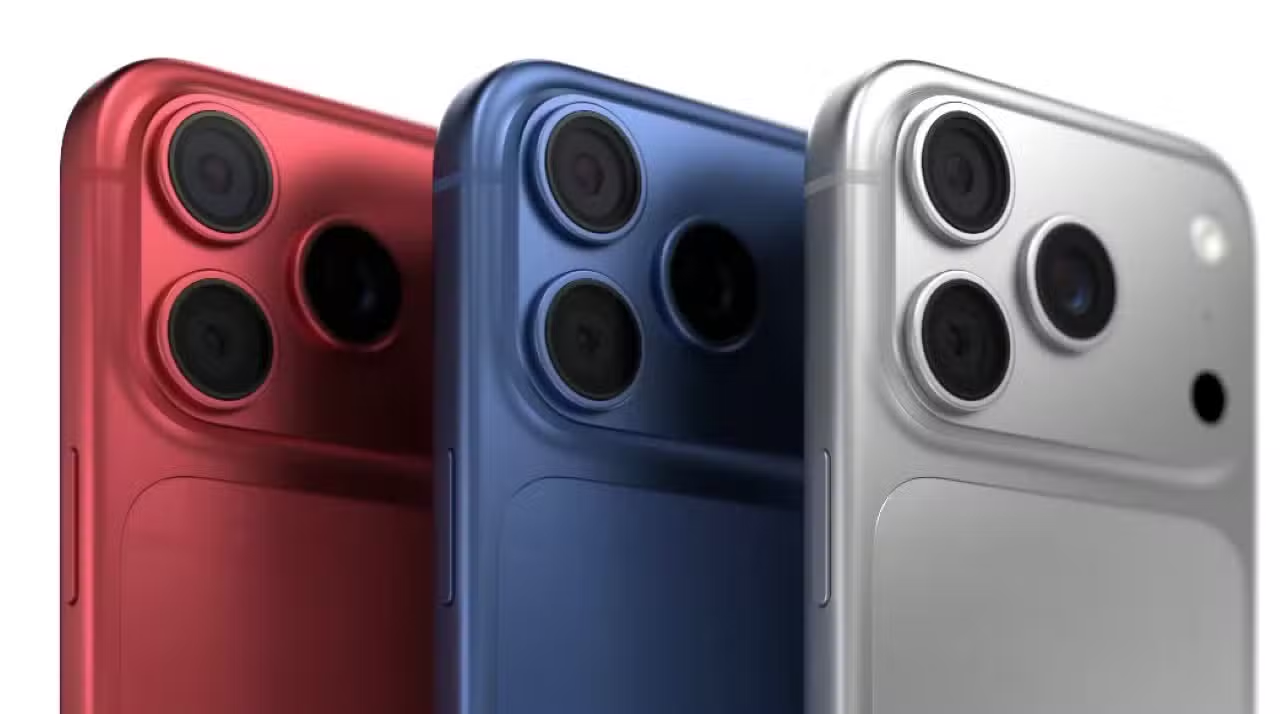
Apple will keep the prices of the iPhone 18 Pro unchanged for 2026, according to an analysis by expert Jeff Pu. The iPhone 18 Pro will remain at US$1,099 and the Pro Max at US$1,199, the same values as the previous generation. Enquanto competitors increase their devices in response to the global memory crisis, Maçã’s aggressive pricing strategy should strengthen its competitive position in the market.
The price freeze represents a calculated move in light of the chip shortage affecting the industry. Fabricantes like Samsung face pressure to increase costs, but Apple is able to maintain competitive margins through exclusive contracts and aggressive purchases of available RAM. The tactic puts the brand at a clear advantage over Android’s rivals.
Storage-Focused Pricing Estratégia
Para absorbs costs of the crisis without compromising base prices, Apple will increase prices only in versions with higher storage. Modelos with 512 GB and 1 TB will receive readjustments, while the initial settings remain frozen. Essa approach maintains visual competitiveness in the market while distributing costs among consumers in different segments.
The pricing structure creates two positive effects for the company. Primeiro, attracts value-sensitive buyers by keeping the minimum price the same as the previous year. Segundo, captures additional margin from customers opting for premium storage. Analistas see this tactic as a sophisticated response to inflationary pressure.

Posição market strengthened amid crisis
Apple captured 21% of the global smartphone market in the first quarter of 2026, growth of 5 percentage points compared to the same period in 2025. Esse’s performance comes as Counterpoint Research sees a reduction in global shipments caused by the memory crisis. The company stands out as an exception in an unfavorable context.
The aggressive purchasing strategy explains the performance. Apple acquires entire stocks of RAM memory before competitors gain access. Essa stance not only guarantees supplies for its products, but also inflates costs for rivals and reduces availability for the competition. Samsung, the main opponent, will be forced to increase prices simultaneously with this offensive by Maçã.
Informações indicate that Apple depletes chipmakers’ inventories in sufficient volume to prevent competitors from making significant purchases. Monopolistic Estratégia creates competitive advantage and brand differentiation in the premium smartphone market.



iPhone Fold marks disruption in pricing model
iPhone Fold will break the price freeze pattern. Primeiro foldable from Apple, the device will be launched for over US$ 2 thousand, equivalent to R$ 12 thousand in the Brazilian market. Tecnologias’s new screen and hinge justify the premium over conventional models.
The launch of the foldable represents a big bet in a differentiated segment. Enquanto iPhone 18 Pro and Pro Max consolidate position in traditional premium phones, Fold seeks leadership in innovation category. High Preço reflects manufacturing complexity and exclusivity of components supplied by specific partners.
Unfavorable competitive Cenário for rivals
Samsung faces strategic dilemma. The competitor needs to increase prices to cover memory costs, exactly when Apple freezes its values. Usuários perceive disproportionality: even the previous generation phone costs less in Maçã while Android alternatives become more expensive. Esse scenario disproportionately benefits the Californian brand.
- iPhone 18 Pro: $1,099 (frozen)
- iPhone 18 Pro Max: $1,199 (frozen)
- iPhone 18 base: will only arrive in 2027
- iPhone Fold: over $2,000
- Versões with 512GB and 1TB: will receive selective adjustments
The positioning puts Apple on an offensive trajectory in the smartphone market. Enquanto chip crisis affects the industry uniformly, the company’s ability to maintain low prices and absorb costs differentiates its proposal. Concorrentes face a choice between accepting lower margins or raising prices and losing market share.
Analistas note that this dynamic could accelerate consolidation in the premium smartphone market. Consumidores who consider migrating from Android have additional financial incentive in this cycle. Samsung and other manufacturers face intensified competitive pressure at the very moment the global chip crisis makes it unfeasible to combat Maçã’s pricing.
See Also em Latest News (EN)

Japanese manufacturer announces new portable video game with artificial intelligence graphics and recreation of Zelda
04/05/2026
Apple reduces price of iPhone 18 Pro for 2026 with A20 chip
04/05/2026
Rockstar Games offers a permanent license for the game Grand Theft Auto V for free for exactly 48 hours
04/05/2026
Nintendo plans to release nine games for the Switch and Switch 2 consoles in May 2026
04/05/2026
Apple presents new premium smartphone with translucent structure and 5200 mAh battery
04/05/2026
Japanese manufacturer offers major free titles on PlayStation 5 without requiring PS Plus
04/05/2026
Nintendo drops prices of digital games for Switch and Switch 2 with discounts of up to 80%
04/05/2026
Dacia reveals 155 hp hybrid engine for Sandero in tests in Europe
04/05/2026
Chilean government recommends changing Key Única password after data leak
04/05/2026
Real Madrid’s Vini Jr. removes photo with Virginia from Instagram after being ignored and web reacts
04/05/2026
Apple releases schedule for the presentation of the iPhone 18 Pro and foldable model
04/05/2026