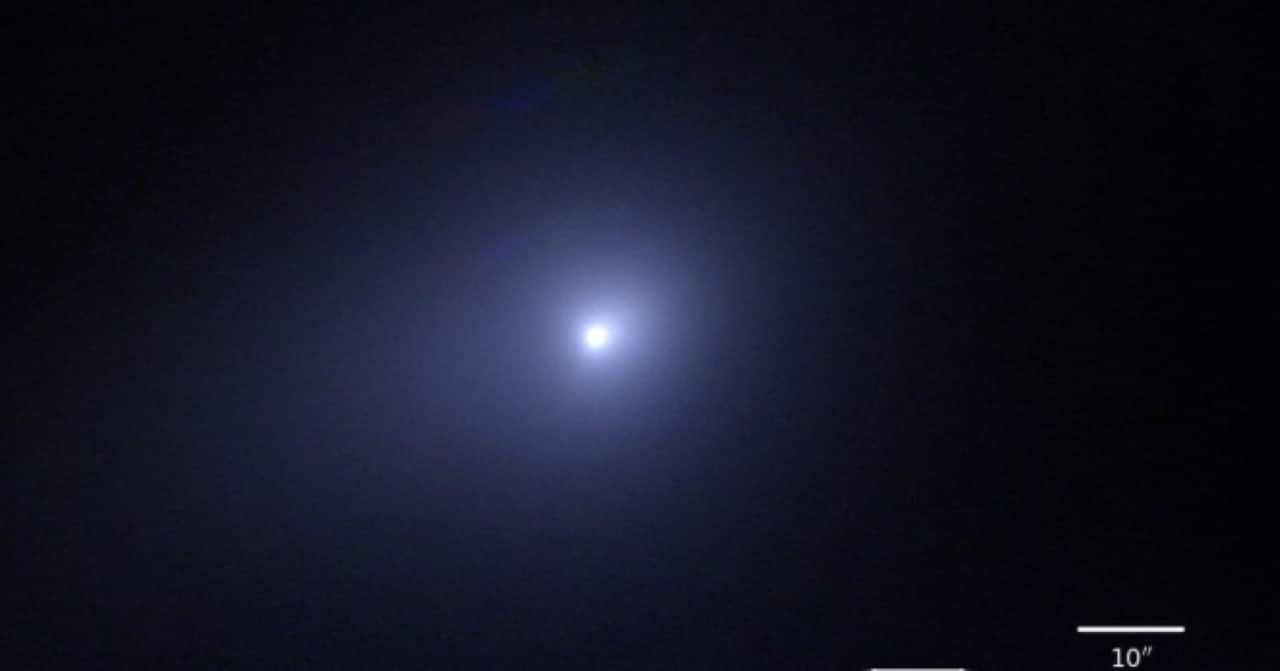
Observações astronomical tests confirm that comet 3I/ATLAS, an interstellar object that crosses Earth’s orbit, originated in a region much colder than any point in our solar system. Dados collected by space and ground-based telescopes indicates chemical and thermal composition compatible with temperature environments close to absolute zero. The comet bears the signature of a birth in the outer regions of another star system, providing clues about how icy worlds form outside our cosmic neighborhood.
The discovery marks a rare moment in modern astronomy: the direct confirmation of an object originating from another star system presenting preserved primordial characteristics. Cientistas compared the composition of 3I/ATLAS with previously studied cometary nuclei and found significant differences. Onde comets native to our solar system contain certain volatiles in known proportions, this visitor exhibits a mix that would only make sense in an even colder environment during its formation.
Composição chemistry points to extraterrestrial genesis
Analistas detected high concentrations of primordial ices and complex molecules that are uniquely preserved at extreme temperatures. The captured light spectrum reveals signatures that diverge from patterns found in comets originating from the Oort cloud or the Kuiper belt. Pesquisadores identified:
- Proporções single frozen carbon monoxide
- Abundância anomalous cyanide and other nitrogenous compounds
- Crystalline Estrutura compatible with formation in a 10 kelvin environment
- Ausência of certain organic molecules common in solar bodies
Estes markers converge on one conclusion: 3I/ATLAS was born in a protoplanetary disk much farther from its parent star than the distance between our Sol and its most remote objects.
Trajetória and observation
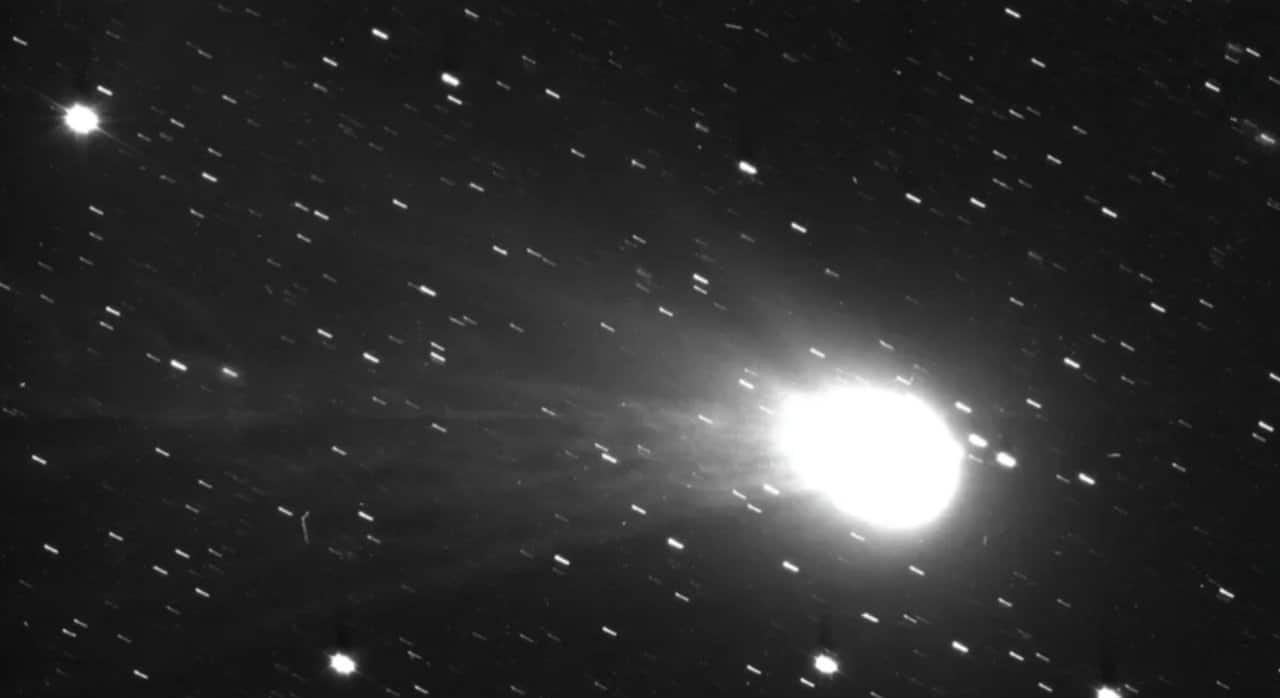
The comet entered the inner solar system in 2026 and continues on a trajectory that will take it beyond Plutão in the coming months. Telescópios from the northern and southern hemispheres track its progression with increasing precision, recording subtle changes in its brightness and composition as it approaches Sol. Solar radiation slowly heats the surface of the core, releasing gases that form the characteristic tail. Cada Further observation refines the understanding of its origin and reveals new details about its natal environment.
Astrônomos take advantage of the period of maximum visibility to collect data that cannot be obtained again for decades. Missões spacecraft like the James Webb telescope capture spectra at infrared wavelengths, where the comet’s thermal signature shines with maximum clarity. Radiofrequency Dados from ground-based observatories complement the images, allowing a three-dimensional reconstruction of their shape and rotation.
Implicações for understanding the cosmos
Intergalactic Corposs like 3I/ATLAS function as natural messengers, carrying information about the architecture of distant star systems. Sua’s extreme temperature of origin suggests that the region where it was born underwent profound cooling, perhaps caused by gas escape or gravitational disturbances during the formation of a massive planet. Esta dynamics offer insights into scenarios that may be occurring around other stars at this time.
Cientistas emphasize that objects like this interstellar comet complement the knowledge obtained from exoplanets detected by other methods. Enquanto exoplanets reveal environments where life could emerge, primitive bodies like 3I/ATLAS expose the conditions that precede the formation of worlds and atmospheres. The collected observations will be analyzed for years, feeding computer simulations of planet formation in distant star systems and refining theoretical models of how our own system was born.
Observational mission Continuidade
Telescópios remains aimed at 3I/ATLAS as long as its visibility allows. Instituições research teams coordinate efforts globally to not miss any data collection opportunities before the comet returns to the depths of interstellar space. The astronomical community recognizes that encounters with objects of this nature occur infrequently enough to justify maximum allocation of observational resources. Cada spectrum captured, each high-resolution image, each brightness measurement contributes to putting together a puzzle that is only now beginning to gain coherence.