A study recently published in the prestigious journal Acta Astronautica reveals a revolutionary method to significantly shorten Marte trips. Pesquisadores point out that the duration of an interplanetary mission can be drastically reduced to just 153 days. Essa optimization is achieved through the exploration and exploitation of preliminary asteroid orbital data, an approach that challenges established paradigms in space journey planning and promises to transform astrodynamics. The research was published on April 28, 2026, authored by Kouceila Rekik and other collaborators.
Traditional interplanetary mission planning has relied on highly refined orbital mechanics, with a constant focus on ideal planetary alignment and fuel efficiency over extended periods. Viagens to Marte, under this model, typically span many months each way. Elas culminate in total mission timelines that often exceed one year. Contudo, this new research introduces a less conventional and bolder variable: the strategic use of orbital data from early-stage asteroids. The study explores whether preliminary trajectories, often considered excessively imprecise for complex mission design, can surprisingly reveal space pathways that have previously remained unnoticed.
Reavaliação of interplanetary routes and efficiency
Durante decades, the journey to Marte represented a colossal logistics and engineering undertaking. Ela involved long and complex journeys across millions of kilometers of space. The missions, which lasted years and not mere months, were designed by highly sophisticated orbital mechanics. Essa mechanics prioritized perfect planetary alignment and maximum fuel efficiency. The new research, however, introduces a radical questioning of this paradigm. Ela proposes that preliminary asteroid trajectories, typically seen as sources of uncertainty, could be the key to more direct and significantly faster routes.
The central idea underlying this innovation is the identification of geometric alignments. Eles occur singularly between the orbital planes of Terra, Marte and smaller celestial bodies, such as asteroids. Rather than treating these early asteroid trajectories as obstacles or mere curiosities, the study repositions them as potential navigation guides. Asteroid 2001 CA21, whose orbital path was initially estimated to intersect the orbits of Terra and Marte, served as a prime example. Embora’s orbit was later refined with additional data, the initial data proved invaluable as a conceptual tool for this research. Essa methodology opens a new dimension in astrodynamics, where the proximity of celestial bodies becomes a characteristic to be explored, and not a limitation to be circumvented, redefining mission planning.
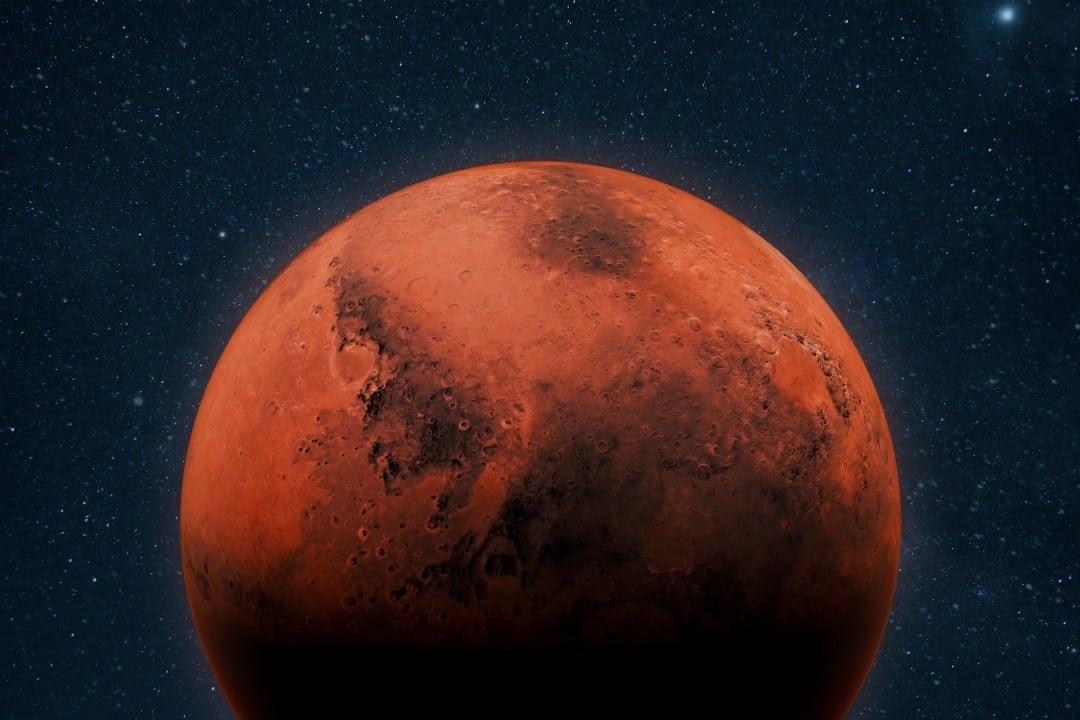
Cosmic Alinhamentos for the 2031 window
The research was dedicated to analyzing several future oppositions of Marte, with a particular focus on the occurrences of 2027, 2029 and 2031. The objective was to determine the moment in which a spatial shortcut would be most viable and efficient. The opposition of Marte, a phenomenon in which Terra is positioned directly between Sol and Marte, already constitutes a fundamental launch window. Essa preference is given by the natural reduction of the distance between the two planets. However, the study revealed that only one of these potential alignments exhibited a truly unique configuration.
Segundo Marcelo of Oliveira Souza, researcher of Universidade of Estado of Norte of Rio of Janeiro (UENF), the astronomical configuration of 2031 aligns in an extraordinary way. Ela coincides with the orbital plane suggested by initial data from asteroid CA21. Esse precise alignment allows spacecraft to maintain a trajectory with an inclination of up to five degrees relative to the plane of the asteroid. Essa angulation drastically minimizes propulsive energy expenditure and maximizes the accuracy of the planned trajectory. In the scientific article published in Acta Astronautica, Oliveira Souza details this discovery: “Marte’s opposition in 2031 allows for two complete round-trip missions in less than a year, compatible with the plan anchored on the CA21 satellite.” Tal precision opens up previously unimaginable avenues for exploration.
Essa projection does not represent a marginal improvement. The study outlines remarkably optimistic scenarios where one-way trips could take just 33 days. The return journeys would take around 90 days. Mesmo most conservative estimates suggest a 56-day outward journey and a 135-day return journey. Esses deadlines compress what is currently a multi-year undertaking into a mission with a total duration of approximately five months. Tais reductions have profound implications for the feasibility and safety of future crewed missions to Marte, fundamentally altering the scope of interplanetary exploration.
Como asteroids become navigation guides
The use of asteroids in planning space missions is not completely new. Contudo, its historical role was often limited to gravitational aids or the need to avoid potential obstacles. The present study, however, operates a fundamental redefinition. Ele repositions them as true “geometric anchors” in the vast and complex interplanetary space. By meticulously analyzing the inclination and trajectory of initial orbital solutions, researchers are able to define a spatial plane. Este plane can ideally intersect with the transfer trajectories between planets.
Oliveira Souza emphasizes the relevance and originality of this methodological change, pointing out that “this study illustrates how the well-defined planar geometry of a preliminary orbit of a small body can be employed as a methodological screening tool for the rapid identification of interplanetary transfers”. Essa’s innovative approach differs from committing to a specific asteroid flyby. Instead, it uses the asteroid’s intrinsic orbital characteristics as a dynamic frame of reference. Essa new perspective enables much more agile computational screening of potential mission architectures. Ela can therefore reveal opportunities that would otherwise remain hidden amidst vast complex data sets. The method introduces an additional layer of creativity into orbital mechanics, merging approximation with precision in a way that challenges long-held assumptions.
Implicações transformer for exploitation of Marte
Reduzir drastically the duration of a mission is one of the most pressing and significant challenges for sending humans to Marte. Períodos prolonged travel exposes astronauts to a series of unacceptable risks. Entre they highlight prolonged exposure to cosmic radiation, which can cause cellular damage and increase the risk of cancer, in addition to the psychological stress inherent to confinement in a restricted space for a long time. Logistical limitations are also accentuated, especially those related to complex life support systems, which require greater volume and weight of supplies.
- Redução of radiation exposure: Minimiza of long-term health risks to crew.
- Mitigação of psychological stress: Diminui the emotional and mental impact of prolonged isolation.
- Menores supply requirements: Reduz the bulk of water, food and other consumables needed on board.
- Diminuição Launch Costs: Lighter payloads Cargas imply lower propellant consumption and operating costs.
- Mission Frequency Aumento: Permite plus launch windows and exploration opportunities.
- Desenvolvimento of new technologies: Estimula innovation in advanced propulsion systems and autonomous navigation.
Projecting to reduce total round-trip travel time to approximately 153 days can substantially mitigate these risks and obstacles. Shorter Missões also imply significantly lower demand for massive payloads. Isso is due to the decreased need for resources to sustain extended travel. Tal fact has direct and favorable implications on launch costs, spacecraft design and operational frequency of missions. The Embora study provides a conceptual foundation rather than an immediate mission plan; it lays the foundation for future exploration strategies. Essas strategies promise to be faster, leaner and, crucially, safer. As government space agencies and private companies intensify their focus on exploring Marte, innovations like this may become indispensable to realizing a sustainable human presence beyond Terra.