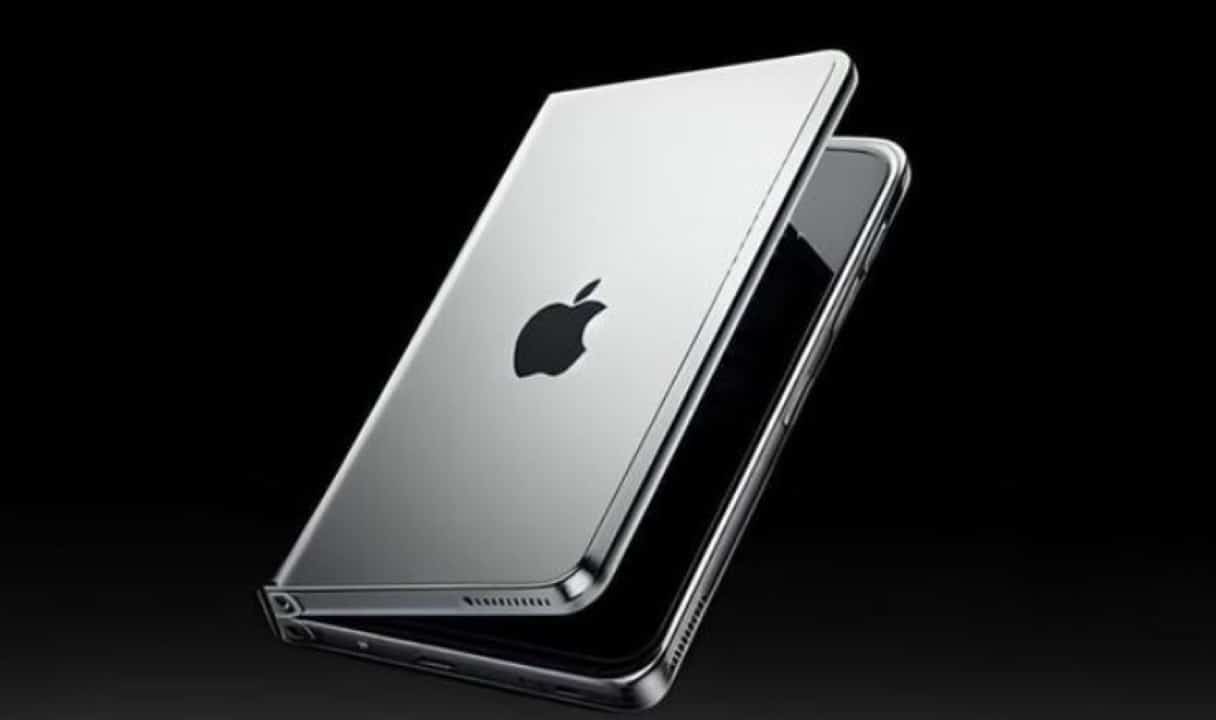
The North American manufacturer Apple plans to enter the flexible screen smartphone segment in 2026. The new device focuses on the very high-income public and features robust technical specifications to compete at the top of the market. The device measures 4.5 millimeters thick when fully opened and houses a 5,800 mAh battery. The energy capacity exceeds the current average of direct competitors in the telecommunications sector, establishing a new standard of autonomy.
The development of the equipment required a complete redesign of the brand’s internal architecture. Engenheiros needed to redesign essential components, such as the motherboard and memory modules, to adapt the hardware to the reduced chassis. The decision meets market demand for profound structural changes to the company’s products. The launch puts the company in direct competition with Asian giants that already dominate the global retail of flexible screens.

Mecanismo articulation and thin design
The new cell phone design sets strict parameters for the thickness of high-performance portable electronics. The device measures 9.5 millimeters while remaining closed in the user’s pocket. Opening the panel reveals a thin profile that required new assembly methods in partner factories located at Ásia. The reduction in measures occurred without compromising the physical integrity of the external structure. The weight distribution facilitates prolonged one-handed handling during daily use.
The central hinge works from a mechanism made from liquid metal panels. The engineering team used industrial precision 3D printers to create the tiny parts of the articulation system. The union of these materials guarantees protection against accidental twisting that could damage the display. The mechanical assembly supports hundreds of thousands of movement cycles without showing play. The process of opening and closing the screen occurs silently and fluidly.
The use of titanium alloys on the side edges reinforces the structure against direct impacts. The material replaces traditional aluminum and gives a premium look to the smartphone’s finish. Materials engineering has worked for years to find the exact balance between lightness and mechanical strength. The ultra-thin chassis represents a milestone in the evolutionary line of the brand’s mobile devices. Assembly requires robots calibrated to the millimeter on the production lines.
The sealing of the equipment underwent rigorous testing in specialized laboratories before final approval. Barreiras internal physics blocks dust and microscopic particles from entering the bending gears. The prolonged durability justifies the product’s positioning in the highest price range in the company’s catalog. Water resistance certification complements the hardware’s basic protection package. Insulation efficiently protects circuits during liquid accidents.
Autonomia battery and thermal processing architecture
Battery life represents the main technological challenge in the flexible phone category. The project gets around this limitation by installing a 5,800 mAh component inside the narrow housing. Técnicas Recent chemical packaging methods have increased electrical density without expanding the physical volume of the part. The user can operate the device intensively for an entire day. The fast power system recovers much of the energy in just a few minutes when plugged in.
The device’s processor operates under a 2-nanometer lithography architecture. The chip offers superior speed when running multiple applications and significantly reduces battery consumption. The manufacture of these semiconductors requires extremely precise machinery in industrial facilities. Thermal dissipation motivated the creation of a unique cooling system for the phone’s format. The heat from the processor is distributed evenly across the metal structure.
The integration of generative artificial intelligence directly into the hardware transforms the user experience. The neural processor performs complex simultaneous translation and text editing tasks without depending on an internet connection. The privacy of user data remains protected within the device itself. Battery consumption during these intensive operations receives constant optimization from the operating system. The advanced architecture enables this level of local processing.
The stability of the operating system maintains performance during computationally demanding tasks. Jogos with heavy graphics and video editing software works without frame drops or localized overheating. Thermal engineering protects the user and preserves internal circuits over the years. The processor integrates cores dedicated exclusively to processing artificial intelligence tools. The integration between hardware and software guarantees constant fluidity.
Adaptações in photo module and dual-layer display
The development of the camera module required creative solutions to maintain the brand’s photographic quality standards. The components underwent structural modifications to fit into the ultra-thin body without generating excessive protrusions at the rear. Digital image processing works in conjunction with lenses to compensate for the physical limitations of the format. The 48-megapixel main sensor records sharp photographs even in low-light environments.
Light capture occurs efficiently through software algorithms integrated into the camera system. High-resolution video recording preserves the optical stabilization present in the manufacturer’s traditional models. The front camera is built into the flexible screen and makes it easier to participate in work video conferences. The optical set meets the needs of content creators who seek portability and image quality in the same device.
- Espessura measuring 9.5 millimeters in the folded state and 4.5 millimeters when the panel is fully opened.
- 5,800 mAh Bateria designed for long periods of continuous operation without recharging.
- Câmera rear with 48 megapixel sensor and set of lenses with a flat profile.
- 2-nanometer Processador equipped with uniform distribution thermal dissipation system.
- Tela with double-layer OLED technology and central crease reduced to 0.15 millimeters.
The main screen solves one of the biggest complaints from consumers of foldable cell phones. The display shows a crease just 0.15 millimeters deep in the central region of the joint. The marking becomes almost invisible when reading text or playing high definition movies. The application of protective films and the internal teardrop-shaped curvature allowed this visual result. The touch-sensitive surface responds immediately to finger commands.
Double-layer OLED technology emits light with greater intensity and protects organic pixels against premature wear. Screen brightness quickly adjusts to direct sunlight for easier outdoor viewing. The variable refresh rate reduces energy consumption when the system displays static images. Precision in color reproduction serves professional photographers and designers who use smartphones as a visual editing tool.
Estratégia commercial and dispute in the global telecommunications market
The 2026 commercial scenario presents aggressive competition for the North American company. South Korean Samsung is preparing to launch the Galaxy Z Fold 7 with a projected thickness of 4.2 millimeters. The dispute for high-income consumer preference defines the next steps for the global telecommunications industry. Chinese Fabricantes continue to supply retailers with more affordable options and frequent mechanical innovations. The Asian market dictates the pace of updates.
Apple’s late entry into the segment requires the delivery of a mature product free of structural flaws from the first units. The company’s commercial strategy focuses on exclusivity and the status associated with the brand logo. High research, development and manufacturing costs directly impact the final price charged in physical and virtual stores. The device occupies a super luxury category within the manufacturer’s portfolio.
The supply chain operates with a conservative initial production volume projection to avoid idle stocks at distributors. The consolidation of the new format depends on the immediate acceptance of this model by the public with high purchasing power. Marketing campaigns should focus on the durability of the warp drive and battery capacity. Global retailers are awaiting the start of sales to measure the device’s real impact on the mobile technology market.