

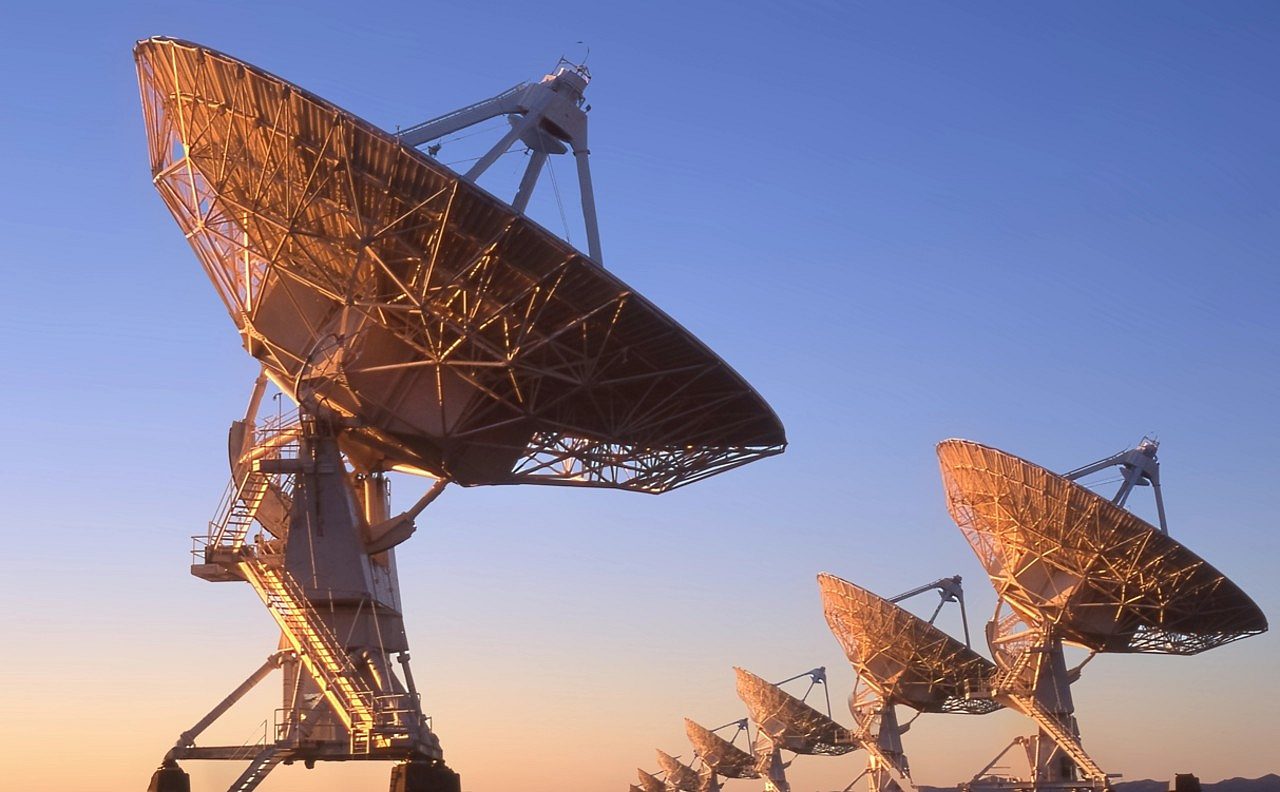
Very Large Telescope Interferometer (VLTI) of Observatório Europeu of Sul (ESO) emitted four laser beams toward Nebulosa of Tarântula, 160 thousand light years away. The operation, carried out on top of Cerro Paranal, Deserto of Atacama, Chile, seeks to measure atmospheric turbulence that affects astronomical observations. Lasers are not part of a space defensive strategy, but are part of a sophisticated process to improve the quality of images captured of the cosmos.
Astronomers use these light beams to create “artificial stars” that serve as references. The method involves observing how the points of light created by lasers suffer distortion and disturbance as they pass through molecules in the Earth’s atmosphere. Based on these measurements, computer algorithms analyze the same images and cancel out the distortion, allowing for much sharper captures of the distant universe.
Adaptive optics Sistema revolutionizes observatories
The use of laser guide stars combined with adaptive optics represents still recent technology in the world of astronomy. Apenas Some observatories around the world have mastered this technique, which allows them to compensate in real time for the effects of atmospheric turbulence. The VLTI began operating its four laser guide star system in 2016, marking a significant advancement in high-resolution astronomical observation capabilities.
The system works through an elegant concept: scientists measure the deformation of laser beams in the atmosphere and use this information to adjust deformable mirrors in the telescope. Esse continuous adjustment compensates for atmospheric distortion almost instantly. Resultado: images of celestial objects with much higher precision than would be possible without this technology. The VLTI, made up of four separate telescopes that function as a single giant virtual instrument, especially benefits from this capability.
The Very Large Telescope Interferometer and its unique configuration
The VLTI consists of four telescopes that work together, creating a large-aperture virtual telescope. Esse array allows astronomers to capture details that a single telescope could never resolve. Localizado at an altitude of 2,635 meters in the Chilean desert, the observatory takes advantage of the region’s exceptional atmospheric conditions to carry out observations of incomparable quality.
Características main techniques:
- Quatro 8.2 meter telescopes operating simultaneously
- Four-star laser guide Sistema active since 2016
- Integrated adaptive Óptica to correct atmospheric distortions
- Capacidade ability to observe objects with angular resolution greater than any single telescope alone
- Localização in Deserto of Atacama, one of the driest areas on the planet
Avanços on observing the distant universe
The image of lasers pointed at Nebulosa from Tarântula demonstrates the significant progress made by modern astronomy. The laser guide star technique, although it seems straight out of science fiction, serves rigorous scientific purposes. Astronomers can now observe distant galaxies, active galaxy cores and other cosmic objects in detail previously impossible. Esse technological advancement has expanded knowledge about the composition, dynamics and evolution of the universe.
Nebulosa of Tarântula, located in Grande Nuvem of Magalhães, is a frequent target of modern observatories due to its complexity and intense star formation activity. VLTI’s high-resolution observations allow scientists to study structures within this nebula with precision never before achieved. Collected Dados contribute to more accurate models of massive star formation and evolution.
Impacto in modern astronomy and future perspectives
The development of adaptive optics and laser guide star technologies represents a qualitative leap in astronomical instruments. Observatórios in only a few privileged regions of the planet are able to implement these systems, consolidating places like Deserto and Atacama as world hubs for professional astronomy. The South American continent is now home to some of the most advanced instruments for observing the cosmos, attracting scientists from around the world.
Instituições international companies continue to invest in improving these technologies. Futuros Giant telescope projects, like the Extremely Large Telescope under construction at Chile, will incorporate even more sophisticated versions of adaptive optics and laser guidance systems. Esses advances open up possibilities for investigating exoplanets, black holes and the structure of distant galaxies with unparalleled precision.





