2026 Nissan Versa compact sedan debuts in Mexico with utility front and technological interior

The Japanese automaker officially presented the updated line of its compact sedan for the Latin American market. The Nissan Versa 2026 arrives at México dealerships with a proposal for a profound aesthetic renovation and significant updates to the cabin. Vehicle production continues to be concentrated at the complex Aguascalientes industrial facility. The model represents a strategic pillar for the manufacturer in the region, maintaining relevance in a scenario dominated by sports utility vehicles.
The trajectory of the automobile in the country neighboring Estados Unidos has accumulated significant numbers of registrations over the last decade. One million Mais units have been sold since 2011. The current strategy aims to maintain the product’s competitiveness in the face of increasingly equipped and modern competitors. The local consumer values the union between generous interior space, large trunk and traditional mechanics that require few corrective interventions.
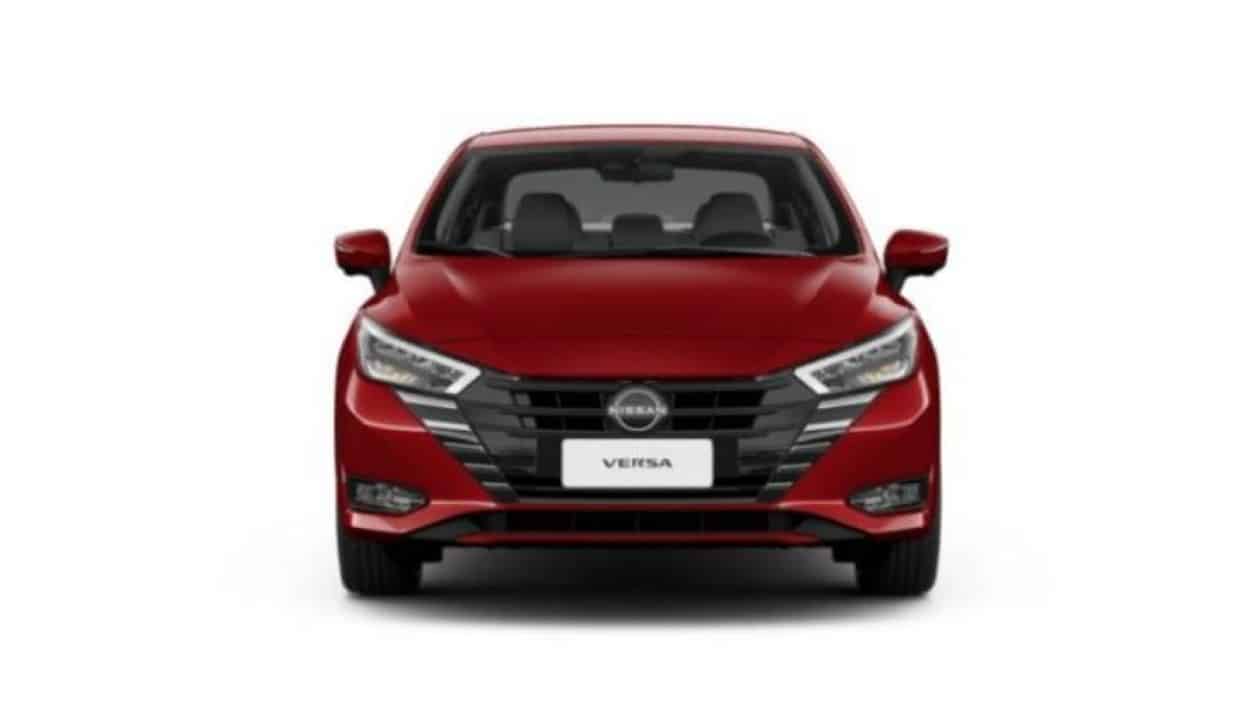
External Design adopts sport utility vehicle visual identity
The styling team’s work focused on the biggest changes to the front of the vehicle. The headlights now feature an arrangement divided into two distinct levels, completely altering the nighttime light signature. The main grille received updated contours and internal elements that give the whole a considerably more robust appearance. The direct inspiration came from the X-Trail sports utility vehicle, a choice that brings the sedan closer to the brand’s global design language.
The structural proportions of the body remain unchanged in the new line, guaranteeing the habitability already known to customers. The total length measures 4,500 millimeters exactly. The width reaches 1,740 millimeters, while the height is set at 1,470 millimeters. The rear balance has a black decorative element that connects the two lights. The visual feature creates a perception of greater width for those observing the car from behind, giving it an appearance that is more low to the ground.
Rodas light alloy with a new design are part of the package of aesthetic novelties, varying in diameter depending on the version chosen. The front and rear bumpers have undergone subtle aerodynamic revisions to improve airflow on highways. The end result conveys a more striking visual presence on urban streets. The characteristic size of the compact segment was rigorously preserved by engineers, facilitating maneuvers in tight spaces.
Internal Ambiente gains larger screens and superior audio system
The instrument panel and center console feature a more contemporary and clean layout, reducing the number of physical buttons. The versions positioned at the top of the range offer a multimedia center with a 12.3-inch high-resolution touchscreen. The equipment concentrates the main functions of entertainment, GPS navigation and general vehicle configuration. The response to commands has become more agile compared to the previous generation of the operating system.
Sound quality received special attention in the development of the interior design. An audio system signed by the premium brand Bose equips the most expensive configurations in the catalog. The set has eight speakers strategically distributed throughout the cabin to optimize acoustics. Unidades audio speakers built into the front seat headrests provide an immersive experience for occupants, a rare feature in the compact sedan category.
The comfort and convenience equipment package varies depending on the trim level selected by the buyer. The manufacturer has structured a list of standard items focused on the daily demands of the modern urban consumer.
- Ar-conditioning with manual override in line input configurations
- Sensores rear parking spaces integrated into the bumper to aid maneuvering
- Wireless Conectividade for smartphone mirroring via Apple CarPlay and Android Auto
- Botão engine starter available in multiple mid-range and higher-end catalogs
- Monitoramento peripheral vision cameras in the most complete options in the range
The parking brake continues to be activated using a manual lever in the vast majority of options available in stores. The technical decision helps contain production costs and simplifies long-term maintenance. Alguns global markets demand push-button electronic brakes, but Mexican consumer preference still accepts the traditional mechanism without resistance.


Mechanical Conjunto preserves aspirated engine and transmission options
The vehicle’s propulsion remains the responsibility of a four-cylinder engine with 1.6 liters of volumetric displacement. The engine consumes gasoline and delivers a maximum power of 118 horsepower at the highest speeds. The torque generated reaches 110 lb-pie, enough force for starting at traffic lights and safe overtaking. Electronic injection calibration prioritizes smooth operation and fuel economy in heavy urban traffic.
Power is transferred to the front wheels in two different ways, depending on the customer’s choice. The driver can opt for a traditional five-speed manual gearbox, ideal for fleet owners and purists. The second alternative is a CVT automatic transmission, focused on energy efficiency and comfort in traffic jams. The availability of the clutch pedal serves a portion of the public that prefers greater control over gear changes.
The active safety architecture maintains simple specifications on certain chassis and suspension components. The automaker’s objective is to guarantee high mechanical robustness to face irregular pavements and frequent potholes on Latin American roads. The affordable maintenance cost over years of use represents a fundamental selling point for the entry-level category.
Tabela prices and repercussions of the launch abroad
The commercial structure of the line includes four distinct levels of finishing and technological content. The Sense Base version with manual transmission represents the entry point for the model in dealerships. The starting price suggested by the manufacturer starts at 374,900 Mexican pesos. The Sense configuration, which allows the choice between manual transmission or CVT automatic transmission, starts at 382,900 pesos.
The Advance intermediate catalog, also offered with both gearboxes, requires an outlay starting at 428,900 pesos. The Exclusive variant, equipped exclusively with the continuously variable transmission and all options, tops the table for 470,900 pesos. The chain’s stores offer financing plans with installments adjusted to the country’s economic reality, aiming to attract the young public.
The factory complex responsible for assembling the sedan operates a gigantic production chain in the central region of the country. The Aguascalientes unit directly employs more than 4,800 employees on the assembly line and in the administrative sectors. Dezenas from local auto parts suppliers depend on continued vehicle production volume to keep their operations active and profitable.
The reveal of the car’s lines generated positive reactions on automotive forums on the other side of the world. Japanese Entusiastas followed the presentation on the internet and praised the balance of the shapes adopted by the designers. Muitos Internet users compared the sedan to the old Tiida Latio, a model that marked an epoch in the Japão for its reliability. The absence of a product with these exact characteristics on the domestic Asian market was the reason for nostalgic comments among the brand’s fans.
The automaker’s corporate division has not confirmed immediate plans to export this specific visual and technological package to other global regions. The strategic direction of the product remains focused on consolidating sales leadership in the Mexican territory during the year 2026. The sedan maintains the established formula of offering a spacious cabin, versatile trunk and uncomplicated drivability for daily use in large cities.
Veja Tambem em Latest News (EN)

Atlético-MG confirms agreement with defender Léo Duarte after period of prominence in Turkish football

Tiger shark bites 19-year-old girl and rips off her leg in Boa Viagem, Recife

2026 World Cup will have 32 athletes who play in Brazilian football

OnePlus develops portable video game with Android system focused on competitive shooters

New BYD Seal 6 DM-i Touring hybrid station wagon debuts in Europe with ample interior space and super-efficient engine

Costco reaches historic volume in gasoline sales in the United States with prices below market

June PlayStation Plus Catalog Brings Grounded and Warhammer 40,000 Darktide to Subscribers

Disney+ brings Avatar Fire and Ash finale to The Bear and new Pixar animation in June

Netflix updates June catalog with new season of Avatar and classic cinema sagas

Geely Xingyuan electric compact gains 47 kWh battery and autonomous driving system in China

Episode 1156 of One Piece marks arrival at Elbaf with decisive actions by Shanks and Blackbeard