Scientists identify 45 exoplanets with the potential to harbor extraterrestrial life
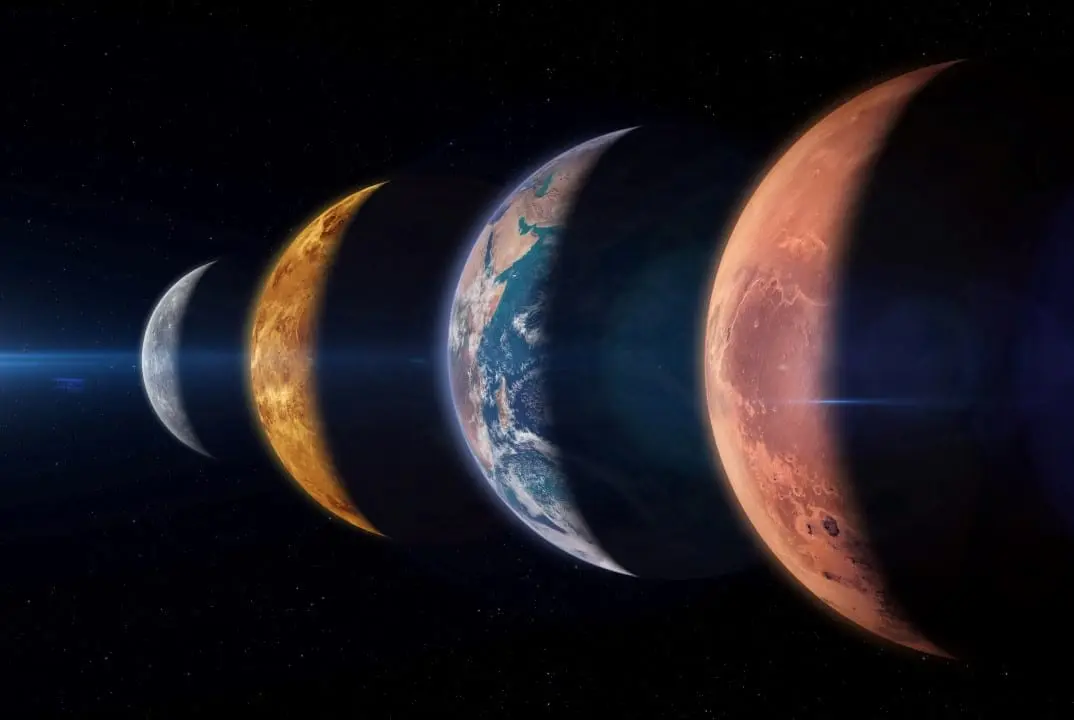
Pesquisadores of Universidade Cornell, in collaboration with the American space agency NASA, analyzed data from the Gaia space observatory and created a list of the 45 most promising exoplanets for future missions to search for extraterrestrial life. The study identified rocky worlds located in the habitable zone of their respective stars, where liquid water may exist on the surface. The results were published in Royal Astronomical Society’s scientific journal Monthly Notices and establish priorities for upcoming space exploration missions.
Critérios scientific research for selection of candidates
The research coordinator, Lisa Kaltenegger, explained that the work acted as a priority map for future explorations. The methodology uses precise data on temperature, composition and distance from host stars to identify worlds where life as we know it would be most likely to exist. The researchers prioritized rocky exoplanets over gas giants, considering that the presence of liquid water is a fundamental condition for life.
The team combined information from multiple data sources to develop the study:
- Catálogo from Agência Espacial Europeia Gaia exoplanets
- NASA Exoplanet Data Base
- Análise planetary temperature and composition
- Cálculos orbit and stellar characteristics
- Dados Detectable Visible Light Spectroscopy
Kaltenegger emphasized that science still recognizes the limits of current knowledge about extraterrestrial life. Segundo he, living organisms can have much more diverse capabilities than we imagine, and life can exist in forms radically different from those we know in Terra.
Principais candidates and relative proximity
The final 45 exoplanets include some of the most significant discoveries in modern astronomy. Proxima Centauri b, located just 4.2 light-years from Sistema Solar, represents the shortest distance between known potentially habitable worlds. TRAPPIST-1f is 41 light-years away, while Kepler 186f is approximately 500 light-years away. The TRAPPIST-1 system deserves special attention, as it concentrates four worlds in the habitable zone: TRAPPIST-1d, TRAPPIST-1e, TRAPPIST-1f and TRAPPIST-1g. Essa concentration of candidates in a single system makes it a priority for future observations. LHS 1140b, 48 light-years away, is also among the most promising due to the orbital stability and characteristics of the host star.
TOI-715b represents the most recent discovery, located 137 light years away. Apesar from the greatest distance, its physical properties and position within the habitable zone justify its inclusion in the priority list. Esses worlds were selected using rigorous criteria that consider both scientific feasibility and the likelihood of harboring suitable environments for living organisms.
Leia Também

The absence of Neymar’s wedding ring in a New York club stirs social media during the Brazilian team’s break

Parachuting plane crash leaves eleven dead in northeastern France this Sunday

Financial analysis indicates that GTA 6 generated US$1 billion in the first hour of pre-sales
Conexão with extraterrestrial life research and future technology
The study establishes direct links between concepts explored in contemporary science fiction and real discoveries. Kaltenegger made reference to the film “Interstellar”, which depicts a rescue mission focused on specific systems. The worlds highlighted in the film, such as the planet orbiting the star Miller and Edmunds, are not on the current list of candidates, but this coincidence reveals how scientific imagination and empirical research converge in the search for habitable potential. Research is not limited to carbon-based organisms. Cientistas recognize that extraterrestrial life can use alternative elements such as silicon, ammonia or other compounds, significantly expanding the possibilities of habitability beyond traditional parameters.
Impacto on future space missions and next steps
Esta compilation sets a key milestone for astronomical research over the next five years. Agências space and ground-based observatories now have a set of well-defined targets to focus resources on advanced spectroscopic analysis. Essa approach allows us to investigate anomalous atmospheric gases and other biomarkers that would indicate the presence of life. The work also provides robust statistical support: of the 6,000 known exoplanets, 45 meet rigorous criteria, allowing scientists to estimate the proportion of potentially habitable worlds in the observable universe.
Futuras unmanned probe missions can prioritize multiple systems containing candidates. The TRAPPIST-1 system has a particular advantage because it concentrates habitable worlds, allowing a single long-duration mission to explore several targets sequentially. Embora 40 light years represents a considerable distance with current technology, compared to Kepler 186f’s 500 light years, it remains achievable in terms of future astronomical planning. The research recognizes that existing data on exoplanets will undergo continual refinement through new observations, and this list will be regularly revised as additional discoveries emerge. The present value of this work lies in providing a solid foundation and strategic map that will guide space exploration in the coming decades.