BYD Dolphin Mini gains LiDAR and autonomous driving system in Chinese update
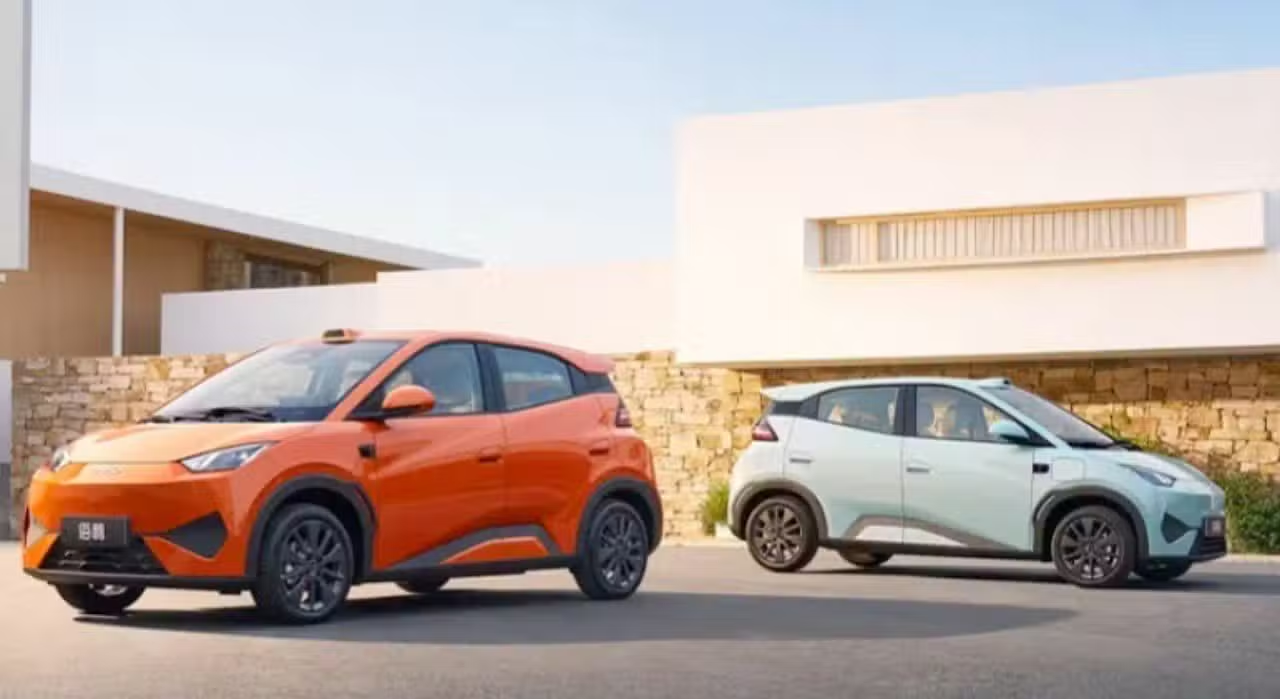
BYD announced the 2026 Dolphin Mini line at China with emphasis on the inclusion of the DiPilot 300 driving assistance system, equipment equipped with a LiDAR sensor that was restricted to luxury cars. The electric compact receives significant reinforcement in its safety and connectivity package to face fierce competition from the Geely EX2, which surpassed the model in sales in the Chinese market during 2025.
The addition of LiDAR represents an important step in the democratization of advanced security technologies in entry vehicles. The feature works like a laser radar that emits pulses of infrared light to map the environment in three dimensions, offering functions such as assisted navigation in urban environments, traffic light recognition and roundabout reading.
LiDAR system and autonomous security functions
The DiPilot 300 integrates high-definition cameras, millimeter wave radars, ultrasonic sensors and high-precision 3D mapping. Na China, the system is offered as an option for the equivalent of R$ 15,300, a value considered high if we take into account the vehicle’s proposal. Prices for the Dolphin Mini start at 69,900 yuan and reach 85,900 yuan for the top-of-the-line version, which is approximately R$50,500 and R$62,100.
Além of the DiPilot 300, the model receives other safety features:
- Frenagem autonomous emergency (AEB)
- Driver Fatigue Detector
- Câmera 360 degrees
- Central DiLink 150 multimedia with 12.8 inch screen
- 50W Wireless Cellphone Carregador
- Driver’s Banco with six-position electrical adjustments and heating

Atualizações visuals and colors
The Dolphin Mini 2026 receives a new front bumper, new 16-inch wheels, headlights with revised graphics and a luminous rear logo. Duas new exterior colors arrive in the catalogue: “Manga Orange” and “Menta Green”. Inside, the dashboard now offers a beige finish with an “Oatmeal Rice” tone, following the trend for more sophisticated interiors in compact vehicles.
The engine remains unchanged, with an electric motor producing 75 horsepower and 13.8 kilograms of torque. Duas battery options continue to be available on the China: the 30.08 kWh version delivers a range of 305 kilometers, while the 38.88 kWh version reaches 405 kilometers according to the Chinese measurement standard.


Posição competitive in the Chinese market
The changes implemented reflect a strategic need for BYD in relation to the model’s sales dynamics. The Dolphin Mini reached its sales peak in April 2025 with 34,005 units and has never reached the same mark since. In June it sold 30,708 units, but never surpassed that figure in the following months.
The Geely EX2, the current leader in the Chinese market, sold 465,775 units during 2025, far surpassing the Dolphin Mini, which sold 310,956 copies in the same period. The difference of approximately 155 thousand units demonstrates the pressure that BYD faces with its electric compact in a market saturated with affordable options.
Estratégia differentiation
The inclusion of LiDAR in the Dolphin Mini represents a deliberate attempt to differentiate the product in a category where price and functionality drive purchasing decisions. Sistemas ADAS with this configuration are rarely offered in vehicles in this price range outside of the China, making BYD’s compact proposition competitively attractive.
BYD maintains a significant presence in the global electric vehicle market and continues to invest in safety and autonomy technologies even in its entry-level models. The focus on equipment considered premium until recently seeks to justify the value proposition of the Dolphin Mini in the face of the more aggressive competition it faces in the China.
No Brasil, the dynamics are different. Dolphin Mini has not yet received the same updates as its home market, maintaining the previous configuration. The spread of technologies like LiDAR in Chinese compact vehicles signals a larger transformation in the global automotive industry toward active safety as standard across all price ranges.
Veja Tambem em Latest News (EN)

Atlético-MG confirms agreement with defender Léo Duarte after period of prominence in Turkish football

Tiger shark bites 19-year-old girl and rips off her leg in Boa Viagem, Recife

2026 World Cup will have 32 athletes who play in Brazilian football

OnePlus develops portable video game with Android system focused on competitive shooters
New BYD Seal 6 DM-i Touring hybrid station wagon debuts in Europe with ample interior space and super-efficient engine

Costco reaches historic volume in gasoline sales in the United States with prices below market

June PlayStation Plus Catalog Brings Grounded and Warhammer 40,000 Darktide to Subscribers

Disney+ brings Avatar Fire and Ash finale to The Bear and new Pixar animation in June

Netflix updates June catalog with new season of Avatar and classic cinema sagas

Geely Xingyuan electric compact gains 47 kWh battery and autonomous driving system in China

Episode 1156 of One Piece marks arrival at Elbaf with decisive actions by Shanks and Blackbeard