Panasonic launches L10 compact camera with 4/3 sensor and articulating screen in July
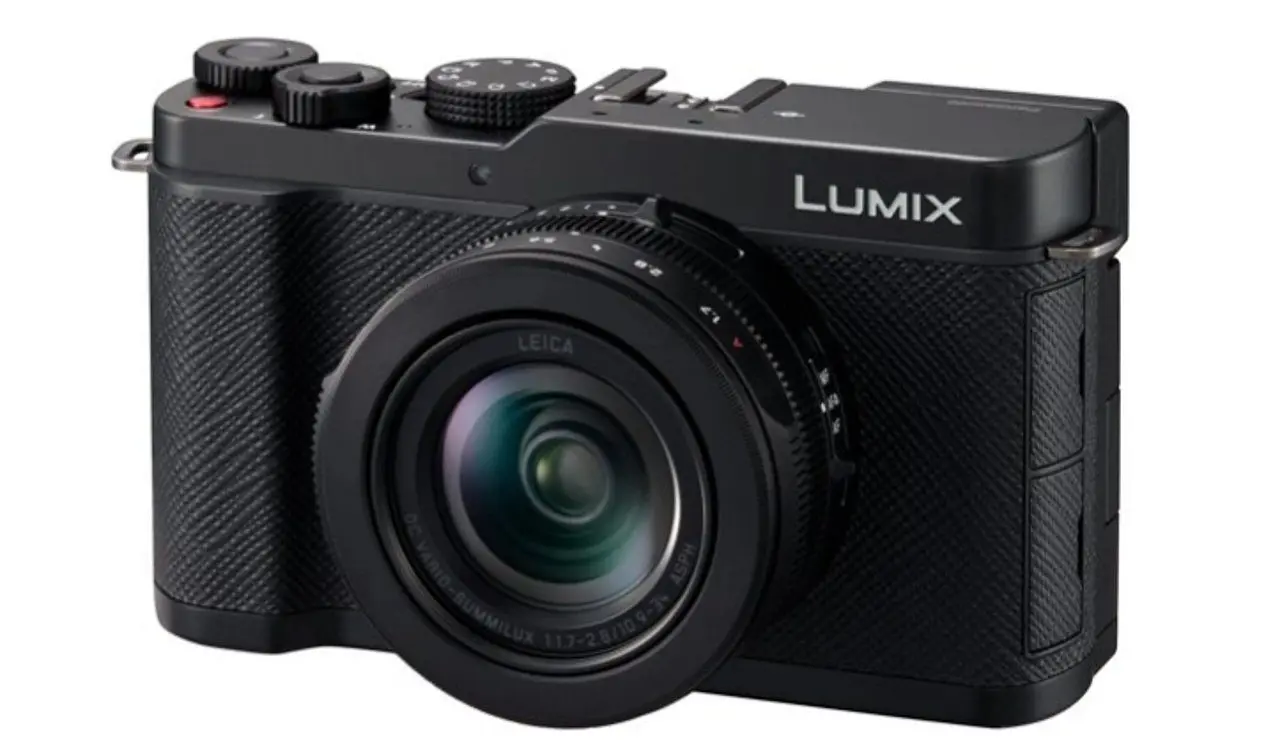
The Panasonic presents the Lumix DC-L10, a modernized successor to the LX100 series that hits the market with a 20.4 effective megapixel Four-Thirds sensor. The launch marks the return of the premium compact line with significant updates to the body and control interface. The camera debuts in June in silver and black colors, with a limited titanium-gold edition in July 2026.
The big difference compared to its predecessor is the incorporation of technologies that come from the GH7 mirrorless camera. The 4/3-inch BSI-CMOS sensor, although maintaining the original size, uses only a portion of the active matrix, allowing different aspect ratios without changing the 35 millimeter equivalent viewing angle. Essa solution guarantees visual consistency between 4:3, 3:2 and 16:9 formats with fixed focal equivalent of 24 to 75 millimeters.
Óptica renewed with smart focus
The lens maintains the lineage of the previous series: Leica branded optics, F1.7 to F2.8 aperture and sophisticated construction with 11 elements in 8 groups. Cinco aspherical lenses with eight aspherical surfaces reduce distortion and chromatic aberration. The optical stabilizer complements image capture in low-light conditions, an essential feature for photographers who work indoors or at dusk.
More on this story: Nikon prepares full-frame compact camera with new ZR sensor
Autofocus evolves into two simultaneous systems. DFD contrast recognition (Depth from Defocus), already consolidated in Panasonic cameras, now works with 779 detection points per phase. Inteligência artificially identifies faces, eyes, bodies of animals and moving vehicles. The platform also recognizes urban sports, expanding applications in action photography.
Controles mechanics gain aspect ratio selector directly on the lens barrel, including 1:1 square mode. Anel zoom allows continuous or stepped selection of focal preset. An AF-MF-macro switch, along with the manual focus barrel, offers the photographer flexibility. Distância minimum focus reaches 3 centimeters, enabling macro photography without additional accessories.

Painel rear with mobile technology
The 7.6-centimeter monitor with 1.84 million dot resolution can rotate and tilt freely. Touchscreen Implementação provides intuitive navigation through menus. Essa addition responds to historical criticism of the LX100 series, which lacked an articulated display. The OLED electronic viewfinder offers 2.36 million subpixels and 0.74x magnification in 35mm equivalent, providing clear viewing of the frame.
Learn more: Panasonic launches Lumix L10 with 20.4 MP sensor and fixed Leica lens for US$1,499
The return of the programming disc at the top marks a modernization of the control philosophy. Além automatic, aperture priority, speed priority and manual, custom memory slots are included. Esse feature allows recording of recurring photographic preferences and quick triggering without diving into deep submenus.
Botão LUT on the rear activates real-time lookup tables, a feature originally from the S9 series. Fotógrafos and videographers apply color curves and cinematic grid directly to the capture. Compatibilidade with Lumix Lab app adds post-production computational processing via cell phone, with updates expected in the coming months.
Full coverage: Latest News (EN)
See Also

David Jolly secures Democratic seat to run for governor of Florida in 2026
Jolly wins Democratic nomination for governor of Florida in the USA

Meta (WhatsApp, Instagram and Facebook) is subject to trial in the USA for damaging the mental health of young people with fines of US$ 1.4 trillion

High Frequency Motion Captura
The central mechanical shutter, a technology typical of premium compacts, reaches 1/2,000 of a second with flash synchronization. Taxa shooting reaches 11 photos per second with continuous focus tracking movement up to 9 fps. Sapata TTL attaches conventional external flashes.
Electronic Obturador expands possibilities to 1/32,000 of a second, essential on sunny days with high-sensitivity film or maximum apertures. Cadência 30 photos per second with autofocus tracking and pre-shutter capture (pre-burst) competes with larger system cameras. Alternância between 20, 10 and 30 fps offers a balance between speed and energy consumption.
On the same topic: DJI launches Osmo Pocket 4 camera with 107GB of space, 37 megapixels and 4K video at 240fps
Vídeo in qualities up to 5.6K
Cinematic Gravação achieves 5.6K (5,632 x 2,976 pixels) at 60 frames per second in H.265 compression with 10-bit color depth and 300 megabits per second bitrate in MOV format. Modos C4K and 4K support up to 120 fps in 10-bit 4:2:0 or 60 fps in 10-bit 4:2:2 with 600 Mbps, expanding creative flexibility in post-production. Full HD allows up to 240 fps for slow motion effects.
Suporte a V-Log guarantees linear color space for professional gradation. Função exposure bracketing, stacking and focus-stacking automate advanced techniques. Dois new L.Classic and L.ClassicGold photo profiles emulate analog palettes. Codec MP4 Lite enables fast sharing via WiFi without compromising technical quality.
Conectividade and autonomy
Entrada 3.5mm microphone with multichannel recording (up to 4 tracks) integrates professional quality audio. Porta USB-C 10 Gbps works as power output, charging and UVC/UAC interface for live streaming and webcam. Bluetooth 5.0 and WiFi 5/6 (802.11ac/n) simplify wireless image transfer.
More on this story: Sony presents 66.8 megapixel mirrorless camera and new telephoto lens
Bateria DMW-BLK22, inherited from the mirrorless camera series, provides 410 shots with viewfinder or 420 with monitor per full charge according to CIPA standard. Essa autonomy puts it at a competitive level among professional compacts.
Disponibilidade and prices
- Junho 2026:Prata and black at approximately 1,500 euros
- Julho 2026:Edição limited titanium-gold exclusive of Panasonic Store at 1,600 euros approximately
- Inclusões:Alça Leather, Automatic Lens Cap, Cleaning Cloth (Titanium-Gold Edition)
The L10 is positioned as a camera for photographers and videographers who prioritize portability without giving up manual control and professional image quality.