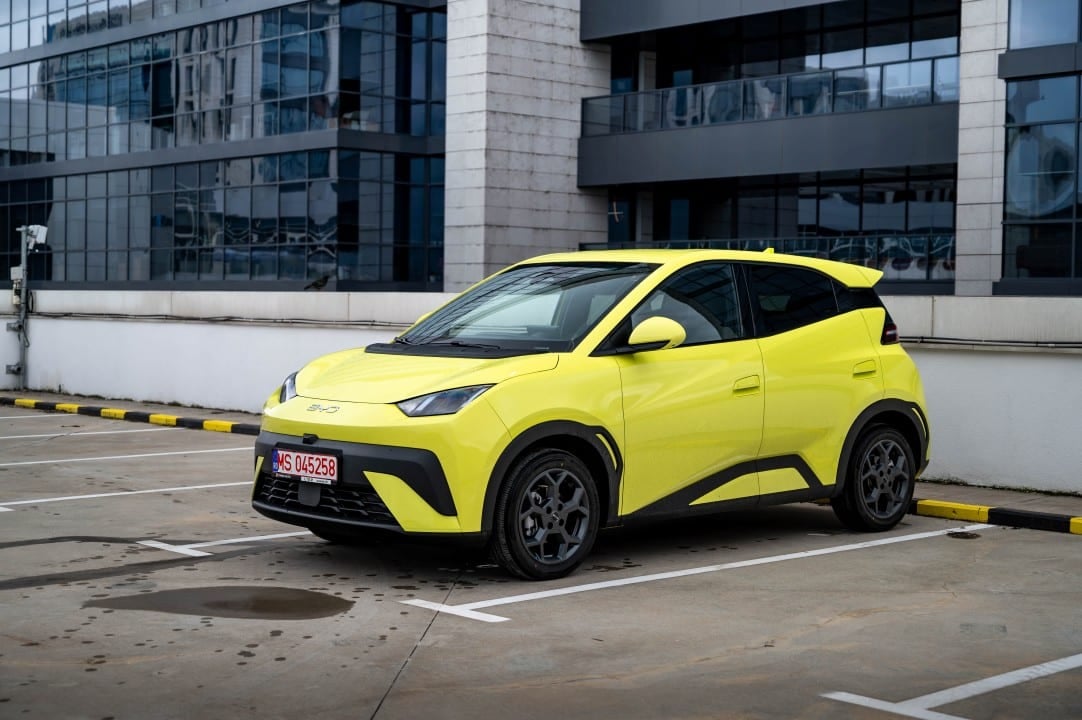
BYD is preparing to launch a new plug-in hybrid utility vehicle on the European market for June. The model, internally designated as Dolphin G, will be the Chinese manufacturer’s first vehicle developed specifically for the continent and promises to compete directly with popular models such as Toyota Yaris and Renault Clio. Diferente of conventional hybrid models, BYD’s proposal relies on plug-in systems to offer greater autonomy in electric mode and reduced operating costs.
The B segment has faced difficulties consolidating plug-in hybrid technologies, as automakers such as Renault and Mitsubishi have discontinued PHEV versions of popular models. The mechanical complexity and high cost made it viable only in higher priced categories. BYD, however, defies this trend by developing an even smaller version than the Atto 2 DM-i, its cheapest plug-in hybrid currently sold in the Espanha.
Posicionamento on the market and direct competitors
The Dolphin G will be positioned between the Dolphin Surf, from the A segment, and the conventional Dolphin from the C segment. Seu’s main difference lies in the plug-in engine, which offers greater electric range compared to conventional hybrids found in vehicles in the same price range. The model will face competition not only from classics such as the Yaris and Clio, but also from the MG3 and the hybrid Dacia Sandero, the latter entering the European market in 2026.
The competitive advantage of the Dolphin G is linked to its technical characteristics. By operating as a plug-in, it can travel significantly more kilometers in 100% electric mode, reducing fuel and maintenance costs. Além will also receive CERO certification from Dirección General and Tráfico, favoring parking and circulation in restricted traffic zones, while conventional hybrid models only obtain the ECO badge.
Especificações techniques and engine options
Stella Li, executive vice president of BYD, confirmed in 2025 that this would be the first plug-in hybrid hatchback designed for the European market, as in China there is “no demand” for this specific category. The vehicle will likely share mechanical components with the Atto 2 DM-i, established as the Espanha’s most affordable plug-in hybrid.
The Dolphin G hybrid system is designed for operational flexibility:
- Motor gasoline Xiaoyun 1.5L with 43% thermal efficiency
- Duas integrated electrical units
- Bateria LFP (lithium iron phosphate) in two different capacities
- Funcionamento series and parallel combustion engine
- Operation Modos: 100% electric or hybrid
Duas mechanically different versions make up the range. The Active variant features a 7.8 kWh battery, providing an electric range of 40 kilometers in the WLTP cycle and a combined range of 930 kilometers. Sua power reaches 166 horsepower and 122 kilowatts, completing acceleration from 0 to 100 km/h in 9.1 seconds, with a maximum speed limited to 180 km/h. The maximum slow charge is 3.3 kilowatts.
The Boost configuration features an 18 kWh battery, doubling the electric range to 90 kilometers WLTP and reaching 1,000 kilometers in the combined cycle. Sua power rises to 212 horsepower and 156 kilowatts, accelerating from 0-100 km/h in 7.5 seconds. Mantém has the same speed limitation, but with a fast charge of 6.6 kilowatts, allowing recharging from 15 to 100% in approximately three hours.
Final Nomeação and European context
Embora officially designated as Dolphin G internally, the model receives speculation about its definitive designation in the European market. Possibilidades include Dolphin DM-i, aligning with the nomenclature already established by Atto 2 DM-i. Qualquer whatever its commercial name, the June launch will mark a transformation in BYD’s positioning on the continent.
The European context of segment B faces a complex technological transition. Traditional Produtores focus efforts on conventional hybrids or fully electric vehicles, abandoning plug-in alternatives due to the costly balance between mechanical complexity and commercialization potential. BYD’s bet on affordable plug-in hybrid technology represents a significant strategic deviation, trusting that the electric autonomy differential justifies mass productive investment for the European market.
Este movement reflects the Chinese manufacturer’s broader ambition to consolidate presence on the continent beyond SUV models. Entry into segment B with a plug-in hybrid proposal signals a willingness to face highly competitive and established categories, seeking to redirect consumer preferences through a differentiated technical proposition and, potentially, price competitiveness that characterizes the brand.