Googlebook fails to convince users; Google offers few reasons to switch
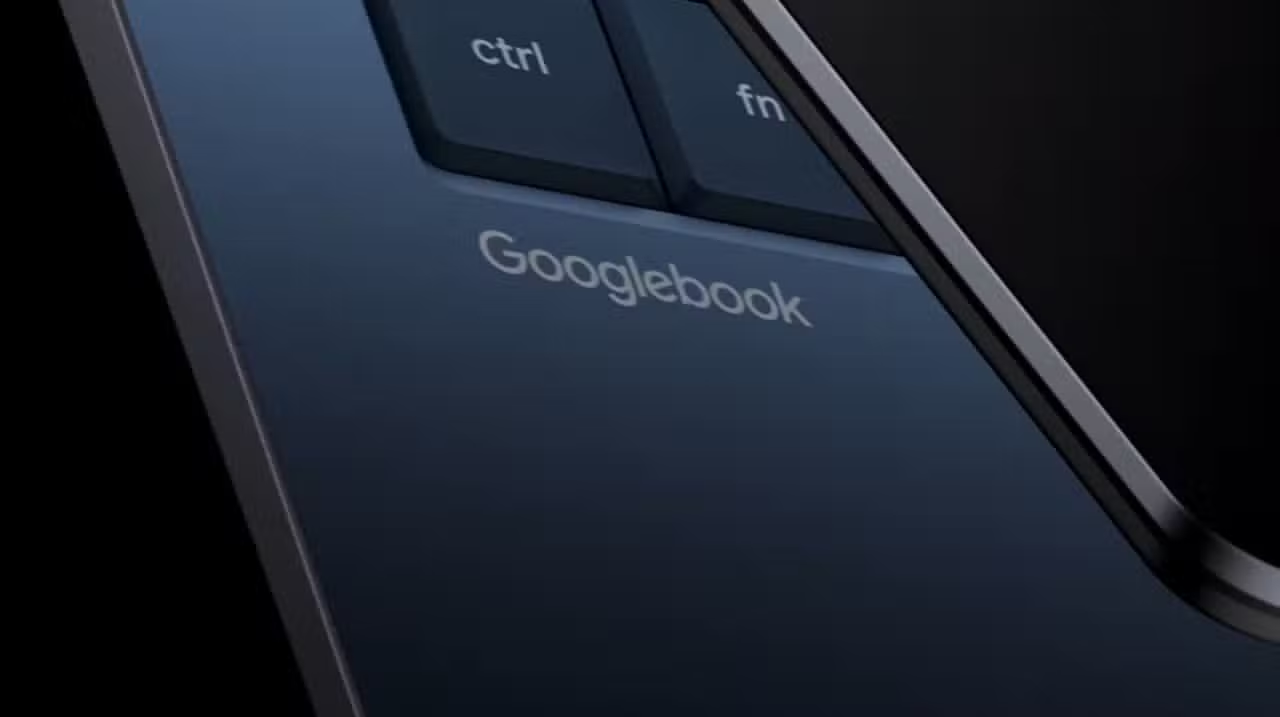
The new Googlebook laptop, revealed by Google in “The Android Show”, hits the market without solid arguments to justify its existence. The merger between Android and ChromeOS, presented as a central innovation, left critics and analysts skeptical about the device’s real advantages over current computers.
The announcement left more questions than answers
The Googlebook demonstration focused mainly on three features: the “Magic Pointer” cursor integrated into Gemini, support for custom widgets and mobile application mirroring. Nenhuma of these features is completely new. The Magic Pointer, although useful for accessing the AI assistant with on-screen gestures, will also come to the Chrome browser. Customizable widgets have existed in Android for a long time. App mirroring is a feature that ChromeOS has offered for several years.
The presentation ended by mentioning premium hardware and the “Glow Bar” as a differentiator. Sem significant technical details, the Google failed to establish a clear selling point for professionals or everyday consumers.
Why users shouldn’t get excited
Googlebook’s central proposal revolves around artificial intelligence as a competitive differentiator. Porém, this argument hits a fundamental obstacle: smartphones already perform AI tasks efficiently. Modern portable Computadores are in pockets, with processing capable of running language models and computer vision. Ferramentas and Gemini work similarly on any device — there is no discernible advantage to using AI on a laptop instead of a phone.
Laptops currently serve specific purposes that smartphones do not adequately solve:
- Edição professional video and photography
- Desenvolvimento advanced coding and software
- Criação complex content (graphic design, 3D)
- Demanding Multitarefa with multiple windows
- Acesso to specialized desktop software
Googlebook has not shown anything to suggest success in these areas.
The Android Operating System Dilemma on Laptops
ChromeOS, despite its damaged reputation, supports Android applications and Linux environments. Essa combination makes the system surprisingly versatile for diverse tasks. By migrating to pure Android, Google would be discarding mature functionality without offering convincing alternatives.


Profissionais creators rely on the Adobe ecosystem — Photoshop, Premiere Pro, After Effects. Desenvolvedores needs robust IDEs, compilers and advanced terminal tools. Android, being historically a mobile system, lacks these applications in full desktop versions. Nem the Google announcement addressed how Googlebook would address this critical gap.
Unfavorable market Contexto
Windows’s reputation has fallen among users frustrated with intrusive updates and confusing user experience. Simultaneamente, Apple gained narrative traction with the rumored MacBook Neo, positioned as an innovation in the category. Google would have a strategic window to capture dissatisfied and curious people — but Googlebook didn’t take advantage of this moment. The presentation seemed reactive, recycling known features as if they were new.
Analistas and experts expected substantial revelations: unique software architecture, innovative hardware integration, or completely new use case. Instead, Google offered incremental improvements to features that already exist.
Falta of surprises and lost potential
Executivos’s Google may be saving additional revelations for later. Porém, first impressions matter — especially at hardware launches. Consumidores and professionals quickly evaluate whether a new device is worth it. Googlebook did not provide convincing reasons in the public debut.
“Magic Pointer” is useful, but not revolutionary. Custom Widgets are convenient but not transformative. The Glow Bar, without detailed specifications, remains a mysterious feature. Nenhum of these elements, alone or together, justify abandoning existing laptops or considering the Googlebook as a superior alternative to the MacBook or next-generation Windows.
Até Now, Google hasn’t even presented a clear reason why Googlebook needs to exist.
Veja Tambem em Latest News (EN)

Atlético-MG confirms agreement with defender Léo Duarte after period of prominence in Turkish football

Tiger shark bites 19-year-old girl and rips off her leg in Boa Viagem, Recife

2026 World Cup will have 32 athletes who play in Brazilian football

OnePlus develops portable video game with Android system focused on competitive shooters
New BYD Seal 6 DM-i Touring hybrid station wagon debuts in Europe with ample interior space and super-efficient engine

Costco reaches historic volume in gasoline sales in the United States with prices below market

June PlayStation Plus Catalog Brings Grounded and Warhammer 40,000 Darktide to Subscribers

Disney+ brings Avatar Fire and Ash finale to The Bear and new Pixar animation in June

Netflix updates June catalog with new season of Avatar and classic cinema sagas

Geely Xingyuan electric compact gains 47 kWh battery and autonomous driving system in China

Episode 1156 of One Piece marks arrival at Elbaf with decisive actions by Shanks and Blackbeard