James Webb Observatory records supermassive black hole consuming matter in galaxy Messier 77
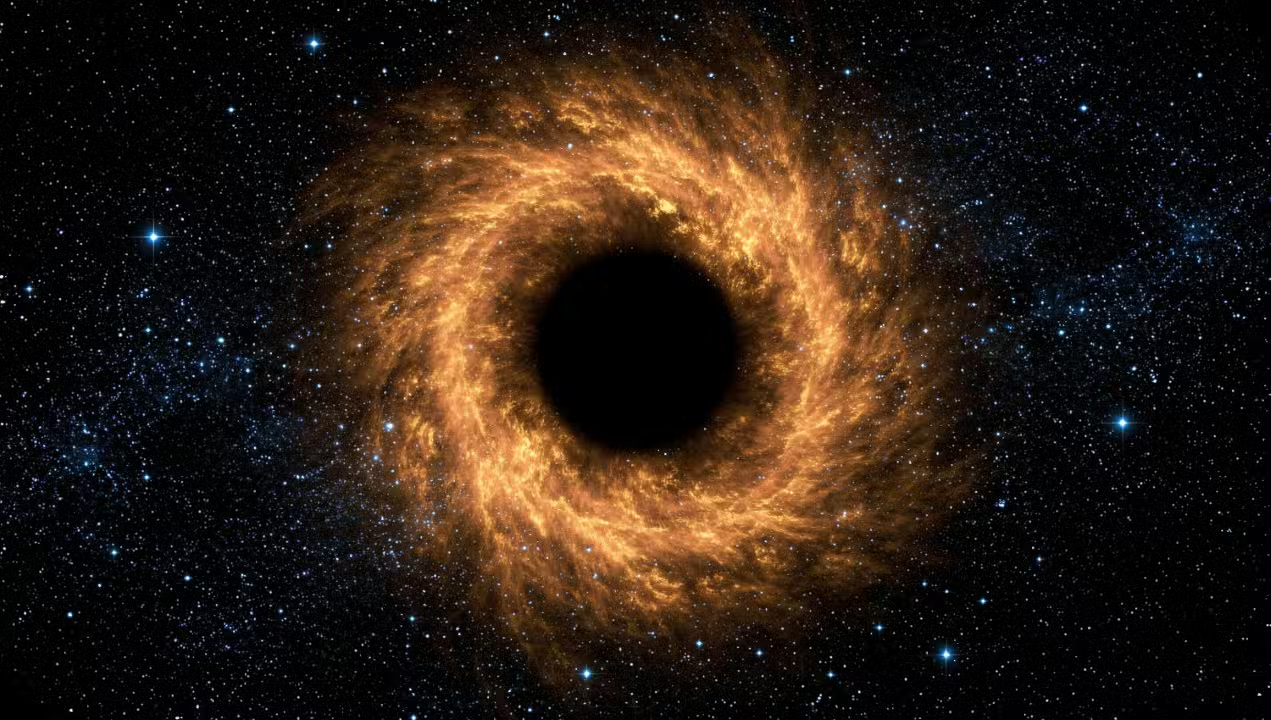
The James Webb space telescope recorded unprecedented images of the nucleus of the galaxy Messier 77, located at a distance of 45 million light years from Terra, in the Cetus constellation. The equipment captured the exact moment when a supermassive black hole consumes a colossal amount of matter at extreme speed. Detailed observation of this violent phenomenon provides new data about the behavior of massive structures in the universe. Pesquisadores uses this information to map the feeding dynamics of these celestial objects.
The images were captured thanks to the infrared radiation instruments present in the space observatory. Essa technology allowed the lens to penetrate the dense clouds of cosmic gas and dust that typically obscure the galactic center from traditional optical telescopes. The material released this week by the international scientific community exposes structural features never before documented. The resolution achieved by the equipment sets a new standard for modern astronomy.
Dinâmica gravitational force at the center of the system
The core of Messier 77 presents an intense glow generated by the accelerated rate of material consumption by the central black hole. Nuvens of gas, interstellar dust and fragments of destroyed stars are continually pulled into the gravitational abyss. Esse attraction process generates an accretion disk around the massive object. The extreme friction between particles releases a gigantic amount of energy. Essa strength manifests itself through infrared radiation, ultraviolet light and x-ray emissions.
The central object has a mass estimated to be millions of times that of our Sol. The gravitational force exerted by this structure forces the surrounding gas to rotate in complex patterns and very high speeds. Durante this spiral movement, part of the material does not cross the event horizon and ends up ejected into space. Fluxos of particles escape perpendicular to the galactic disk. The magnetic force generated by the vortex propels these relativistic jets at speeds approaching the speed of light.
The observatory’s sensors detected specific spectral signatures emitted by these moving materials. The data indicates temperature variations and the exact speed of the elements before reaching the point of no return. Analyzing this information allows astrophysicists to understand fluid mechanics in extreme gravity environments. Thermal mapping of the central region reveals zones of warming that could not be seen by instruments from previous generations.
Tecnologia infrared overcomes visual barriers
The ability to operate in the infrared range of the electromagnetic spectrum represents the main differentiator of the James Webb. Infrared light has longer wavelengths, which allows it to pass through the visual obstacles of deep space. Telescópios Conventional optics, such as Hubble, only saw a bright, blurry spot when observing Messier 77. The dark regions of the galaxy have finally become transparent to researchers. Submillimeter Estruturas now appears on monitors with extreme clarity.
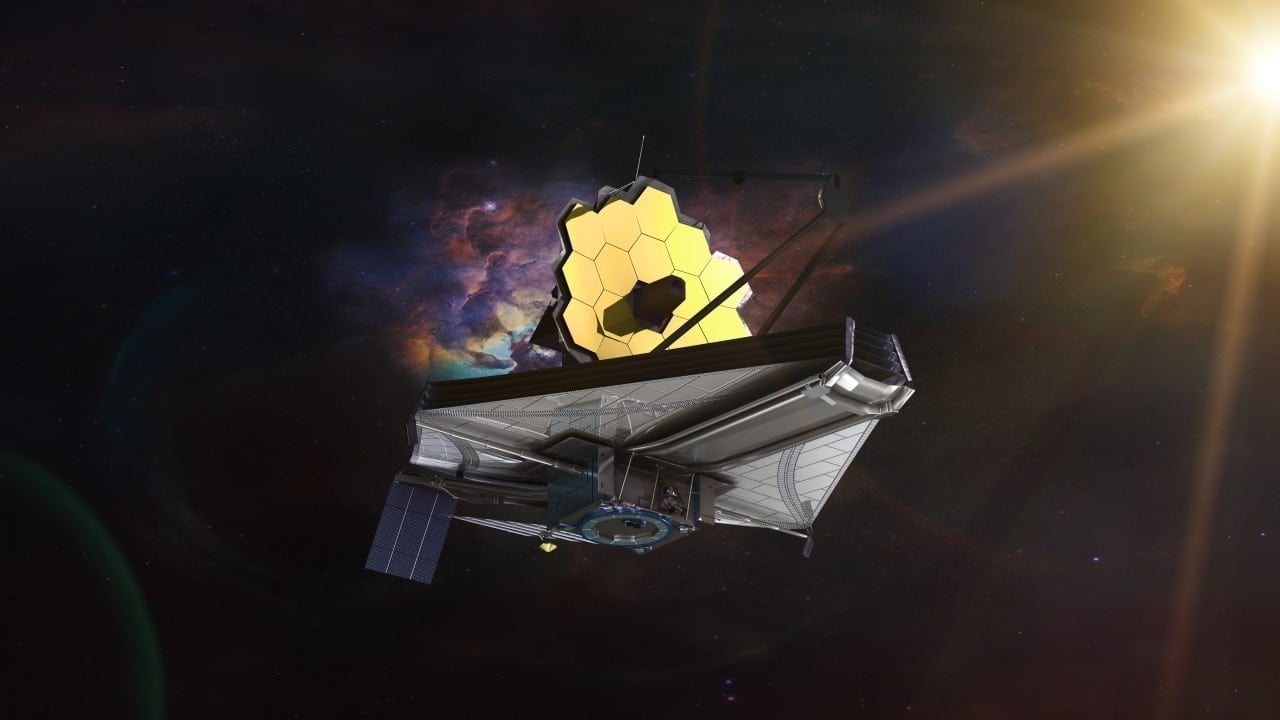
The space observatory operates at a distance of approximately 1.5 million kilometers from the planet Terra. The equipment orbits Sol at the so-called Lagrange L2 point, a region of gravitational stability that allows uninterrupted observations. The telescope’s primary mirror measures 6.5 meters in diameter and is composed of segments of beryllium coated with a thin layer of gold. Essa engineering optimizes the collection of light from extremely distant and low-light objects.
Infrared cameras and spectrographs onboard the satellite break down captured radiation into measurable components. The recent image reveals dust structures that act as a frame around the black hole. Anéis and luminous filaments trace the system’s magnetic lines of force. Regiões ionization glow in different colors that vary depending on the chemical elements present in the location. The telescope identified clear spectral markings of oxygen, nitrogen, neon and other heavy elements.



Impacto in the evolution of cosmic structures
The presence of active galactic nuclei occurs in a significant portion of the galaxies cataloged in the known universe. The scientific community works with the theory that practically all large galaxies house a supermassive black hole at their center. In most cases, these objects remain in a dormant state for billions of years. Messier 77 serves as a real-time natural laboratory for studying galactic activity. The behavior of the nucleus directly affects the development of the entire surrounding structure.
The material ejected by relativistic jets interacts violently with the interstellar medium. Essa high-speed particle collision heats nearby intergalactic gas. The drastic increase in temperature prevents the gas from condensing to form new stars. Esse regulation mechanism demonstrates how black holes influence the rate of star formation on a global scale. The observed dynamics confirm theoretical models developed by astrophysicists over the last few decades.
Previous computational Simulações predicted exactly the patterns of matter flow that are now gaining visual proof. Astronomers crossed recent spectrographic data with ancient mathematical predictions. The result showed a remarkable agreement between theory and practical observation. Esse information alignment reinforces current understanding of the physics of supermassive black holes. The differences in density and chemical composition of the nucleus are now mapped with millimeter precision.
Próximas steps of scientific observation
The capture of images of Messier 77 marks only the initial stage of a systemic exploration project. The researchers plan to use the telescope’s observing time to investigate other active galactic nuclei. The strategy involves collecting data at different stages of cosmic evolution. Space agencies defined the main focuses of future campaigns:
- Mapear the chemical composition of the gases present in the accretion disk.
- Medir the matter flow velocities using the Doppler spectral effect.
- Comparar the different levels of energetic activity in multiple galaxies.
- Investigar the exact mechanisms of formation of relativistic jets.
- Estudar the role of magnetic fields in gravitational attraction processes.
The telescope’s resolving power allows it to isolate individual structures within a radius of hundreds of light years from the black hole. Essa precision eliminates the visual distortions that limited the work of astrophysicists in the past. Technological advancement represents a qualitative leap in the way humanity observes the most extreme phenomena in space. The astronomical catalogs undergo a constant updating process as new data arrives at Terra.
Centenas of other supermassive black holes are waiting in the space equipment observation queue. The data collected in these missions will feed the databases of research institutes in several countries. The information will contribute to the creation of more comprehensive evolutionary models of the cosmos. The ultimate goal is to connect the behavior of black holes to the fate of entire galaxies over billions of years.
Veja Tambem em Latest News (EN)

Costco reaches historic volume in gasoline sales in the United States with prices below market

June PlayStation Plus Catalog Brings Grounded and Warhammer 40,000 Darktide to Subscribers

Disney+ brings Avatar Fire and Ash finale to The Bear and new Pixar animation in June

Netflix updates June catalog with new season of Avatar and classic cinema sagas

Geely Xingyuan electric compact gains 47 kWh battery and autonomous driving system in China

Episode 1156 of One Piece marks arrival at Elbaf with decisive actions by Shanks and Blackbeard

2026 Jeep Renegade global update introduces new 1.2 turbo engine and six-speed manual transmission

June cinema and streaming releases include new Toy Story and return of Steven Spielberg

Streaming catalog receives new film from the Avatar franchise and closure of The Bear in June

Prime Video launches Spider-Noir series with Nicolas Cage in 1930s monochrome aesthetic

Victim of a serious scooter accident, former defender Marios Oikonomou dies at the age of 33 in a hospital in the city of Ioannina