
Chinese automaker BYD presents new Qin Plus hybrid sedan with a range of more than two thousand kilometers


Chinese automaker BYD officially announced the arrival of the Qin Plus DM-i 2026 sedan on the Asian market in early January. The plug-in hybrid vehicle features significant updates to its mechanical package and energy storage capacity. The new version achieves a range of up to 210 kilometers operating exclusively in electric mode. The combined range exceeds the 2,110 kilometer mark. Sales prices start at 79,800 yuan in the entry-level configuration and reach 99,800 yuan in the top-of-the-line model. The expansion of the new energy vehicle lineup reflects the automotive sector’s rapid transition toward fleet electrification.
The pricing strategy positions the car as an affordable alternative within the midsize electrified segment. Fuel consumption recorded with a discharged battery is 2.79 liters for every 100 kilometers driven. The model maintains the fifth generation hybrid system developed by the manufacturer. The architecture combines a 1.5 combustion engine with a high-efficiency electric drive. The set is robust. The gasoline engine acts mainly as an energy generator for the main electrical system, ensuring continuous operation of the vehicle on long journeys.
Desempenho and efficiency of the new mechanical assembly
The integrated operation of the two engines guarantees optimized performance in different urban and highway driving scenarios. The electric drive takes responsibility for the vehicle’s main traction most of the time. The dynamics change quickly. The combustion engine comes into operation at times of high power demand or when the battery charge level reaches pre-established minimum limits. The transition between propulsion modes occurs imperceptibly for the occupants. The brand’s Engenheiros calibrated the system to prioritize fuel economy without sacrificing agility during daily acceleration.
Testes carried out under the Chinese CLTC standard cycle confirmed the autonomy figures released by the manufacturer during the launch event. A full tank of fuel combined with a fully charged battery allows for long trips without the need for frequent stops to refuel. The result is impressive. The Asian market requires vehicles capable of dealing with severe congestion and long distances between provinces. The engineering response focuses on the durability of mechanical components under continuous thermal stress. The liquid cooling of the batteries ensures that the ideal operating temperature is maintained. The thermal efficiency of the 1.5 liter engine reaches high levels in today’s market.
Battery Capacidade and extended runtime
The evolution in pure electric autonomy results from the adoption of an Blade LFP battery pack with increased capacity. The upper versions of the sedan receive modules capable of storing up to 25.28 kWh of energy. Lithium-iron-phosphate chemistry offers advantages in terms of thermal safety and long-term durability compared to other commercially available technologies. The change is clear. The emission-free range of 210 kilometers meets the daily routine of most urban drivers. The charging infrastructure at China is growing at a rapid pace to support the volume of plug-in vehicles on the country’s streets.
The model’s entry-level configuration maintains an electric range of 128 kilometers. The mid-range and top variants focus on the extended range of 210 kilometers. The version called Progressive arrives at dealerships with a suggested price of 89,800 yuan. The version scaling strategy makes it possible to reach different consumer profiles with varying travel needs. The battery can be recharged at fast charging stations or conventional household sockets. Advanced thermal management prevents premature degradation of power cells during charge cycles.
Especificações details of the electrified sedan
The vehicle’s technical package encompasses features aimed at maximizing energy efficiency and dynamic performance on paved roads. Integration between hardware and software manages energy flow in real time. The regenerative system recovers kinetic energy during braking and deceleration. The technical data reinforces the car’s positioning.
- Pure electric Alcance of up to 210 kilometers according to the CLTC cycle
- Autonomia combined over 2,110 kilometers with full tank and battery
- Consumo 2.79 liters of fuel per 100 kilometers with a discharged battery
- Bateria with Blade LFP technology and maximum capacity of 25.28 kWh
- Sistema fifth generation DM-i hybrid with 1.5 liter gasoline engine
The consumption and autonomy figures place the sedan in a prominent position compared to its direct competitors in the Asian market. The vehicle’s electronic architecture supports remote updates for continuous improvement of energy management systems. The automaker invested in research and development to reduce the total weight of the battery pack without compromising structural rigidity. The DM-i platform has consolidated the automaker’s position in the global new energy vehicle market in recent years.
Tecnologia embedded and assistance systems
The level of safety and driving assistance equipment has been increased in intermediate and higher versions. The level C package now integrates the list of standard items in these specific configurations. The system provides semi-autonomous driving functions classified as L2+ on highways and expressways. Sensores high-precision and high-resolution cameras monitor the vehicle’s surroundings continuously. Data processing takes place in real time to anticipate risk situations. Technology acts fast.
Automatic parking technology makes it easier to maneuver in confined spaces in densely populated urban centers. The urban memory navigation feature allows the vehicle to learn frequent routes and assist the driver along the way. Autonomous emergency braking works in conjunction with the lane keeping system to prevent frontal collisions and accidental departures from the lane. The DiLink multimedia center has a touch screen measuring up to 12.8 inches. The device accepts intelligent voice commands and offers native integration with everyday applications. The digital instrument cluster provides essential information about power flow.
Conforto acoustic and visual identity of the brand
The sedan’s acoustic engineering achieved significant sound insulation levels for the medium vehicle category. The noise level inside the cabin remains below 53 decibels when driving at moderate speeds. Silence predominates. The result derives from the application of laminated double glazing on the front and the active noise cancellation system. Materiais sound absorbers cover critical areas of the bodywork to block the invasion of sounds coming from the engine and the tires rolling on the asphalt. Multi-zone digital air conditioning and electrically adjustable seats raise the standard of comfort in more expensive versions.
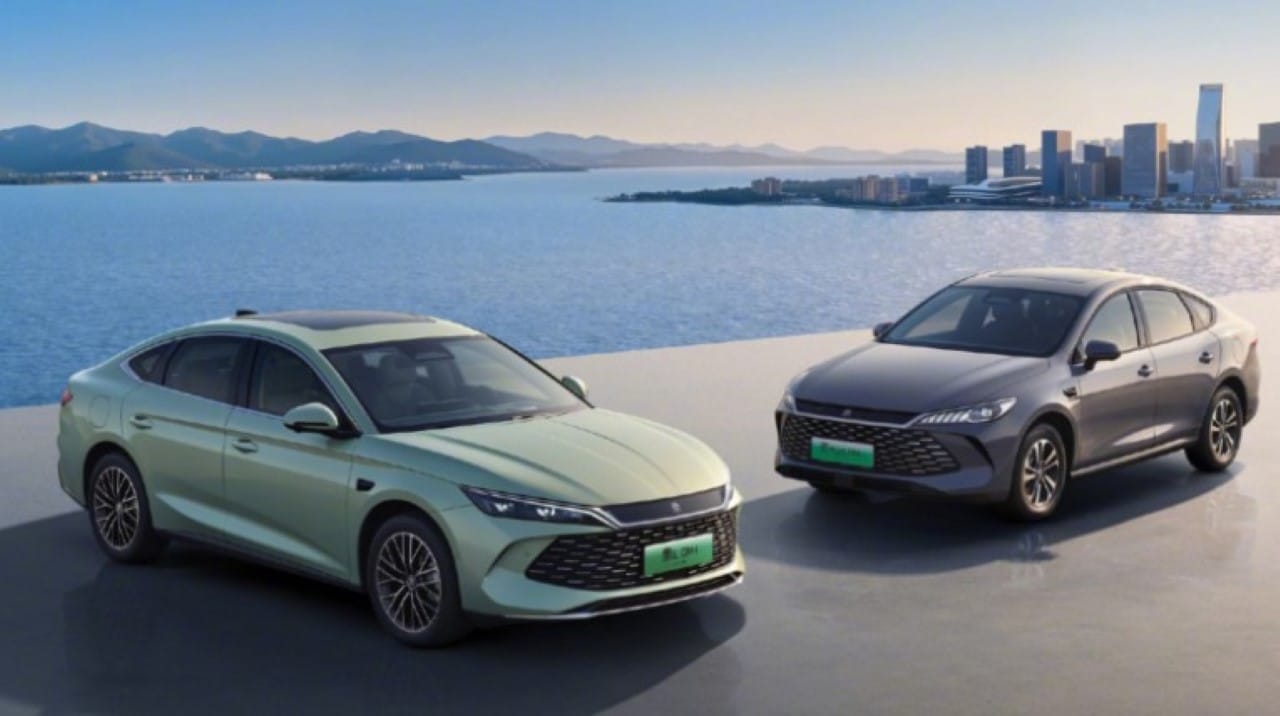
The external design preserves the visual language known as Dragon Face, a striking feature of the Chinese manufacturer’s recent models. The pronounced front grille and fluid body lines optimize the vehicle’s aerodynamic coefficient. The color catalog offers seven distinct options for buyers. A new shade of gray, capable of varying appearance depending on the incidence of light, is part of the palette of choices. The interior accommodates five passengers and has the gear selector positioned on the steering column to free up space on the center console. The automaker started sales of the model immediately after the end of the official presentation event.





