

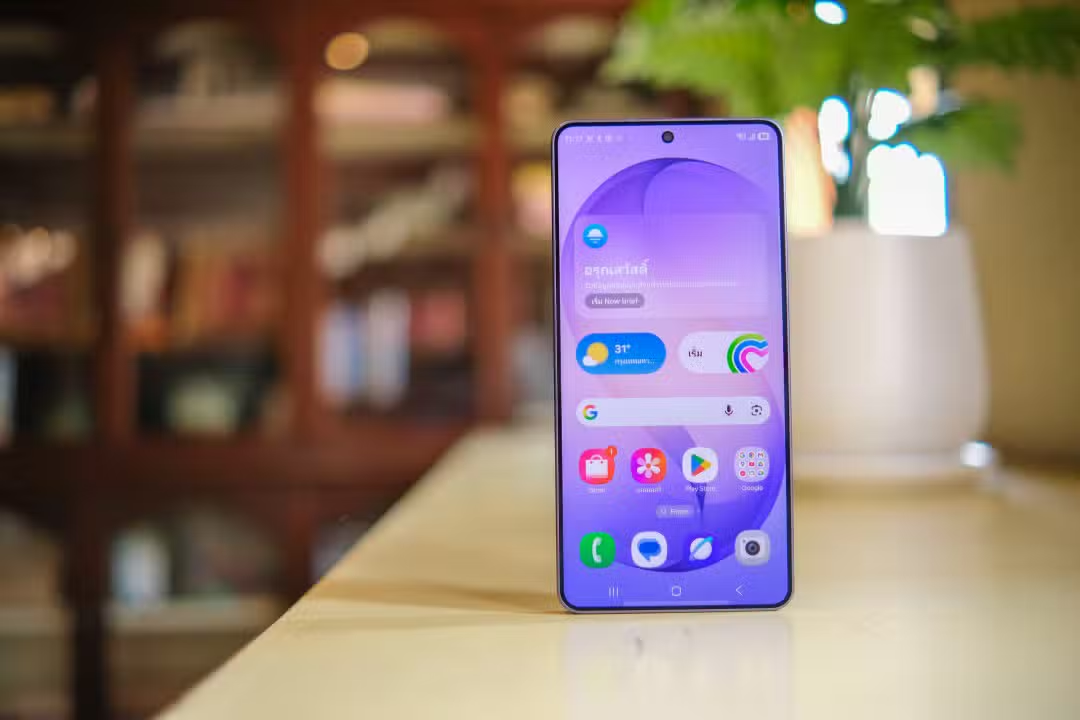
South Korean manufacturer Samsung is preparing a significant overhaul of the power architecture of its next high-performance mobile devices. The future Galaxy S27 Ultra emerges as the main candidate to debut silicon-carbon battery technology in the brand’s portfolio. The change ends a long period of technical stagnation in the sector. The company maintained the 5,000 mAh standard for several consecutive generations in its most expensive line, frustrating some consumers. Engenheiros are now working hard to integrate the new component without compromising the device’s characteristic slim and elegant design.
The innovative material replaces the traditional graphite used in the anode of energy cells with a nanostructured compound. Essa chemical change allows the storage of a considerably larger quantity of lithium ions in the same physical space. Marcas competitors already implement similar solutions in the Asian market. The South Korean giant chose to wait for the technology to mature to ensure rigorous safety and durability levels before mass production.
https://twitter.com/_TheJasonC/status/2030357427774976450?ref_src=twsrc%5Etfw
Fim of energy stagnation in high-end models
The recent launch of the Galaxy S26 Ultra maintained the identical energy capacity as its direct predecessors, generating debates in the technology market. The company’s Executivos confirmed during official presentations that the new chemical composition was still undergoing rigorous validations in research and development laboratories. The board established that adoption would only occur when the innovation demonstrated practical and unquestionable benefits for the end consumer. The main objective involves increasing daily autonomy without compromising the thickness of the titanium chassis or the long-term useful life of the component.
The manufacturer’s conservative stance reflects a history of caution with thermal management in mobile devices. The engineering department invests significant resources in stress simulations and cell stacking. Fontes linked to the supply chain report structural changes in the internal separating layers. The voltage control firmware also receives constant updates to meet the internal longevity goals set by the quality division.
The transition requires a complete redesign of the motherboard to accommodate the new electrical current flows. Especialistas point out that heat dissipation remains the biggest technical obstacle in implementing high-density batteries. Silicon has a natural tendency to physically expand during rapid recharge cycles. The development team needs to mitigate this microscopic swelling to avoid internal pressure against the smartphone’s screen and back cover.
Engenharia advances with dual stacked cell testing
Industrial Relatórios leaks indicate that the Samsung SDI division evaluates extreme energy storage configurations. One of the approaches being tested combines two independent units stacked in the same compartment. The main prototype combines a 6,800 mAh cell measuring 4.7 millimeters thick with a secondary 5,200 mAh cell measuring 3.2 millimeters. The set reaches an impressive 12,000 mAh within dimensions strictly controlled by the company’s designers.
The company’s laboratories also explore even higher limits in controlled environments. Documentos internals mention experimental prototypes reaching capacities between 18,000 mAh and 20,000 mAh. Essas very high performance versions, however, come up against the minimum commercial durability criteria. Avaliações conducted in late 2025 revealed that the 20,000 mAh variant failed to meet the basic requirement of 1,500 full charge and discharge cycles.
Overcoming these technical bottlenecks mobilizes dozens of researchers at Coreia’s Sul facilities. The internal architecture of the component dictates the pace of advances in the mobility sector.
- Silicon-carbon Compostos retains up to ten times more ions compared to conventional graphite.
- Estruturas duals optimize internal space without requiring the phone to increase its thickness.
- Modificações chemicals focus on the stability of separators during rapid loading.
- Protocolos systems require thermal behavior identical to that of current lithium-ion batteries.
- Protótipos seek the exact balance between energy density and resistance to daily wear and tear.
The success of this venture defines the brand’s launch schedule for the coming years. The semiconductor industry is closely following the results obtained by the manufacturer’s energy division. The commercial viability of capacities above 10,000 mAh in conventional phones would transform the dynamics of device use.
Asian Concorrência accelerates adoption of new materials
The global smartphone market is witnessing an aggressive race for energy supremacy among the main technology giants. Diversas Chinese manufacturers already offer silicon-carbon batteries in their premium devices and even in advanced intermediate models. Essas companies are able to deliver remarkably superior autonomy in extremely thin and light designs. Samsung monitors this movement with extra attention. The brand has lost market share in recent years by adopting more conservative technical specifications than its direct rivals.
The demand for energy grows exponentially with the introduction of new mobile technologies. Telas with high refresh rates and high-end processors require a constant and robust electrical supply. Ferramentas based on generative artificial intelligence processed locally on the device drains traditional reserves in a few hours. The increased density of the new material appears as the only viable solution to sustain this ecosystem without turning phones into heavy blocks.
Competitive pressure forces the South Korean company to accelerate its research schedule. Analistas of the market assess that the delay in the transition could cost important shares of the high-end segment in Europa and Américas. The strategy of prioritizing absolute security has worked in recent years. The contemporary consumer, however, is beginning to value the significant leaps in autonomy offered by competing brands.
Impacto directly into the consumer’s daily use experience
The introduction of the Galaxy S27 Ultra with the new energy matrix promises to change the routine of the most demanding users. The technology delivers additional hours of active screen time while performing complex tasks. Frequent Jogadores and professionals who edit videos on their cell phones will notice an immediate difference in charge retention. The device will support long working hours away from sockets without the need for external power accessories.
The longevity of the device also receives a substantial increase with the new chemistry. The battery’s natural degradation, generally noticeable after the second year of intense use, tends to decrease with adjustments to the silicon anode. The consumer will maintain peak smartphone performance for an extended period. Essa feature enhances the product’s value in the resale market and aligns the manufacturer with new environmental demands for more durable electronics.
The official launch of the long-awaited S27 line remains scheduled for the first quarter of 2027, following the brand’s traditional calendar. The company will use the next few months to finalize exhaustive stress tests and define the exact nominal capacity that will reach global retail shelves. Detalhes specifics on the maximum charging speed supported by the new architecture remain under strict industrial secrecy. The expectations surrounding the project confirm the importance of autonomy as an absolutely decisive purchasing factor in the competitive mobile phone market.