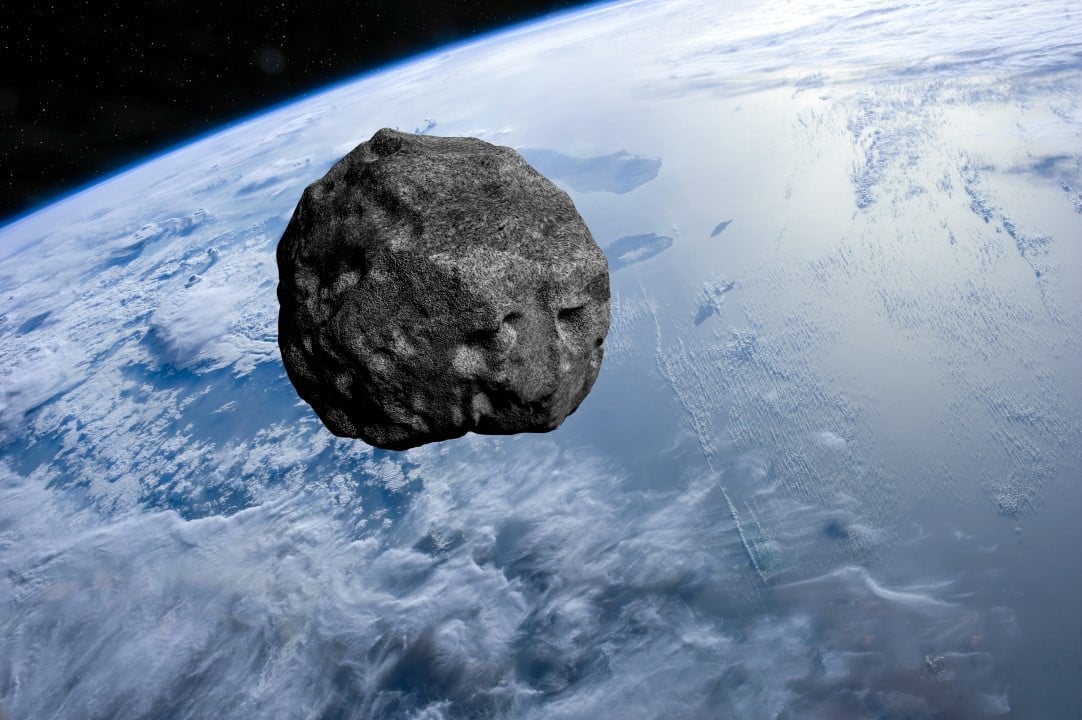
Cientistas Canadians and Germans have developed an unprecedented mathematical solution to a problem that has challenged space agencies for decades: how to determine the most efficient route for a spacecraft to visit multiple moving asteroids. MVXN 1 Asteroides” (ARP). The approach uses classical optimization concepts adapted to a scenario where destinations are not fixed, but are in constant orbital movement.
The work addresses a critical gap in astrodynamics. Enquanto space agencies are able to calculate routes when using gravitational assistance from planets, as in the Voyager missions, they face enormous difficulties when planning jumps from one asteroid to another based only on onboard fuel. The asteroids orbit Sol in continuous trajectories, making the calculation of distances and travel times dynamic and computationally complex.
Inspiration from the classic problem

The solution of Rudich and Römer is based on a mathematical concept known for centuries: the Problema of Caixeiro Viajante. Este model determines the shortest route for a salesperson to visit multiple fixed destinations before returning to the origin. Porém, applying this logic to moving asteroids required a radical redesign.
The ARP asks in what order a spacecraft should visit multiple asteroids to minimize both travel time and fuel consumption. The complexity increases because calculating the exact cost of each route requires solving another fundamental mathematical problem: the Problema of Lambert. Formulado in the 18th century by the Swiss Johann Heinrich Lambert, he determines the ideal trajectory between two moving objects a challenge that took decades to be completely solved by Joseph-Louis Lagrange.
Redução of computational complexity
Quando multiple asteroids are involved, computational complexity explodes. The calculation of Problema from Lambert needs to be repeated for each possible route between each possible pair of asteroids, generating a volume of operations that conventional computers take excessive time to process. Rudich and Römer got around this obstacle using a sophisticated technique called Diagramas from Decisão.
Os Diagramas and Decisão function as an evolution of the traditional Árvores and Decisão. Eles map a decision problem into a graph and identify when multiple choices lead to the same outcome in time and space. Essas equivalent routes are represented as a single node in the graph, drastically reducing the number of times Problema of Lambert needs to be resolved. The practical result is a significant reduction in computational time without loss of precision.
Proven efficient Ganho
The results achieved by the team exceeded initial expectations. Segundo Rudich and Römer, their approach achieves solutions approximately 20% better than those using standard methods. Para problems even larger missions visiting more asteroids the improvement could reach an additional 20%. Essa percentage combines reduction in total travel time and reduction in fuel consumption.
Put Para in perspective: just a 1% improvement in a real mission would represent substantial savings in three critical dimensions: time, money and fuel. In long-duration operations, especially those that depend on limited onboard resources, every percentage saved expands mission range and reduces operational costs exponentially.
Aplicações current and future practices
Poucas missions have so far visited multiple asteroids. NASA’s Dawn probe explored Ceres and Vesta. The Lucy mission, en route to Júpiter via Cinturão of Asteroides, will fly over several smaller asteroids and visit five Jovian Trojan asteroids, an ideal setting to test Rudich and Römer’s approach.
The researchers recognize that the ARP is a simplification of the real astrodynamic problem. True mission Simulações requires considering many additional aspects beyond the basic routing parameters. Ainda thus the tool provides a solid basis for initial optimization of mission planning.
Practical applications go beyond the space sector:
- Bus Roteamento in cities with variable traffic
- Otimização of supply chains subject to dynamic delays
- Planejamento of shipping routes in uncertain weather conditions
- Delivery Logística in scenarios with fluctuating time constraints
Contribuição fundamental scientific
Rudich and Römer define their research as “fundamental in the sense that it develops mathematical tools that can be used by space agencies to plan missions.” The work is available to the scientific community, allowing engineers from different space agencies and research institutes to test and validate the methodology in their own scenarios.
The solution represents an advance in an area that combines three disciplines: astronautical engineering, mathematical optimization and computer science. The problem of moving asteroids has remained without an elegant solution for decades, despite its critical importance for future space exploration. The formulation of the ARP and its resolution via Diagramas of Decisão open the way for more ambitious, cheap and efficient missions in the exploration of Sistema Solar.