Nasa’s Mobile Pad 1 began its rollout on Thursday morning, leaving Launch Pad 39B toward Edifício of Montagem of Veículos. The immense steel structure runs along the route within the Centro Espacial Kennedy facilities, located at Flórida. Esta logistics operation takes place exactly two weeks after the successful return of the crew from the Artemis II mission. Engenheiros and technicians monitor every inch of progress to ensure equipment integrity.
The route of approximately 6.4 kilometers is carried out on the space agency’s historic conveyor belt. The movement began promptly at 8:11 am, considering Estados Unidos’s East Coast time zone. The physical transition of the platform marks the end of ground activities for Artemis II, whose Orion capsule landed on Oceano Pacífico on April 10th. Agora, the engineering teams’ focus is entirely on preparing the launch infrastructure for the next phase of the lunar program.
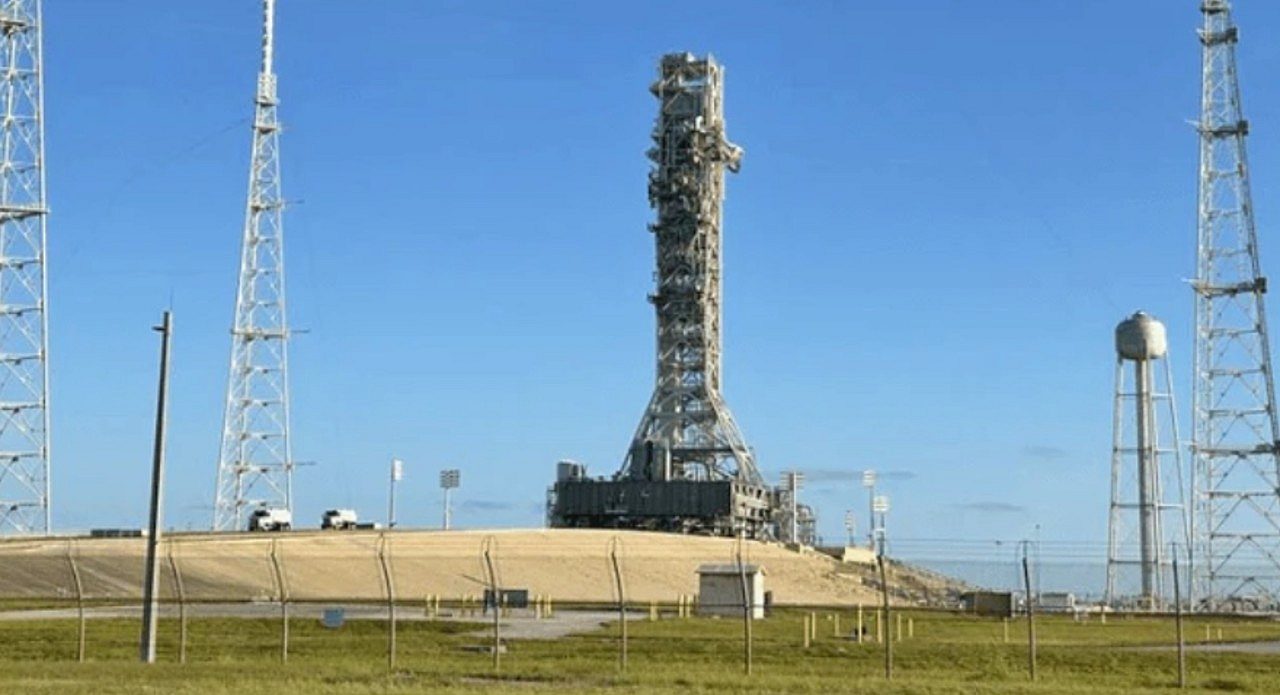
Transport Operação requires thorough coordination on Centro Espacial Kennedy
The mobile launcher is a key piece of deep space exploration architecture, designed to support the gigantic Space Launch System rocket. The equipment carries the launch vehicle about 30 stories high and provides all the necessary power, fluids and communications connections before liftoff. The belt conveyor advances at an extremely low and constant speed designed to avoid any excessive vibration. Equipes of Nasa and contracted companies walk alongside the structure throughout the entire route.
The complexity of the maneuver requires strategic pauses to evaluate the operators’ locomotion and rest systems. The operation was temporarily interrupted according to schedule and is scheduled to resume this Friday. Centro Espacial Kennedy concentrates all hardware integration activities of the Artemis program, functioning as the starting port for lunar missions. The Edifício of Montagem of Veículos, known by the acronym VAB, houses the final assembly of the thrusters, core stage and Orion spacecraft.
The launcher’s structure is 112 meters high and weighs an impressive 5 million kilograms, which makes transporting it a complex engineering event. Sensores installed at various points on the tower transmit real-time data on the inclination and stability of the load. The river’s stone path, specially prepared to support the combined weight of the transporter and the platform, undergoes constant maintenance to avoid unevenness that could compromise the safety of the umbilical tower.
Inspeções rigorous repairs prepare the structure for new flights
The arrival of the launcher inside the VAB marks the beginning of a long maintenance and reconditioning campaign. Técnicos specialists wear full protective suits to access areas that were directly exposed to exhaust gases during takeoff. The first stage of the process involves high pressure washing to remove chemical residues left behind by burning the fuel. Solid fuel propellants generate highly corrosive compounds that can degrade metal if not quickly neutralized.
The work schedule inside the assembly building includes a series of activities critical to the safety of upcoming flights. Engineers use lifting platforms to reach the highest levels of the umbilical tower. The main work fronts established by the space agency include:
- Inspeção details the entire 112 meter high metal structure to identify possible cracks or wear.
- Limpeza deep and remove corrosive residues generated by solid propellants during the first seconds of flight.
- Reparos corrections in protection panels, elevator systems, pneumatic lines and fiber optic cables.
- Implementação of structural adaptations based on lessons learned from previous releases to reduce future damage.
- Testes validation of the umbilical arms that connect the tower to the different stages of the rocket and the manned capsule.
The modifications made after the program’s inaugural mission have already demonstrated effectiveness in reducing the damage expected on the platform. Mesmo With these improvements, visual and instrumental inspection remains extremely thorough, covering every weld and electrical connection. Repairs to the lifting systems and cryogenic fluid pipelines follow a strict schedule so as not to delay the assembly of the next launch vehicle.
Recent manned Missão consolidates life support technologies
The mobile platform provided direct service to Artemis II, which took off from platform 39B at the beginning of April. Esta was the first manned lunar mission of the 21st century, marking the return of humans to the vicinity of Lua after more than fifty years. The crew, consisting of astronauts Reid Wiseman, Victor Glover, Christina Koch and Jeremy Hansen, tested the spacecraft’s life support systems under real deep space flight conditions.
Durante the technical evaluation journey, the quartet covered a total distance of approximately 1.1 million kilometers in space. At a certain point in the free flight trajectory, the astronauts ended up being more than 400 thousand kilometers away from Terra. The successful re-entry into the Earth’s atmosphere and safe rescue on the Oceano Pacífico validated the design of the Orion capsule’s heat shield, one of the most critical components for the crew’s survival.
Telemetry data and observations reported by the crew are under review by mission control centers. The information collected during the orbital flight days is essential to certify the spacecraft for docking and descent operations to the lunar surface. The impeccable completion of this test stage opened the definitive path for surface exploration missions that will require even more precision from navigation systems.
Planejamento logistics advances towards return of humans to lunar surface
Nasa is now directing its resources and infrastructure towards the execution of Artemis III, which is scheduled to launch in 2027. The central objective of this next stage is to carry out a manned landing in the south polar region of Lua, an area of high scientific interest due to the presence of water ice in the permanently shadowed craters. The mission represents a leap in operational complexity compared to the recently completed flyby and will require all ground equipment to function perfectly.
The lunar exploration program relies on a broad network of international collaboration and partnerships with the private aerospace industry. Commercial Empresas develops the next-generation spacesuits and human landing system that will take astronauts from lunar orbit to the surface. The transfer of the mobile platform to the VAB signals the uninterrupted continuity of the flow of operations on the ground to integrate all these elements in a safe and efficient way.
Crucial Componentes of the Space Launch System rocket destined for the Artemis III are already in an advanced stage of production in factories or in the process of being transported by sea to the Flórida. Qualquer required adjustment on the launch tower will be finalized before the solid propellant segments begin to be stacked onto the mobile base. The assembly building will once again serve as the convergence point for hardware coming from different parts of the country.
This week’s logistical movement reinforces the accelerated pace of the American space agency’s preparations. The operation directly connects the end of the Artemis II flight phase to the immediate start of the Artemis III assembly campaign. Continued work on Centro Espacial Kennedy ensures that the launch infrastructure is ready to support the establishment of a lasting human presence on the Terra natural satellite.