
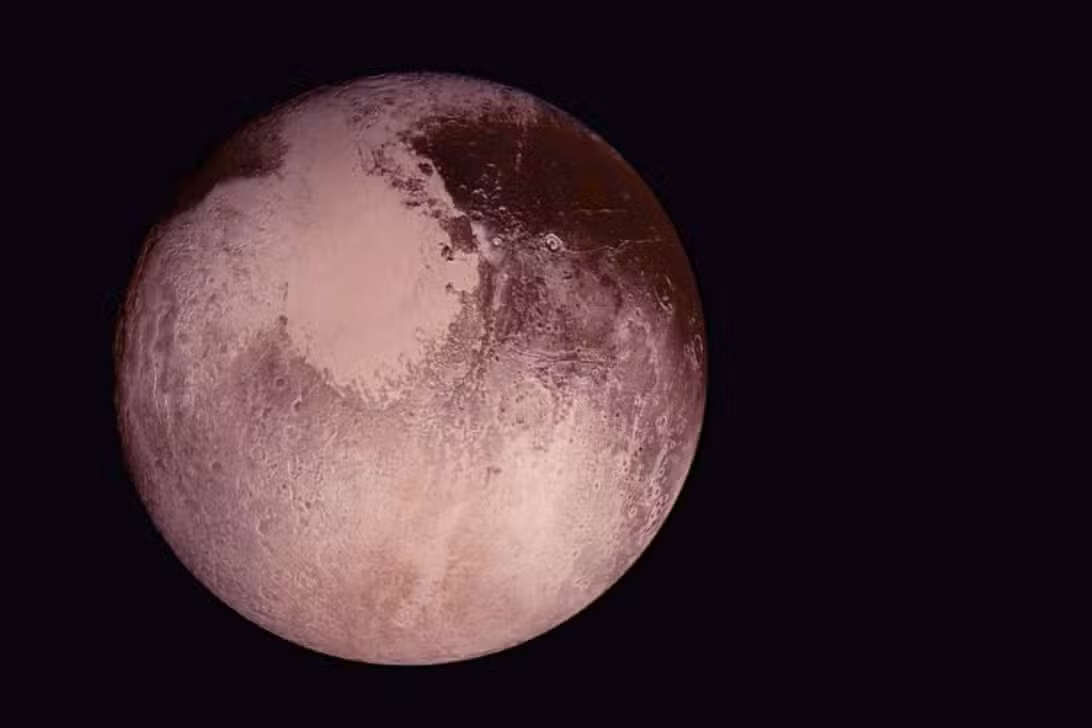
A research group led by Observatório Astronômico Nacional of Japão has identified an extremely tenuous atmosphere on the trans-Neptunian object 2002XV93. Esta is the first detection of an atmosphere on any celestial body other than Plutão in the outer region of the solar system.
The discovery challenges previous scientific understanding of which celestial bodies can retain atmosphere. The analyzed object is just 500 kilometers in diameter, significantly smaller than Plutão, which is 2,380 kilometers and had already shown signs of an atmosphere.
Observações held in three Japanese cities
The observation campaign took place on January 10, 2024, using the stellar occultation technique. Researchers monitored the moment object 2002XV93 passed in front of a 15th magnitude star in the constellation Auriga, approximately 5.5 billion kilometers from Terra.
The observations were distributed in three locations:
- Kyoto – recorded clear stellar occultation
- Nagano (Nagano province) – detected gradual light change over 1.5 seconds
- Fukushima (Fukushima province) – observed gradual dimming of the star, with crucial participation from a 25-centimeter amateur telescope
Método detection by light refraction
The occultation technique works by analyzing the behavior of starlight during the frontal passage of the object. Quando there is no atmosphere, the light disappears instantly when it reaches the edge of the celestial body. With an atmosphere present, light is gradually refracted, changing its brightness measurably.
Results from the observatories at Nagano and Kyoto showed patterns consistent with atmospheric presence. Embora Fukushima did not record direct occultation, the data collected reinforced the general hypothesis.
Atmosphere Características detected
Análises with atmospheric models revealed surface pressure between 100 and 200 nanobars. Essa measurement is equivalent to approximately one ten-millionth of Earth’s atmospheric pressure and one-hundredth of the pressure of Plutão.
The exact composition remains under investigation. The data is consistent with three possible main constituents:
- Metano
- Nitrogênio
- Monóxido carbon
Essas Volatile substances would theoretically escape into space in such small, cold objects due to weak gravity. The maintenance of atmosphere in these extreme conditions — temperatures below -220 degrees Celsius; represents a phenomenon previously considered impossible.
Implicações for understanding the outer solar system
The detection expands knowledge about the diversity of worlds beyond Netuno. Trans-Neptunian Objetos are frozen bodies located on the outer fringes of the solar system, characterized by a hostile environment and little explored celestial dynamics.
The presence of an atmosphere in 2002XV93 suggests that atmospheric retention mechanisms in small bodies may be more robust than previous models indicated. The discovery opens up perspectives for new observations of other similar objects in the trans-Neptunian region.